Have you ever received a message that said something like, “I’m tired ASF” or “That movie was funny ASF” and wondered what it actually meant?
You’re not alone.
Text slang changes fast, and new abbreviations appear on social media almost every day. One term that has become extremely popular across texting apps, social media platforms, and online conversations is ASF.
If you’ve been asking, “what does ASF mean in text?”, this guide explains everything in simple language. You’ll learn the meaning, how people use it, examples, common mistakes, and when it’s appropriate to use.
What Does ASF Mean in Text?
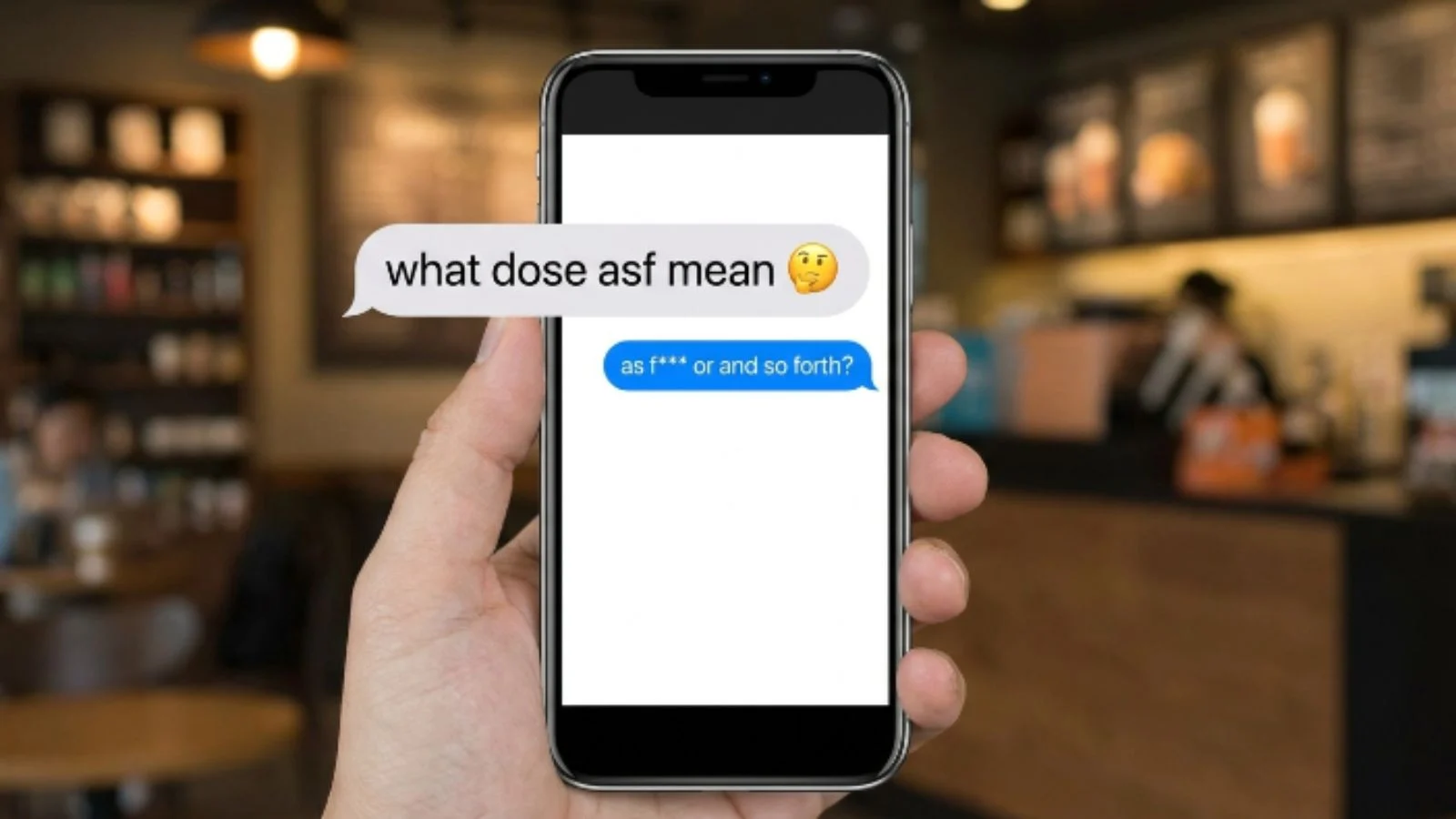
ASF means “As F*.”**
It is an internet slang expression used to add strong emphasis to a statement.
People use ASF when they want to say that something is very, extremely, or really something.
Quick Definition
ASF = As F* = Extremely or Very**
For example:
- “I’m hungry ASF.”
- “That game is hard ASF.”
- “She’s happy ASF today.”
In all of these examples, ASF simply makes the statement stronger.
Simple Meaning of ASF
In everyday English, ASF means:
- Very
- Extremely
- Really
- Super
Think of it as a way to exaggerate a feeling, opinion, or situation.
Examples
| Text Message | Meaning |
|---|---|
| I’m tired ASF | I’m extremely tired |
| It’s cold ASF outside | It’s very cold outside |
| That food was good ASF | That food was extremely good |
| He’s funny ASF | He’s very funny |
The abbreviation saves time while making the message sound more expressive.
Where Is ASF Used?
ASF is commonly used in informal online communication.
You will often see it on:
Social Media
- TikTok
- Snapchat
- X
- Threads
Messaging Apps
- Messenger
- Telegram
- Discord
- iMessage
Online Communities
- Gaming chats
- Forums
- Group chats
- Comment sections
Because ASF is casual slang, it usually appears in conversations among friends rather than professional settings.
Why Do People Use ASF?
People use ASF for one simple reason:
It adds emphasis.
Instead of saying:
“I am tired.”
Someone may say:
“I am tired ASF.”
The second version sounds stronger and expresses the feeling more clearly.
Other reasons people use ASF include:
It Saves Time
Typing ASF is quicker than writing a longer phrase.
It Sounds Casual
Internet slang helps conversations feel relaxed and friendly.
It Adds Emotion
ASF can make messages sound more dramatic or expressive.
It Fits Online Culture
Many social media users prefer short, catchy expressions.
Real-Life Examples of ASF in Text
Let’s look at some common examples and what they mean.
Example 1
Text:
“I’m bored ASF.”
Meaning:
The person is extremely bored.
Example 2
Text:
“This pizza is good ASF.”
Meaning:
The pizza tastes really good.
Example 3
Text:
“That exam was hard ASF.”
Meaning:
The exam was extremely difficult.
Example 4
Text:
“I’m excited ASF for the concert.”
Meaning:
The person is very excited about the concert.
Example 5
Text:
“She’s lucky ASF.”
Meaning:
The speaker believes she is extremely lucky.
ASF vs Similar Terms
Many internet abbreviations have similar meanings. Here’s how ASF compares to other popular slang terms.
| Term | Meaning | Usage |
| ASF | As F*** | Strong emphasis |
| AF | As F*** | Same meaning as ASF |
| FR | For Real | Shows honesty or agreement |
| NGL | Not Gonna Lie | Introduces an honest opinion |
| TBH | To Be Honest | Expresses honesty |
| IMO | In My Opinion | Shares a personal view |
ASF vs AF
The biggest comparison is ASF versus AF.
Both mean exactly the same thing:
- AF = As F***
- ASF = As F***
Examples:
- “I’m tired AF.”
- “I’m tired ASF.”
Both sentences have the same meaning.
The choice usually depends on personal preference.
When Should You Use ASF?
ASF works best in casual conversations.
Good Situations
Use ASF when talking with:
- Friends
- Classmates
- Family members
- Online gaming friends
- Social media followers
Examples:
- “I’m sleepy ASF.”
- “That song is catchy ASF.”
- “This weather is hot ASF.”
Situations to Avoid
Avoid using ASF in:
- Job applications
- Business emails
- Professional messages
- Academic papers
- Formal communication
For example, writing:
“The project was difficult ASF.”
would not be appropriate in a workplace email.
Instead, use:
“The project was extremely challenging.”
Common Misunderstandings About ASF
Many people misunderstand ASF when they first encounter it.
Mistake #1: Thinking It’s a Separate Word
ASF is not a standalone word.
It is simply an abbreviation used to emphasize a statement.
Mistake #2: Assuming It Has One Fixed Meaning
ASF does not have a specific emotional meaning.
It can describe almost anything:
- Happy ASF
- Sad ASF
- Fast ASF
- Cold ASF
- Funny ASF
The meaning depends on the words around it.
Mistake #3: Using It in Formal Settings
Because ASF contains a censored form of profanity, it should remain in casual conversations.
Mistake #4: Thinking Everyone Understands It
While younger internet users often know ASF, some people may not recognize the abbreviation.
Consider your audience before using it.
How ASF Became Popular
ASF became popular through social media and texting culture.
As messaging platforms grew, users started shortening phrases to communicate faster.
ASF gained popularity because:
- It is short.
- It adds emphasis.
- It is easy to understand.
- It works in many situations.
Platforms like TikTok, Snapchat, Instagram, and Discord helped spread the term among younger users.
Today, ASF is recognized by millions of internet users worldwide.
Different Ways People Use ASF
ASF can be used with many types of expressions.
To Describe Feelings
- Happy ASF
- Sad ASF
- Excited ASF
- Nervous ASF
To Describe People
- Funny ASF
- Smart ASF
- Cool ASF
- Friendly ASF
To Describe Situations
- Busy ASF
- Loud ASF
- Stressful ASF
- Crazy ASF
To Describe Objects
- Expensive ASF
- Fast ASF
- Heavy ASF
- Bright ASF
This flexibility is one reason why ASF remains popular.
Pro Tips for Using ASF Correctly
Here are some useful tips.
Know Your Audience
Use ASF with people who are familiar with internet slang.
Keep It Casual
ASF belongs in relaxed conversations, not professional communication.
Don’t Overuse It
Using ASF in every sentence can make your messages feel repetitive.
Understand the Tone
Because ASF comes from a profanity-based phrase, some people may find it too informal.
Consider Alternatives
If you want a cleaner option, use:
- Very
- Really
- Extremely
- Super
These alternatives work in both casual and professional settings.
Is ASF Offensive?
Not usually.
However, ASF originates from a phrase that contains profanity.
Because of that, some people may consider it inappropriate in formal situations.
Among friends and online communities, it is generally accepted and widely used.
The key is understanding the context and audience.
Final Thoughts
If you’ve been wondering what does ASF mean in text, the answer is simple.
ASF means “As F*” and is used to show strong emphasis.**
People use it to mean very, really, or extremely when texting, posting on social media, or chatting online.
While ASF is common in casual conversations, it’s best to avoid it in professional or formal communication.
Understanding internet slang like ASF can help you better understand online conversations and communicate more naturally with others.
Frequently Asked Questions
What does ASF stand for in texting?
ASF stands for “As F*.”** It is used to emphasize something strongly and usually means “very” or “extremely.”
Is ASF the same as AF?
Yes. ASF and AF generally have the same meaning. Both are abbreviations of “As F***.”
Is ASF rude?
ASF is not usually considered rude among friends, but it may be inappropriate in formal settings because it comes from a profanity-based phrase.
Can I use ASF in professional emails?
No. ASF should be avoided in professional communication. Use words like “very,” “really,” or “extremely” instead.