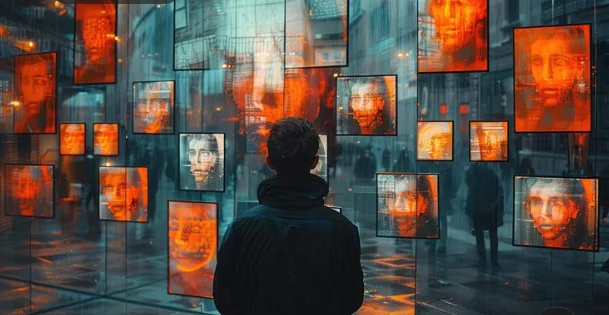
For centuries, visual art was largely defined by physical boundaries. A painting existed within a frame, a sculpture occupied a fixed space, and viewers typically experienced creative work from a respectful distance. Digital installations are changing that relationship completely.
Today, artists are combining projection, sound, sensors, artificial intelligence, lighting, virtual environments, and interactive technology to create experiences that surround the audience rather than simply appearing in front of them. Instead of observing art from the outside, visitors can walk through it, influence it, and sometimes even become part of the artwork itself.
This shift is redefining what immersion means and expanding the possibilities of artistic expression far beyond the traditional canvas.
From Viewing Art to Entering It
Traditional galleries often encourage quiet observation. Visitors move from one artwork to another, taking in paintings, photographs, or sculptures from designated viewing areas.
Digital installations create a very different experience.
A visitor may enter a darkened room where animated landscapes flow across the walls and floor. Motion sensors might detect movement, causing colors, sounds, or visual patterns to change. In another installation, digital flowers may appear wherever someone steps, while projected waves respond to the movement of people walking through the space.
The audience is no longer simply looking at art. They are participating in an environment designed around movement, presence, and interaction.
This transformation makes immersive art feel personal because each visitor may experience the installation slightly differently.
Technology Becomes Part of the Artistic Language
Technology in digital installations is not simply a tool for displaying artwork. Increasingly, it becomes part of the creative language itself.
Artists may use projection mapping to transform ordinary walls, buildings, or objects into moving visual surfaces. Sensors can detect motion, sound, temperature, or touch. Large LED screens can display generative artworks that continuously change based on algorithms or real-time data.
Some installations even incorporate artificial intelligence to produce evolving visuals, music, or patterns.
These technologies allow artists to create works that are dynamic rather than static. A traditional painting generally remains visually unchanged once completed. A digital installation, however, may evolve every second.
The artwork can react to visitors, environmental information, or programmed rules, meaning the experience may never repeat in exactly the same way.
The Physical Space Becomes the Canvas
One of the most significant changes brought by digital installations is the expansion of the artistic canvas itself.
Instead of working within the dimensions of a frame, artists can transform entire rooms, warehouses, public buildings, museums, or outdoor spaces.
Walls become projection surfaces. Floors become interactive platforms. Ceilings may display moving galaxies or abstract patterns. Sound systems can create different audio experiences depending on where someone stands.
This approach allows artists to design environments rather than individual objects.
Visitors may find themselves walking through digital forests, floating among virtual particles, or standing inside constantly shifting architectural landscapes. The space surrounding the viewer becomes part of the artwork.
As a result, the distinction between art, architecture, technology, and performance begins to blur.
Interaction Changes the Role of the Audience
Traditional art usually exists independently of the viewer. A painting remains the same whether one person or a thousand people see it.
Interactive installations introduce a new relationship.
The artwork may react to the audience.
Cameras can track movement. Pressure sensors can respond to footsteps. Microphones can detect voices. Touch-sensitive surfaces can change visuals when someone interacts with them.
In these situations, visitors become active participants.
A person waving their hand might create digital particles across a wall. A group of visitors may collectively generate patterns through their movement. Sound installations may create different tones depending on where people walk.
The artwork becomes a conversation between the artist, the technology, and the audience.
This participation creates a stronger sense of presence because viewers feel that their actions have a direct impact on what they see or hear.
Sound Is Becoming Just as Important as Sight
Immersion is not purely visual.
Digital installations increasingly use sound to create atmosphere, emotional depth, and spatial awareness.
Directional speakers can make audio appear to come from specific parts of a room. Surround-sound systems can create environments where noises move around visitors. Artists may combine music, spoken words, environmental recordings, or computer-generated sounds with visual projections.
These elements can dramatically change how an installation feels.
A slowly moving projection paired with calm ambient audio may create a meditative atmosphere. The same imagery combined with loud mechanical sounds could feel unsettling or futuristic.
By combining visual and auditory elements, digital installations engage multiple senses at once, making the experience more emotionally powerful.
Artificial Intelligence Introduces Unpredictability
Artificial intelligence is also beginning to influence immersive art.
AI systems can generate images, patterns, music, text, and animations based on programmed instructions or incoming data. This means artists can design installations that continuously produce new creative outputs.
For example, an AI-powered installation might analyze visitor movement and generate visual compositions based on those patterns. Another system could interpret voices and transform them into abstract images.
Instead of creating every detail manually, artists establish the rules and frameworks within which the technology operates.
The result can be unpredictable.
This unpredictability challenges traditional ideas about artistic authorship. The artist designs the system, but the final experience may also depend on algorithms, audience behavior, and environmental conditions.
Immersive Art Extends Beyond Museums
Digital installations are no longer limited to contemporary art galleries.
They are appearing in many different environments, including shopping centers, hotels, music festivals, corporate events, public plazas, airports, exhibitions, and entertainment venues.
Brands also use immersive installations to create memorable experiences around products or campaigns.
Instead of displaying a conventional advertisement, a company might build an interactive room where visitors can explore digital environments connected to its brand identity.
Cities may use large-scale projections during cultural festivals, turning historic buildings into animated storytelling surfaces.
This wider adoption demonstrates how immersive technology is changing not only art but also entertainment, marketing, education, and public spaces.
Social Media Is Changing How Installations Are Designed
Another major influence on digital installation art is social media.
Highly visual immersive spaces naturally encourage visitors to photograph and record their experiences. Dramatic lighting, enormous projections, mirrored rooms, and interactive visuals can create striking content for platforms such as Instagram, TikTok, and YouTube.
This visibility can introduce digital art to audiences who may rarely visit traditional galleries.
However, it also raises an interesting question: should immersive installations be designed primarily to create meaningful artistic experiences or memorable social media moments?
The most successful installations often achieve both.
They create visually impressive environments while also giving visitors ideas, emotions, or stories to think about after leaving the space.
Immersion Can Create Stronger Emotional Connections
One reason immersive installations have become popular is their ability to create emotional engagement.
People often remember experiences more strongly when they involve movement, sound, scale, and participation.
Walking through a digital representation of an ocean can feel very different from seeing a photograph of one. Standing inside a room filled with projected stars may create a stronger sense of wonder than looking at an image of the night sky.
Artists can use this emotional power to explore serious subjects as well.
Immersive installations may address climate change, migration, memory, identity, urban development, or social issues. By surrounding visitors with images, sounds, and information, artists can encourage audiences to experience a topic rather than simply read about it.
The Definition of Art Continues to Expand
Digital installations challenge many traditional assumptions about art.
Does an artwork need to be a physical object?
Does it need to remain unchanged?
Can software be considered an artistic medium?
Can an experience that lasts only a few minutes be considered a complete artwork?
Contemporary digital artists are constantly exploring these questions.
In many installations, the physical equipment—computers, projectors, sensors, screens, and speakers—is only the infrastructure. The actual artwork exists in the experience created when technology, space, and audiences interact.
This represents a significant shift from owning or displaying art toward experiencing it.
The Future of Digital Immersion
The possibilities for immersive installations will continue to expand as technology develops.
Virtual reality, augmented reality, spatial computing, advanced projection systems, artificial intelligence, motion tracking, and haptic technology could create increasingly sophisticated environments.
Future installations may respond not only to movement but also to voice, facial expressions, biometric signals, or environmental information.
Visitors could enter spaces that adapt completely to their presence, creating personalized experiences in real time.
At the same time, artists will continue exploring how technology can be used thoughtfully rather than simply for spectacle.
The strongest digital installations are likely to be those where technology supports an artistic idea instead of becoming the entire point of the experience.
Conclusion
Digital installations are transforming the relationship between art, space, technology, and audiences.
The canvas is no longer limited to a rectangular surface hanging on a wall. It can be an entire room, a building, a public square, or a responsive virtual environment.
Through projection, sound, sensors, artificial intelligence, and interactive systems, artists are creating experiences that audiences can enter, explore, and influence.
This new form of creative expression does more than introduce technology into art. It changes the role of the viewer from observer to participant.
As immersive technology continues to evolve, digital installations will likely push artistic boundaries even further, creating experiences where the distinction between physical space and digital imagination becomes increasingly difficult to see.
Read More : What Does Fawk Mean in Text? The Real Meaning May Surprise You