
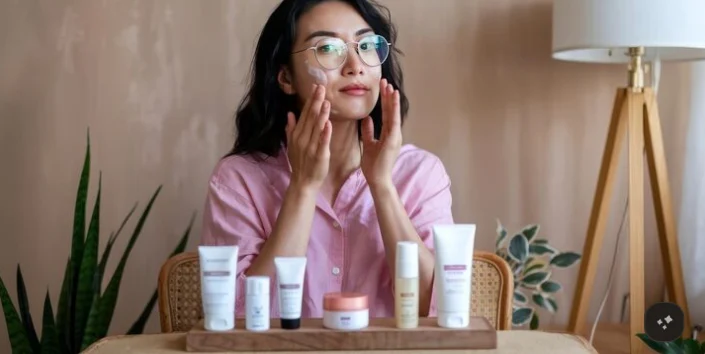
Skincare routines have become increasingly complicated. Social media is filled with videos showing shelves packed with cleansers, toners, essences, serums, exfoliants, masks, moisturizers, oils, and specialty treatments. While some people enjoy experimenting with different products, using more skincare does not automatically mean achieving healthier skin.
This growing realization has helped popularize skin minimalism, sometimes called “skinimalism.” The idea is simple: instead of layering numerous products every morning and evening, you focus on a smaller number of carefully chosen essentials.
For many people, a simpler routine can be easier to maintain, more affordable, and gentler on the skin. It can also make it easier to understand which products are actually helping.
What Is Skin Minimalism?
Skin minimalism is an approach to skincare that prioritizes essential products rather than complicated routines.
Instead of using eight or ten products at once, a minimalist routine might contain only three or four core steps. These usually include cleansing, moisturizing, sun protection, and one targeted treatment when necessary.
The purpose is not to eliminate skincare completely. Instead, it is about being more intentional.
A minimalist routine asks a simple question:
Does my skin actually need this product?
If the answer is no, there may be little reason to keep adding another layer to your routine.
Why Skincare Routines Became So Complicated
The beauty industry has changed dramatically over the past decade. Consumers now have access to thousands of specialized products designed to address specific concerns.
There are products marketed for hydration, pigmentation, dullness, pores, texture, acne, fine lines, redness, oiliness, and countless other issues.
Social media has also played a major role. Multi-step routines often look impressive in videos, and new ingredients regularly become beauty trends.
As a result, some people end up combining multiple active ingredients without fully understanding how they interact.
A complicated routine can sometimes work well, but it can also create unnecessary irritation or make it difficult to identify which product is causing a problem.
Your Skin Barrier May Prefer Simplicity
One of the most important reasons people simplify their skincare routine is to protect the skin barrier.
The skin barrier is the outer protective layer of the skin. It helps retain moisture while protecting the body from environmental irritants.
When the barrier becomes irritated or damaged, skin may feel:
- Dry
- Tight
- Sensitive
- Itchy
- Rough
- Red
- Easily irritated
Overusing exfoliating acids, retinoids, scrubs, or strong cleansers may contribute to irritation in some people.
Reducing the number of active products can give the skin time to recover and help maintain a more balanced routine.
Fewer Products Can Make Irritation Easier to Identify
Imagine using nine skincare products every evening and suddenly developing redness or breakouts.
Which product caused the problem?
It can be difficult to know.
When a routine contains only a few products, identifying possible triggers becomes much easier.
For example, if you introduce one new serum and irritation appears shortly afterward, you have a clearer idea of what may have caused the reaction.
This is also why introducing new skincare products gradually can be useful.
The Basic Skin Minimalism Routine
A simple skincare routine does not need to be complicated to be effective.
For many people, a basic routine can revolve around three main steps.
1. Gentle Cleansing
Cleansing helps remove dirt, excess oil, sweat, sunscreen, makeup, and environmental debris from the skin.
However, cleansers do not need to leave the skin feeling extremely tight or “squeaky clean.”
A gentle cleanser that suits your skin type is often enough.
People with dry or sensitive skin may prefer cream or hydrating cleansers, while people with oily skin may prefer lightweight gel cleansers.
The goal is simply to clean the skin without unnecessarily stripping away moisture.
2. Moisturizing
Moisturizer helps support hydration and reinforce the skin’s protective barrier.
Even oily skin can benefit from proper moisturization.
People with dry skin may prefer thicker creams containing ingredients such as ceramides or glycerin. Those with oily skin may prefer lightweight lotions or gel-based moisturizers.
A good moisturizer does not need to contain dozens of trendy ingredients. It simply needs to keep your skin comfortable and hydrated.
3. Sunscreen
Sunscreen is one of the most valuable steps in a daytime skincare routine.
Regular sun protection helps reduce exposure to ultraviolet radiation, which contributes to premature skin aging, pigmentation, and skin damage.
A broad-spectrum sunscreen with appropriate SPF protection can therefore become the foundation of a minimalist morning routine.
The best sunscreen is often one that feels comfortable enough for you to use consistently.
What About Serums?
Skin minimalism does not mean you cannot use serums.
It simply means choosing them intentionally.
Instead of layering four or five serums, consider selecting one targeted product based on your primary concern.
For example:
Vitamin C may be used by people interested in antioxidant protection and brighter-looking skin.
Niacinamide may help support the skin barrier and improve the appearance of uneven tone or oiliness.
Hyaluronic acid can support hydration.
Retinoids are commonly used to address acne, texture, and signs of aging.
The important point is that you do not necessarily need all of them at the same time.
Too Many Active Ingredients Can Become Counterproductive
Active ingredients can be useful, but combining too many powerful ingredients may increase the risk of irritation.
For example, someone might use:
- A glycolic acid toner
- A salicylic acid serum
- A retinoid
- A vitamin C serum
- An exfoliating mask
Individually, these products may serve useful purposes. However, using several strong products too frequently can overwhelm sensitive skin.
Possible signs of over-exfoliation or irritation may include burning, persistent redness, peeling, unusual dryness, or increased sensitivity.
Skin minimalism encourages people to choose one or two targeted treatments rather than trying everything at once.
Minimalism Can Save Money
Skincare can become expensive surprisingly quickly.
A serum might cost $30, a moisturizer $40, a specialty treatment $50, and sunscreen another $25. Add several other products and the cost of a routine can easily reach hundreds of dollars.
A minimalist approach encourages spending money on products you consistently use rather than constantly purchasing new releases.
You may also waste fewer products because fewer bottles expire before you finish them.
Quality matters, but a larger skincare collection does not necessarily produce better results.
Minimalism Makes Consistency Easier
One of the most overlooked advantages of a simple routine is consistency.
A complicated ten-step routine might feel exciting for the first week. However, maintaining it every morning and evening can become difficult.
A three- or four-step routine is easier to follow.
Consistency is especially important because many skincare products require regular use over weeks or months before noticeable improvements appear.
A simple routine you follow consistently may ultimately be more useful than an elaborate routine you use occasionally.
Minimalist Skincare for Acne-Prone Skin
People with acne sometimes believe they need many aggressive products to control breakouts.
However, excessively stripping the skin can sometimes worsen irritation.
A simple acne routine might include:
- Gentle cleanser
- Acne treatment
- Lightweight moisturizer
- Sunscreen during the day
Depending on the type and severity of acne, treatment ingredients might include salicylic acid, benzoyl peroxide, or a retinoid.
Persistent, painful, or severe acne may require professional evaluation from a dermatologist rather than additional over-the-counter products.
Minimalist Skincare for Dry Skin
Dry skin often benefits from routines focused on hydration and barrier support.
A basic routine could include:
- Gentle hydrating cleanser
- Moisturizer
- Sunscreen
Some people may also benefit from applying a hydrating serum underneath moisturizer.
However, frequent exfoliation may not always be necessary, particularly if the skin is already sensitive or flaky.
Minimalist Skincare for Oily Skin
Oily skin can still become dehydrated or irritated.
Using harsh cleansers repeatedly in an attempt to remove all oil may leave the skin uncomfortable.
A simple routine might include:
- Gentle foaming or gel cleanser
- Lightweight moisturizer
- Sunscreen
- One targeted oil-control or acne treatment if necessary
Products containing niacinamide or salicylic acid are sometimes included depending on individual needs.
Minimalist Skincare for Sensitive Skin
Sensitive skin is often one of the strongest candidates for a simplified routine.
Every additional ingredient creates another potential source of irritation.
A basic routine may include fragrance-free, gentle products with relatively simple formulations.
Introducing new products one at a time can also make it easier to identify ingredients that your skin does not tolerate well.
Do You Really Need Toner?
Toner was historically used after cleansing to remove residue and balance the skin after stronger cleansers.
Modern cleansers are generally much gentler, which means toner is not automatically necessary.
Some modern toners function more like hydrating essences or treatment products. They may still be useful depending on the formulation and your skin goals.
However, if your cleanser, moisturizer, and treatments already work well, toner can often remain optional.
Do You Need Eye Cream?
Eye creams can contain useful moisturizing or treatment ingredients, but they are not always essential.
In some cases, a gentle facial moisturizer can also be used around the eye area, depending on the product’s formulation.
People dealing with specific concerns such as dryness or fine lines may prefer a dedicated eye product.
Skin minimalism does not say eye cream is useless. It simply encourages consumers to decide whether the product provides a meaningful benefit for them.
Avoid Changing Everything at Once
One of the most useful principles of minimalist skincare is making changes gradually.
If you replace six products in one day and your skin improves or worsens, you may not know which product caused the change.
Instead, introduce new products one at a time.
This gives your skin time to adjust and makes it easier to evaluate results.
Patch testing can also be useful, particularly for people with sensitive or reactive skin.
Minimalism Does Not Mean Ignoring Skin Problems
A simple routine is not a replacement for medical treatment.
Certain skin conditions require professional care.
Persistent acne, eczema, rosacea, unusual rashes, infections, painful lesions, or changing moles should be evaluated by an appropriate healthcare professional.
A dermatologist can also help create a streamlined routine based on your skin type and concerns.
In some cases, professional guidance can actually reduce the number of products someone uses by replacing several ineffective treatments with one targeted option.
How to Simplify Your Current Skincare Routine
If your bathroom shelf is overflowing with products, you do not need to throw everything away immediately.
Start by identifying your essentials.
Ask yourself:
Which products do I use consistently?
Which products clearly improve my skin?
Which products repeatedly cause irritation?
Which products perform the same function?
You may discover that several products overlap.
For example, you may own multiple hydrating serums, several exfoliators, and three moisturizers that essentially perform similar roles.
Choose the products that work best and temporarily remove the rest.
Give Your Routine Time
Another common skincare mistake is expecting instant results.
Some products make the skin feel hydrated immediately, but many concerns require time.
Frequently switching products can make it difficult to determine whether anything is actually working.
A stable routine also gives you a clearer baseline. Once your skin becomes predictable, you can introduce additional treatments only when they serve a specific purpose.
Minimalist Skincare Is Also About Lifestyle
Healthy-looking skin is influenced by more than cosmetics.
Sleep, nutrition, hydration, stress, sun exposure, environmental conditions, and personal health can all influence how skin looks and feels.
This is another reason skincare products should not carry the entire burden of maintaining healthy skin.
A cabinet full of expensive products cannot necessarily compensate for chronic sleep deprivation, frequent sun exposure without protection, or an untreated skin condition.
Skin minimalism encourages a broader view of skincare—one where products are helpful tools rather than the entire solution.
Sustainable Benefits of Using Fewer Products
A smaller skincare routine may also reduce waste.
Fewer products can mean:
- Less packaging
- Fewer partially used bottles
- Fewer impulse purchases
- Less product expiring unused
- Reduced shipping and consumption
For environmentally conscious consumers, this can be another meaningful advantage.
Minimalism does not require perfect sustainability, but thoughtful purchasing can reduce unnecessary consumption.
How Many Products Are Enough?
There is no universal number.
Some people may thrive with three products, while others may need five or six because they are managing particular concerns.
A dermatologist-directed routine may include prescription treatments alongside supportive skincare.
The real goal is not reaching the smallest possible number.
The goal is removing unnecessary steps while keeping products that serve a clear purpose.
Signs Your Routine May Be Too Complicated
Your routine may benefit from simplification if:
- Your skin frequently feels irritated.
- You regularly experience burning after applying products.
- You cannot identify which products are helping.
- You constantly purchase new products without finishing old ones.
- Several products contain overlapping active ingredients.
- Your routine takes so long that you frequently skip it.
- You are spending significantly more than you intended on skincare.
Simplifying for a few weeks may help you understand what your skin actually needs.
Final Thoughts
Skin minimalism is not about rejecting skincare trends or limiting everyone to three products forever. It is about choosing products based on purpose rather than pressure.
A cleanser, moisturizer, sunscreen, and carefully selected treatment may be enough for many people.
By reducing unnecessary products, you may make your routine easier to follow, reduce the possibility of irritation, spend less money, and better understand how your skin responds to different ingredients.
In skincare, more is not always better.
Sometimes the most effective routine is the one simple enough to use every single day.
Read More : The Quiet Brushstroke: Rediscovering the Lost Art of Minimalist Painting



Pingback: Beyond SPF: The Overlooked Everyday Habits Aging Your Skin Fastest