Skincare has evolved far beyond basic cleansers, moisturizers, and facial masks. Today, innovative beauty technologies are making it possible to incorporate more advanced skincare techniques into everyday routines. From radiofrequency devices to targeted serum application systems, at-home skincare tools are attracting attention from people who want to improve the appearance of their skin without relying entirely on professional treatments. Among these innovations, micro-infusion technology and multifunctional facial devices are becoming increasingly popular for their convenience and personalized approach to skincare.
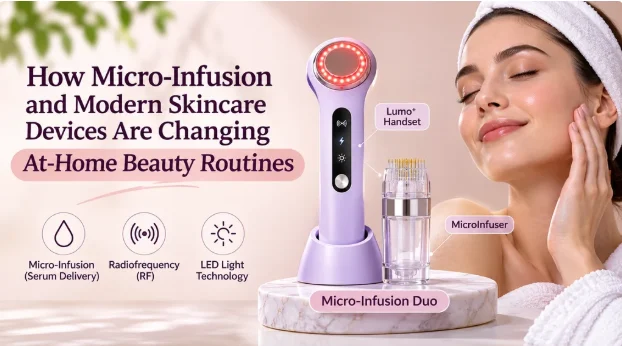
One example of this growing trend is the Micro-Infusion Duo, which combines a MicroInfuser applicator with the Lumo⁺ handset. Rather than relying on a single skincare technique, this combination brings together two different approaches: controlled micro-infusion for serum delivery and noninvasive facial technology designed to support the appearance of firmer, smoother skin. Understanding how these technologies work can help consumers make informed decisions about incorporating them into their skincare routines.
Understanding Micro-Infusion Technology
Micro-infusion is a skincare technique that uses fine needles to create tiny channels in the skin while applying a specially formulated serum. These channels temporarily reduce the skin’s natural barrier to ingredient penetration, allowing compatible formulations to reach beyond the surface.
Unlike ordinary topical skincare, which primarily works on the skin’s outer layers, micro-infusion involves controlled penetration. This makes hygiene, proper technique, and suitable formulations particularly important.
How Does a MicroInfuser Work?
A MicroInfuser is designed to combine controlled microneedle application with serum delivery.
The process generally involves a specialized applicator containing fine needles and a compatible skincare formulation. When used according to the manufacturer’s instructions, the applicator creates small channels while distributing the serum.
Some systems use disposable needle heads and sealed serum containers to help maintain hygiene and reduce unnecessary handling.
However, micro-infusion should not be confused with ordinary serum application. Because the procedure temporarily disrupts the skin barrier, improper use can increase the risk of irritation, infection, and unwanted skin reactions.
For this reason, consumers should follow device-specific instructions carefully and seek professional advice when uncertain about suitability.
The Role of the Lumo⁺ Handset in Modern Skincare
Another development in home beauty technology is the multifunctional facial handset.
Instead of requiring several separate devices, some modern skincare tools combine different technologies into one system.
The Lumo⁺ handset is an example of this approach, incorporating radiofrequency, electrical muscle stimulation (EMS), and LED light technology.
Each technology serves a different cosmetic purpose.
Radiofrequency Technology
Radiofrequency skincare devices use controlled energy to warm targeted areas of the skin.
Professional radiofrequency treatments are commonly associated with improvements in the appearance of skin firmness and texture. Lower-powered home devices aim to provide a more gradual cosmetic approach.
Results depend on factors such as device specifications, individual skin characteristics, and consistent use.
At-home radiofrequency should not be considered equivalent to professional procedures, which may operate at different energy levels and require clinical supervision.
Electrical Muscle Stimulation
Electrical muscle stimulation uses controlled electrical impulses to stimulate superficial facial muscles.
In cosmetic devices, EMS is generally intended to support a temporary toned or lifted appearance.
Although the technology is increasingly available in home skincare tools, consumers should maintain realistic expectations. Visible effects can vary, and long-term results from a particular device should not be assumed without supporting evidence.
LED Light Technology
LED light therapy is another feature found in multifunctional skincare devices.
Different wavelengths of light are studied for different cosmetic applications. Red light is commonly associated with skin rejuvenation research, while blue light is often discussed in relation to acne-prone skin.
However, the effectiveness of LED treatments depends on wavelength, intensity, exposure time, and the specific device being used.
Not every home LED device has the same level of clinical evidence, making product transparency an important consideration.
Why Combining Skincare Technologies Is Becoming Popular
One reason multifunctional skincare systems are attracting interest is their ability to address different cosmetic concerns within a structured routine.
For example, a person interested in improving the appearance of uneven texture may explore serum-based treatments, while someone concerned about facial firmness may consider noninvasive radiofrequency technology.
Combining complementary approaches can make a routine feel more comprehensive, but using more technologies does not automatically produce better results.
The sequence of treatments, recovery periods, and individual skin tolerance are essential considerations.
Companies such as EvenSkyn offer home skincare devices that reflect this interest in combining different cosmetic technologies. Their product range illustrates how facial handsets and micro-infusion applicators can be incorporated into a coordinated routine rather than treated as interchangeable tools.
Importantly, the effectiveness of individual technologies does not establish that combining them produces superior results. Consumers should evaluate each device on its own merits and follow the recommended usage protocol.
Building a Balanced At-Home Skincare Routine
Advanced beauty tools can be useful additions to a routine, but they should complement rather than replace essential skincare practices.
Healthy-looking skin still depends on consistent cleansing, adequate moisturization, appropriate sun protection, and avoiding unnecessary irritation.
Start With the Basics
Before introducing specialized skincare devices, establish a simple routine that supports the skin barrier.
A gentle cleanser helps remove dirt, excess oil, and environmental impurities without excessive stripping.
Moisturizers containing ingredients such as glycerin, ceramides, or hyaluronic acid can help maintain hydration and reduce moisture loss.
Daily broad-spectrum sunscreen is also essential, particularly when using skincare techniques that may temporarily increase sensitivity.
Introduce New Treatments Gradually
Adding several new products or devices simultaneously can make it difficult to identify the cause of irritation.
A more practical approach is to introduce one change at a time and observe how the skin responds.
This principle also appears in discussions about aligning skincare routines with changing skin needs, where flexibility and awareness are emphasized over rigid schedules.
Skin condition can change due to weather, stress, hormones, and product use. A treatment that feels comfortable one week may not be appropriate when the skin is irritated or unusually sensitive.
Make Recovery Part of the Routine
Recovery is especially important after procedures involving microneedles.
The skin may experience temporary redness, tenderness, or sensitivity following micro-infusion.
During the recommended recovery period, gentle cleansing, moisturizing, and sun protection should take priority.
Strong exfoliating acids, retinoids, and other potentially irritating ingredients may need to be temporarily avoided according to the device’s instructions.
For systems combining radiofrequency and micro-infusion, treatment order and spacing should follow the manufacturer’s guidance. Additional energy-based treatments should not be applied immediately after micro-infusion unless specifically permitted by the instructions.
Important Safety Considerations Before Using a MicroInfuser
Although home skincare technology offers convenience, safety should remain the first priority.
Micro-infusion involves needles that penetrate the skin, making it more invasive than ordinary facial cleansing or massage.
Consumers should consider several factors before starting.
Skin Conditions and Sensitivity
Individuals with active skin infections, inflamed acne, eczema flare-ups, or compromised skin barriers should avoid microneedling over affected areas.
People who develop raised scars, experience poor wound healing, or have certain medical conditions should consult a qualified healthcare professional before using these devices.
Hygiene and Product Compatibility
Sterile, single-use needle heads should never be reused or shared.
Only formulations specifically intended for the device and its method of application should be used.
Ordinary cosmetic serums are not necessarily suitable for delivery through microneedle-created channels, even when their ingredients are commonly used in topical skincare.
Understanding Device Limitations
Home devices are not substitutes for professional dermatological evaluation.
They cannot reliably treat every skin concern, and they should not be expected to reproduce the effects of professional radiofrequency microneedling or other clinical procedures.
People with implanted electronic devices, including pacemakers, should check radiofrequency and EMS contraindications carefully.
If persistent redness, significant swelling, unusual pain, or signs of infection develop, discontinue use and seek medical advice.
What Results Can Users Realistically Expect?
One of the most important aspects of skincare technology is understanding the difference between immediate cosmetic changes and gradual improvements.
Hydrating formulations may temporarily make the skin appear plumper and smoother. These effects can result from increased surface hydration rather than structural changes within the skin.
Other cosmetic goals, such as improving the appearance of fine lines or uneven texture, may require consistent treatment over a longer period.
Individual results depend on skin type, age, environmental exposure, treatment frequency, and the quality of the supporting skincare routine.
It is also important to distinguish evidence supporting a general technology from research evaluating a specific commercial product.
A study involving professional radiofrequency equipment, for example, does not automatically demonstrate the effectiveness of every home radiofrequency handset.
Consumers should look for transparent product specifications, realistic claims, and clearly explained limitations.
The Future of Personalized At-Home Skincare
The growing availability of home skincare devices reflects a broader shift toward personalized beauty routines.
Consumers increasingly want to understand how products work, what ingredients they contain, and whether the technology is appropriate for their individual needs.
This interest is encouraging manufacturers to develop devices with clearer instructions, controlled settings, and more specialized applications.
Future innovations may also place greater emphasis on skin monitoring, improved safety features, and evidence-based treatment recommendations.
However, technology alone cannot replace consistency, patience, or professional guidance when necessary.
The most effective routine is not necessarily the one containing the greatest number of devices. It is the one that supports the skin’s needs without introducing unnecessary risks.
Conclusion
Micro-infusion technology and multifunctional facial devices represent an interesting development in modern at-home skincare. By combining specialized serum application with technologies such as radiofrequency, EMS, and LED light, these systems offer consumers additional ways to personalize their beauty routines.
The MicroInfuser and Lumo⁺ handset demonstrate how different cosmetic approaches can be organized into a structured skincare regimen. Nevertheless, understanding the purpose, limitations, and safety requirements of each technology is essential.
Ultimately, healthy-looking skin depends on more than innovative devices. Gentle skincare habits, consistent sun protection, appropriate recovery time, and realistic expectations remain the foundation of a sustainable routine.
As home beauty technology continues to evolve, informed choices will help consumers find a balance between modern innovation and responsible skincare.
Read More: What Does DSLS Mean in Text? The Slang Meaning You Need to Know