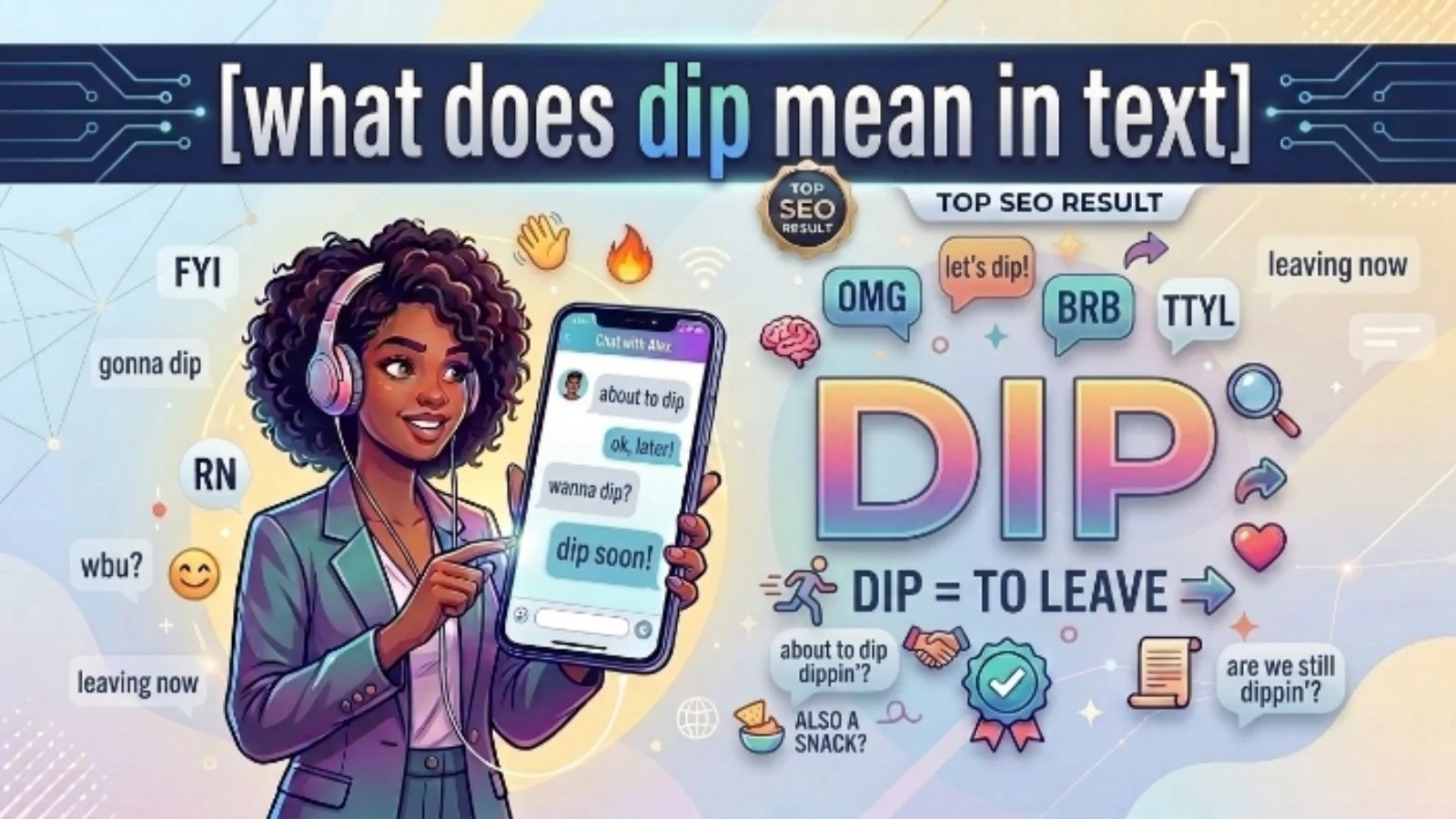
Have you ever received a text that says, “I’m gonna dip,” and wondered what the person actually meant?
In texting and online conversations, “dip” usually means to leave or go away, especially when someone wants to leave a place or end a conversation. It is casual slang and is commonly used among friends.
For example, if someone texts, “It’s getting late, I’m gonna dip,” they simply mean, “I’m going to leave now.”
But “dip” can have slightly different meanings depending on the situation. Sometimes it can mean leaving suddenly, getting away from an uncomfortable situation, or ending a conversation without much explanation.
Let’s break down exactly what “dip” means in text, how people use it, and how you can respond when someone sends it to you.
What Does Dip Mean in Text?
In text messages, “dip” usually means “to leave” or “to go.”
It is informal slang used when someone is about to leave a place, conversation, event, or situation.
Dip = Leave / Go away / Head out
For example:
“I gotta dip. Talk to you later.”
This means:
“I have to leave. Talk to you later.”
The word is generally friendly and casual. It does not automatically mean the person is upset with you.
However, the exact tone depends on the conversation.
If someone says, “I’m gonna dip,” they may simply be telling you they need to go. If they say, “I’m dipping from this conversation,” they may be expressing that they no longer want to continue talking.
What Is the Simple Meaning of Dip?
The simplest meaning of “dip” in texting is “leave.”
It is similar to saying:
- I’m leaving.
- I’m heading out.
- I have to go.
- I’m out.
- I’m going now.
- See you later.
The difference is that “dip” sounds more casual and slang-like.
For example:
“I’m gonna dip.”
Means:
“I’m going to leave.”
You might see it in a group chat when someone has to leave an event, go home, stop chatting, or move on to another activity.
Where Is “Dip” Used in Texting?
“Dip” can appear across many informal online conversations.
You may see it in:
- Text messages
- Instagram DMs
- Snapchat
- TikTok comments or messages
- Discord
- Group chats
- Gaming chats
- Facebook Messenger
- Casual conversations between friends
It is especially common in relaxed conversations where people use slang and shortened expressions.
For example, a friend might message:
“Movie starts in 10. I gotta dip.”
They mean they need to leave their current location so they can get to the movie.
Another person might say:
“This party is boring. I’m about to dip.”
Here, “dip” means they are planning to leave the party.
Why Do People Use “Dip” Instead of “Leave”?
The main reason is casual communication.
When texting friends, people often prefer short, relaxed expressions instead of formal language.
Compare these:
Formal:
“I need to leave now because I have something else to do.”
Casual:
“I gotta dip.”
The second version is shorter and sounds more natural between friends.
“Dip” can also make the message sound less serious. Saying “I’m leaving” may sound neutral, while “I’m gonna dip” has a more relaxed, conversational feeling.
Examples of “Dip” in Text
Understanding real examples is one of the easiest ways to recognize slang.
Example 1: Leaving a Party
Person A: “Are you staying until the end?”
Person B: “Nah, I’m gonna dip soon.”
Person B means they plan to leave the party soon.
Example 2: Leaving Work
Person A: “You still at work?”
Person B: “Nope, I dipped an hour ago.”
Here, “dipped” means left.
Example 3: Ending a Chat
Person A: “Want to keep playing?”
Person B: “I gotta dip. I’m tired.”
The person is saying they need to leave the game or stop chatting.
Example 4: Leaving an Uncomfortable Situation
Person A: “Why did you leave so quickly?”
Person B: “Everyone started arguing, so I dipped.”
Here, “dipped” means the person left quickly to avoid the argument.
Example 5: Going Home
Person A: “Where are you?”
Person B: “I’m about to dip and head home.”
The speaker is saying they are about to leave and go home.
Example 6: Group Chat
Person A: “Anyone still online?”
Person B: “I’m dipping. Goodnight everyone.”
This simply means the person is leaving the chat or going offline.
Different Forms of “Dip”
You may see “dip” used in several grammatical forms.
“Dip”
This is the basic form.
“I might dip early tonight.”
Meaning: I might leave early tonight.
“Dipping”
This describes someone who is leaving.
“I’m dipping now.”
Meaning: I’m leaving now.
“Dipped”
This describes someone who already left.
“She dipped before we arrived.”
Meaning: She left before we arrived.
“Gonna Dip”
This is an extremely casual expression.
“I’m gonna dip.”
It means:
“I’m going to leave.”
“About to Dip”
This means someone is very close to leaving.
“I’m about to dip. Need anything?”
Meaning:
“I’m about to leave. Do you need anything?”
“Dip” vs. Similar Slang Terms
Several other slang expressions can have a similar meaning.
| Term | Meaning | Tone |
|---|---|---|
| Dip | Leave or go | Casual |
| Bounce | Leave | Very casual |
| Head out | Leave | Casual and natural |
| Peace out | Goodbye / leave | Playful |
| Dip out | Leave, often quickly | Casual |
| Bounce out | Leave | Very informal |
| Go | Leave | Neutral |
Although these words can overlap, they do not always have exactly the same feeling.
For example, “head out” is casual but widely understood, while “dip” sounds more like slang.
What Does “Dip Out” Mean in Text?
You may also see “dip out” instead of simply “dip.”
“Dip out” usually means to leave, sometimes quickly or unexpectedly.
For example:
“I’m gonna dip out before it gets too late.”
This means:
“I’m going to leave before it gets too late.”
Another example:
“He dipped out without saying goodbye.”
This suggests that he left without informing anyone.
The phrase can therefore carry a slightly stronger sense of suddenly leaving.
Does “Dip” Mean Someone Is Mad?
Not necessarily.
This is one of the biggest misunderstandings about the word.
If someone texts:
“I gotta dip.”
They probably just mean:
“I have to leave.”
There is no automatic indication that they are angry.
However, context matters.
Compare:
“I gotta dip, I have class tomorrow.”
This sounds completely normal.
With:
“Whatever. I’m dipping.”
The second message could sound annoyed, especially if it comes after an argument.
So, the word itself does not indicate anger. The surrounding conversation determines the tone.
Can “Dip” Mean Ignore Someone?
Sometimes, yes, depending on how it is used.
If someone says:
“He dipped after I asked him about the money.”
They could mean he left or disappeared instead of responding.
In this situation, “dip” may suggest avoiding a conversation or situation.
But do not automatically interpret “dip” as “ignore.” The context is important.
When Should You Use “Dip”?
“Dip” works best in casual conversations.
You can comfortably use it when talking with:
- Friends
- Close classmates
- Gaming friends
- People you regularly chat with
- Casual online communities
For example:
“I gotta dip. Catch you later.”
That sounds natural in a friendly conversation.
When You Should Avoid “Dip”
Avoid slang when communicating in situations that require professionalism.
For example, you probably should not text your manager:
“I’m gonna dip.”
Instead, say:
“I need to leave now. I’ll finish the remaining work tomorrow.”
The meaning is similar, but the second version is more appropriate for a professional setting.
How to Respond When Someone Says “Dip”
Your response depends on the situation.
If a friend says:
“I gotta dip.”
You can respond with:
- “Alright, see you later.”
- “Okay, catch you later.”
- “No worries.”
- “Alright, talk soon.”
- “Take care.”
If you want to know why they are leaving, you could ask:
“Everything okay?”
But there is usually no need to overthink it.
Someone saying “I gotta dip” does not necessarily require a serious response.
Common Misunderstandings About “Dip”
1. Thinking It Always Means Someone Is Angry
This is incorrect.
“Dip” normally just means leave.
The emotional meaning comes from the context, not the word itself.
2. Assuming It Means Ghosting
“Dip” can sometimes describe leaving without explanation, but it does not automatically mean ghosting.
If someone says:
“I gotta dip, I’ll text you later.”
They are clearly saying they are leaving temporarily.
3. Confusing It With “Dip” as Food
“Dip” also has a completely different literal meaning.
For example:
“Pass me the ranch dip.”
Here, “dip” refers to a food or sauce used for dipping.
The context makes the meaning clear.
4. Thinking It Is Always a Permanent Goodbye
Usually, “dip” does not mean someone will never return.
“I’m gonna dip” generally means I’m leaving now, not “I’m permanently disappearing.”
If someone says:
“I gotta dip. See you tomorrow.”
The meaning is obvious: they are leaving for now.
Pro Tips for Understanding “Dip”
Here are a few simple tips to help you understand the word correctly.
Look at the Whole Sentence
Do not interpret “dip” by itself.
For example:
“I’m gonna dip home.”
Clearly suggests leaving and going home.
Check the Conversation
If you were discussing plans, “dip” probably means the person is leaving the location.
If you were arguing, however, it might mean they are ending the conversation.
Pay Attention to Tone
Words surrounding “dip” can change the feeling.
Friendly:
“I gotta dip, catch you later!”
Annoyed:
“I’m done with this. I’m dipping.”
The slang is the same, but the emotional tone is different.
Remember That Slang Changes
Texting language evolves quickly. People may use “dip,” “dip out,” “bounce,” “head out,” or other expressions depending on their age, social group, and online community.
That is why context is always more reliable than a dictionary-style definition.
Is “Dip” Rude in Texting?
Usually, no.
“Dip” is generally casual rather than rude.
However, saying:
“I’m dipping.”
and immediately leaving during an important conversation could feel dismissive.
The issue is not necessarily the word itself. It is how and when you use it.
If someone is sharing something serious with you, suddenly saying “I’m dipping” could come across as insensitive.
In a normal casual conversation, though, it is perfectly fine.
Is “Dip” Commonly Used by Young People?
“Dip” is established informal slang and is widely recognizable, particularly in casual American English and online communication.
Its popularity can vary by age group, location, and social circle.
You may encounter it in texting, social media, gaming, and everyday conversations.
However, not everyone uses it. If you are unsure whether someone understands the slang, simply saying “I’m leaving” is clearer.
Quick Meaning Guide
If you see any of these phrases, here is what they usually mean:
“I gotta dip.”
= I have to leave.
“I’m gonna dip.”
= I’m going to leave.
“I’m dipping.”
= I’m leaving.
“I dipped.”
= I left.
“I dipped out.”
= I left, often quickly.
“She dipped early.”
= She left early.
“Let’s dip.”
= Let’s leave.
Final Thoughts
So, what does dip mean in text? In most casual conversations, it simply means to leave or go away.
When someone says, “I’m gonna dip,” they are usually telling you that they are about to leave. It does not automatically mean they are angry, upset, or ignoring you.
The word can also appear as “dipping,” “dipped,” or “dip out,” with slightly different shades of meaning. Context is the key to understanding the exact intention.
If a friend texts, “I gotta dip, talk later,” there is probably nothing mysterious behind it. They simply have to go.
Once you know this slang meaning, you will recognize “dip” immediately in texts, group chats, gaming conversations, and social media messages.
Frequently Asked Questions
1. What does “dip” mean in a text message?
In a text message, “dip” usually means to leave or go away. For example, “I gotta dip” means “I have to leave.”
2. What does “I’m gonna dip” mean?
“I’m gonna dip” is casual slang for “I’m going to leave.” It is commonly used between friends or in informal online conversations.
3. Does “dip” mean goodbye?
It can function like an informal way of saying goodbye because it often means someone is leaving. However, its literal slang meaning is closer to “leave” or “go.”
4. What does “dip out” mean in texting?
“Dip out” usually means to leave, sometimes quickly or without much notice. For example, “I dipped out early” means “I left early.”