Creating a living space that reflects your personality and meets your practical needs is one of the most rewarding design challenges you can undertake. Most people spend a significant portion of their lives at home, yet many settle for generic, mass-produced interiors that fail to capture their individuality. The difference between a forgettable room and a truly distinctive one often comes down to intentional choices and a willingness to move beyond standard decorating formulas. This guide walks you through the essential steps to transform your living space into something uniquely yours.
1. Define Your Personal Style Foundation
Before purchasing furniture or selecting colors, take time to identify what style genuinely appeals to you. Spend a week or two collecting images from magazines, social media, and design websites that capture your eye. Look for patterns in these images: do you gravitate toward minimalist spaces with clean lines, or do you prefer maximalist rooms filled with texture and pattern? Do warm, earthy tones make you feel at home, or do you thrive in cool, neutral environments? Understanding your authentic preferences is far more valuable than following trending design movements.
Your personal style foundation should reflect how you actually live, not an idealized version of yourself. If you have children and pets, a pristine white sofa probably won’t work for your daily reality. If you love cooking and entertaining, an open kitchen layout might be essential to your happiness, even if it’s less fashionable than a closed galley kitchen. Once you commit to honoring your real lifestyle and tastes, design decisions become much simpler because they’re guided by genuine needs rather than external expectations.
2. Invest in Quality Foundational Pieces
Every distinctive living space begins with a few high-quality anchor pieces that define the room’s character and functionality. These might include a well-constructed sofa, a dining table that accommodates your entertaining style, or a bed frame that provides both comfort and visual impact. Unlike trendy accessories that you’ll replace frequently, foundational pieces deserve your budget because they form the backbone of your room for years to come. Choosing quality over quantity at this stage means you won’t waste money replacing worn items every few years.
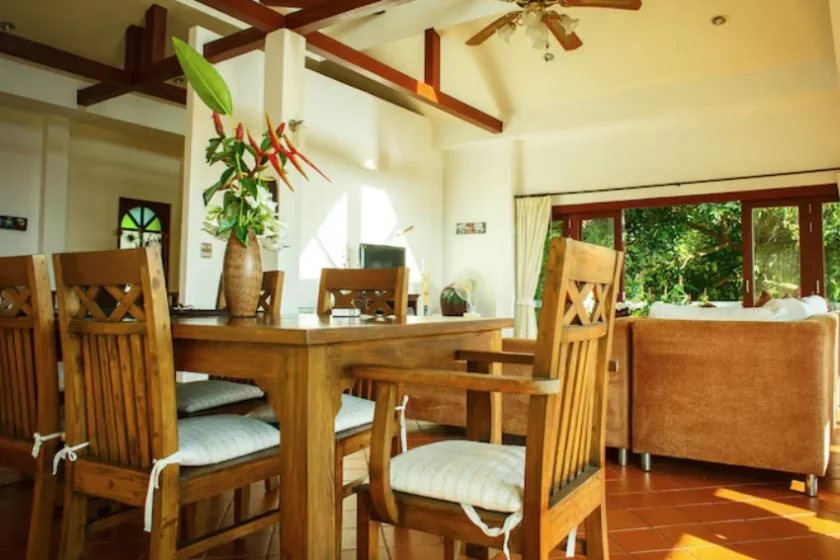
When selecting foundational pieces, prioritize function and durability alongside aesthetic appeal. A solid wood table will outlast a particle board alternative by decades, and a sofa with hardwood frames and quality upholstery will maintain its shape and comfort much longer than cheaper options. These investment pieces don’t need to be expensive designer items, but they should be constructed thoughtfully with materials that age well. Once you have these anchors in place, you can add personality and adapt your space affordably through accessories and secondary furniture.
3. Layer Textures and Materials Strategically
A one-of-a-kind living space gains depth and visual interest through the thoughtful combination of different textures and materials. Instead of matching all your furnishings to a single aesthetic or material family, try mixing wood, metal, fabric, leather, and stone in ways that feel intentional rather than random. For example, you might pair a reclaimed wood dining table with a sleek metal light fixture and upholstered chairs in a natural linen. This combination tells a story about your design preferences and creates visual rhythm that keeps the space engaging.
Layering textures also makes a space feel more collected and personal, as if you’ve gathered meaningful pieces over time rather than ordering an entire room from a single furniture store. Consider adding a woven rug over hardwood floors, linen curtains alongside wooden shutters, or metal shelving displaying both leather-bound books and ceramic objects. Each texture you introduce should serve both an aesthetic and functional purpose. The interplay between rough, smooth, soft, and hard surfaces creates a living environment that’s not only beautiful but also genuinely pleasant to inhabit.
Homeowners planning a property that integrates with its natural surroundings can draw real inspiration from how deliberate material choices connect interior spaces to the landscape outside. The approach behind a custom lake house design by AM Architects demonstrates how responding to a waterfront setting through thoughtful material selection can produce spaces that feel both purposeful and deeply tied to their environment. Applying that same thinking to any home, regardless of its location, helps create interiors that feel grounded and cohesive rather than assembled at random.
4. Incorporate Personal Collections and Meaningful Objects
What truly sets a living space apart is the inclusion of objects that hold personal significance. These might be inherited furniture from family members, artwork from artists you admire, collections you’ve gathered through hobbies or travel, or handmade items from people you love. Rather than hiding these meaningful pieces away, display them prominently as part of your room’s design story. A gallery wall of personal photography, a bookshelf organized by your reading interests, or open shelving showcasing collected ceramics immediately communicates that this space belongs to a specific person.
Displaying personal collections requires thoughtful arrangement but doesn’t need to follow strict design rules. Group similar items by color, size, or theme in ways that feel organized yet organic. Leave negative space around collections so they feel curated rather than cluttered. When you surround yourself with objects that have genuine meaning, your living space becomes a reflection of your values, memories, and interests. This authenticity is something that no amount of money spent on trendy furniture can replicate.
5. Create Functional Zones Within Your Space
A distinctive living space anticipates how you actually use your home and designs zones accordingly. If you work from home, dedicate a specific area with appropriate lighting and furniture rather than sprawling work materials across your coffee table. If you enjoy reading, create a comfortable corner with good natural light, a quality chair, and a small table for your book and beverage. If cooking and entertaining are central to your life, ensure your kitchen layout supports gathering and interaction. These functional zones make your space more livable while also reinforcing your personal priorities.
Functional zones don’t require expensive architectural changes or completely separate rooms. Simple strategies like positioning furniture to define areas, using area rugs to anchor zones, or installing floating shelves to delineate spaces can work effectively. A room that’s thoughtfully organized around your actual activities feels infinitely more comfortable and personal than a room organized purely for its appearance. When visitors enter a space that clearly works for the people living there, they immediately sense that difference.
Conclusion
Creating a one-of-a-kind living space is an ongoing process rather than a single project you complete and forget. By starting with your authentic personal style, investing in quality foundational pieces, layering textures thoughtfully, displaying meaningful objects, and designing functional zones, you build a home that genuinely reflects who you are. Your living space should work hard for you on a practical level while also bringing you joy and comfort every single day. The most distinctive rooms are those designed with intention, self-awareness, and a commitment to honoring both your aesthetic preferences and the way you actually live. Take the time to make intentional choices, and you’ll end up with a space that no one else could replicate.
Read More : How to Create a Stylish and Modern Home Without Spending Too Much