You’re scrolling through messages, Snapchat, Instagram DMs, or maybe even gaming chats, and suddenly someone replies with “MBD.”
You pause for a second. What does that even mean? Is it an apology? An insult? Or just random typing?
Don’t worry—you’re not alone. Internet slang evolves fast, and “MBD” is one of those short forms that can feel confusing until you understand the context.
In this guide, you’ll learn exactly what MBD means in text, how people use it, real-life examples, and when you should (or shouldn’t) use it yourself.
What Does MBD Mean in Text?
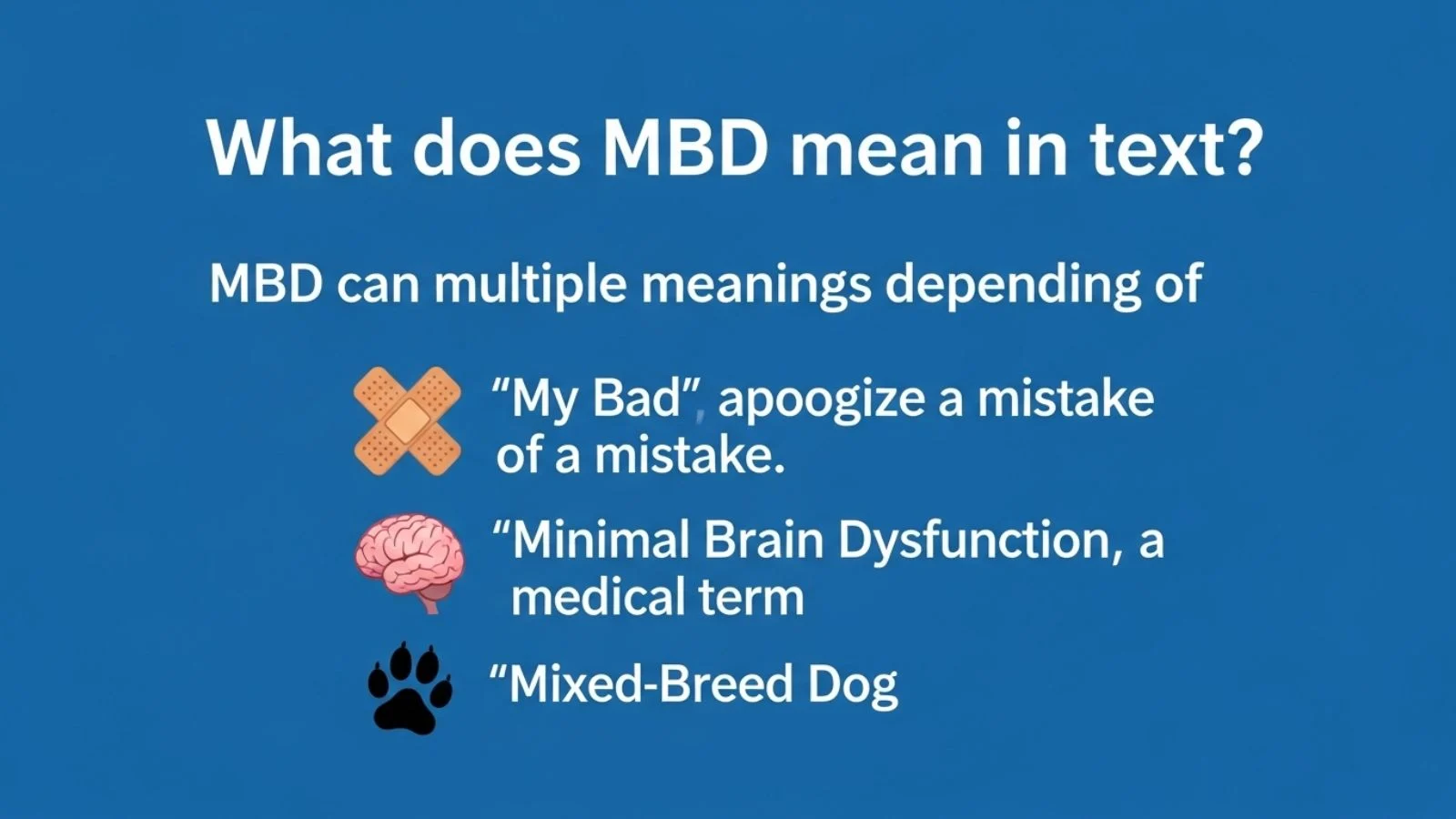
In most everyday online conversations, MBD means “My Bad.”
It is a casual way of saying:
- I made a mistake
- I’m sorry
- I didn’t mean that
- I take responsibility
So when someone types “MBD,” they are usually admitting a small mistake in a relaxed, informal way.
For example:
- “MBD, I sent the wrong file.”
- “MBD bro, I forgot to reply.”
It’s quick, simple, and widely used in casual digital communication.
Simple Meaning of MBD (Easy Explanation)
If we break it down in the simplest way:
MBD = My Bad = I messed up
It is not a formal apology. Instead, it is a friendly and light way of saying sorry without sounding too serious.
Think of it like this:
- Formal: “I sincerely apologize for the mistake.”
- Casual: “MBD, my fault.”
That’s the tone difference.
Where Is MBD Used?
You’ll mostly see MBD in informal online spaces, especially where people chat quickly and casually.
Common places include:
1. Social Media Chats
- Instagram DMs
- Snapchat messages
- TikTok comments
2. Gaming Chats
- Discord servers
- Online multiplayer games
- Team voice/text chats
3. Personal Text Messages
- Friends texting each other
- Group chats
- Casual conversations
4. Online Communities
- Reddit threads
- Meme pages
- Fan groups
It is rarely used in formal emails, school assignments, or professional communication.
Why Do People Use MBD?
People prefer short slang like MBD for a few simple reasons:
1. Speed of typing
Typing “MBD” is much faster than “my bad” or “I apologize.”
2. Casual tone
It feels relaxed and friendly, not too serious.
3. Fits online culture
Internet communication is fast-paced, so abbreviations are common.
4. Reduces awkwardness
Sometimes saying “sorry” can feel heavy. “MBD” makes it lighter.
Real-Life Examples of MBD in Text
Let’s understand how it appears in real conversations.
Example 1: Simple mistake
A: “You sent me the wrong address.”
B: “MBD, I’ll send the correct one now.”
Example 2: Forgetting something
A: “You didn’t join the call yesterday.”
B: “MBD, I totally forgot.”
Example 3: Gaming situation
Player 1: “Why did you attack the wrong target?”
Player 2: “MBD, I clicked too fast.”
Example 4: Friend conversation
A: “You ignored my message.”
B: “MBD, I was busy.”
In all these cases, it simply means “my mistake.”
MBD vs Similar Terms
Here’s how MBD compares to similar texting slang:
| Term | Meaning | Tone | Usage |
|---|---|---|---|
| MBD | My bad | Casual | Quick apology |
| MB | My bad | Casual | Same meaning, even shorter |
| SRY | Sorry | Neutral | Slightly more serious |
| Oops | Mistake happened | Playful | Light errors |
| My bad | Full form | Casual | More readable in serious chats |
Key difference:
- MBD and MB = very informal, fast texting
- Sorry = more respectful or serious
- Oops = playful mistake
When Should You Use MBD?
You should use MBD only in casual situations, such as:
- Talking with friends
- Gaming chats
- Informal social media replies
- Group chats with people you know well
It works best when:
- The mistake is small
- The situation is not serious
- You want a relaxed tone
Example:
- You forgot to reply → “MBD, I was busy.”
When You Should NOT Use MBD
Even though it’s useful, there are times when you should avoid it:
1. Professional communication
Avoid using it in:
- Emails
- Work chats
- Job communication
2. Serious mistakes
If the situation is important, “MBD” may feel too casual.
3. Respectful conversations
When talking to elders, teachers, or formal contacts.
Instead, use:
- “Sorry”
- “I apologize”
- “My apologies”
Common Misunderstandings About MBD
Many people misinterpret this slang. Let’s clear it up:
Misunderstanding 1: It is aggressive
Some think “MBD” sounds rude. In reality, it is usually casual, not offensive.
Misunderstanding 2: It has only one meaning
In rare cases, acronyms can change meaning depending on context, but in texting, it almost always means “my bad.”
Misunderstanding 3: It is professional slang
It is not used in formal business communication.
Pro Tips for Using MBD Correctly
If you want to use MBD like a native texter, keep these tips in mind:
- Use it only with people you know well
- Don’t use it in serious situations
- Pair it with a fix or solution when needed
- Example: “MBD, I’ll fix it now.”
- Don’t overuse it in every message
- Understand tone before sending
Good communication is not just about slang—it’s about timing and context.
Final Thoughts
So, what does MBD mean in text?
In simple terms, MBD means “my bad,” a casual way of saying you made a mistake.
It’s short, fast, and commonly used in online conversations where people prefer relaxed communication. While it’s useful in friendly chats, it should be avoided in formal or serious situations.
Understanding slang like this helps you stay confident in digital conversations and avoid confusion when chatting online.
FAQ: What Does MBD Mean in Text?
1. What does MBD stand for in texting?
MBD stands for “my bad,” which means admitting a small mistake in a casual way.
2. Is MBD the same as sorry?
Not exactly. “MBD” is more informal and lighter than “sorry.”
3. Can I use MBD in professional messages?
No, it is best to avoid it in professional or formal communication.
4. Is MBD rude?
No, it is not rude. It is just very casual slang used among friends.