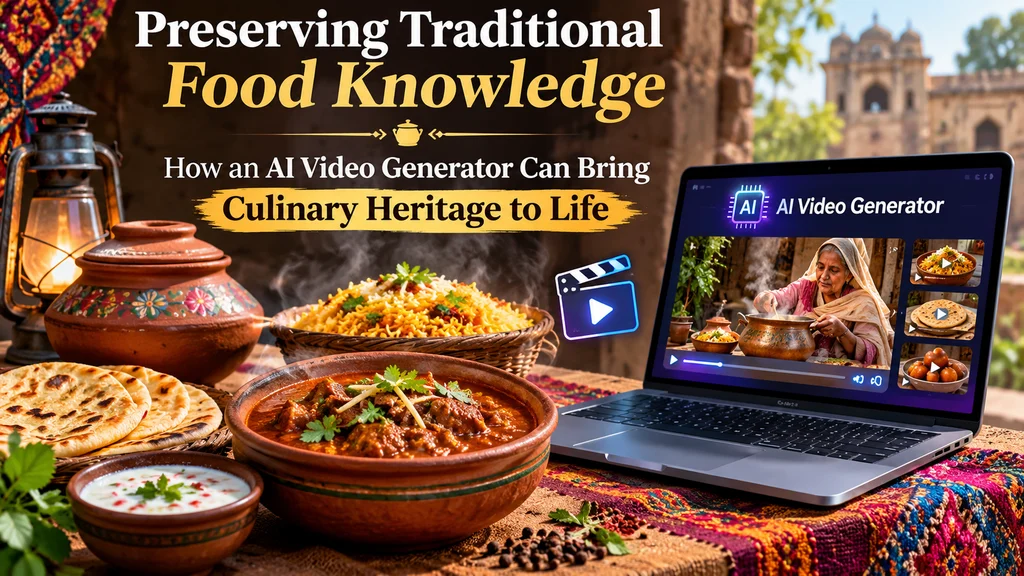
Traditional food carries more than flavor. A family recipe may preserve memories of celebrations, migration, seasonal harvests, or techniques learned from an older generation. In many communities, cooking knowledge is passed down through observation rather than written instructions. When the people who hold that knowledge stop practicing or teaching it, important details can gradually disappear. An ai video generator offers one way to help document and share culinary traditions. It can turn written descriptions, recorded interviews, and reference images into visual storytelling that introduces viewers to ingredients, preparation methods, and the cultural meaning behind a dish. Used thoughtfully, it can support food education without replacing the people whose knowledge gives these traditions their value.
Begin With the Story Behind the Dish
A useful food heritage video does not need to begin with a list of ingredients. It can start with the place, occasion, or memory connected to the recipe. A dish might be prepared for a harvest celebration, served during a family gathering, or associated with a particular season. These details give viewers a reason to care about the cooking process. A short introduction could show a traditional market, a family kitchen, or the landscape where an important ingredient is grown. The narration can explain why the dish matters to the people who prepare it.
Dreamina can help creators explore visual scenes from a written description, especially when they are planning a documentary-style introduction. Any generated scene representing a real community should be checked carefully so it does not introduce inaccurate clothing, customs, settings, or cultural details.
Capture the Knowledge That Instructions Often Miss
Written recipes usually focus on quantities and steps, but experienced cooks rely on many details that are difficult to measure. They may recognize when dough has the right texture, judge heat by sound, or know that a mixture is ready from its appearance. A video can make these observations easier to communicate. For example, a cooking demonstration might show how a dough changes during kneading, how spices are prepared before cooking, or how a cook checks the consistency of a sauce.
The most valuable reference material comes from the people who actually prepare the dish. Interviews, demonstrations, and permission-based recordings can provide authentic details for the video. Generated visuals may support the explanation, but they should not be presented as genuine footage of a person performing a traditional technique.
Build the Video Around the Rhythm of Preparation
Some traditional dishes involve several stages spread across hours or even days. Fermentation, drying, soaking, slow cooking, and resting periods may all contribute to the final result. Showing every minute would make a video unnecessarily long, while skipping too much could leave viewers confused. A useful approach is to organize the story around important changes. First, introduce the ingredients. Next, explain preparation and cooking. Finally, show how the finished dish is served and when it is traditionally enjoyed.
An AI video generator can help create transitions between these stages or illustrate a process that is difficult to capture in a single recording. The sequence should still follow the actual recipe. If a step has a particular order or requires a specific waiting period, the visual explanation should not suggest otherwise.
Make Regional Differences Part of the Story
Traditional recipes are rarely identical everywhere. Families and regions may use different ingredients, cooking equipment, seasonings, or preparation methods. Even people who share the same dish name may have different versions. Rather than treating one recipe as the only authentic version, a video can introduce these variations respectfully. For instance, it might compare two regional approaches to preparing a similar dish, explaining how local ingredients or household customs influence the result.
Creators should consult knowledgeable cooks before making cultural claims. They should also avoid combining unrelated traditions simply because the resulting visuals appear attractive. Accurate context is more valuable than a polished but misleading representation.
Create Learning Material for Different Audiences
Culinary heritage videos can serve more than one purpose. A school may use them to introduce students to local history, a cultural organization may include them in an online archive, and a cooking group may share them with people who want to learn a particular technique. The format can be adjusted to suit each audience. A short social video might focus on one memorable cooking step, while a longer educational feature could include interviews, ingredient explanations, and the history of the dish.
Clear captions and straightforward narration can make the content easier to follow. Where appropriate, subtitles in additional languages can help younger family members or international audiences understand the story. The original language and important culinary terms should be preserved when they carry cultural meaning.
Protect the People and Traditions Being Documented
Sharing culinary knowledge requires more than obtaining an interesting recipe. Some preparations may be private family practices, while others may belong to a particular community or cultural group. Creators should ask permission before recording people, reproducing family material, or publishing details that participants consider sensitive. Credit cooks and knowledge holders when they want recognition. Give them an opportunity to review important descriptions, especially when the video explains the origin or significance of a tradition.
Generated visuals also need careful review. An invented kitchen scene, inaccurate utensil, or unsuitable ingredient could change how viewers understand a cultural practice. Treat visual generation as a production aid, not as an authority on culinary history.
Final Thoughts
Traditional food knowledge deserves to be shared with care because it connects recipes with memories, places, and generations of experience. An AI video generator can help turn interviews, demonstrations, and written material into engaging visual stories that make culinary heritage easier to explore. The strongest videos combine creative presentation with authentic knowledge. By involving experienced cooks, checking cultural details, and respecting permission and attribution, creators can use modern visual tools to support the preservation of food traditions without losing sight of the people who keep them alive.
Frequently Asked Questions
Can an AI video generator recreate an old family recipe?
It can help illustrate the preparation process, but the recipe itself should come from reliable family notes, demonstrations, or interviews. Generated scenes should not be treated as proof of how the dish was historically prepared.
How can creators make traditional cooking videos more authentic?
Work with people who know the recipe, record their explanations with permission, verify ingredients and techniques, and review cultural details before publishing. Avoid inventing customs to make the story more dramatic.
Are these videos useful for preserving endangered food traditions?
They can contribute to documentation and awareness by recording knowledge and making it accessible. However, videos work best alongside living practices, community participation, written records, and opportunities for younger people to learn directly.
Should regional recipe variations be included in one video?
They can be included when the differences are relevant and accurately explained. Identifying each variation by its region or community helps avoid presenting distinct traditions as interchangeable.
Can culinary heritage videos be used in schools and cultural archives?
Yes. They can support lessons about local history, agriculture, migration, and cultural identity. For archival use, creators should preserve source information, obtain appropriate permissions, and clearly distinguish original recordings from generated illustrations.
Read more: Smart Travel Planning Tips for a Comfortable and Stress-Free Journey