Long before refrigerators, freezers, and vacuum-sealed packaging became common, people had to find reliable ways to prevent food from spoiling. One of the most successful methods was fermentation. From jars of vegetables stored through winter to cultured dairy and slowly fermented grains, communities around the world discovered that microorganisms could help transform fresh ingredients into foods that lasted longer and often tasted even better.
Today, fermentation is experiencing a revival. Home cooks, chefs, gardeners, and food enthusiasts are rediscovering techniques that have existed for centuries. What once served primarily as a survival strategy has become a practical way to reduce waste, experiment with flavor, and reconnect with traditional food preparation.
What Is Fermentation?
Fermentation is a natural process in which microorganisms such as bacteria or yeast convert components of food, particularly sugars, into substances such as acids, gases, or alcohol.
In vegetable fermentation, beneficial bacteria often convert naturally occurring sugars into lactic acid. The increasingly acidic environment helps discourage many unwanted microorganisms while creating the recognizable tangy flavor associated with fermented vegetables.
Other forms of fermentation work differently. Yeast plays an important role in bread, beer, wine, and several traditional beverages, while specialized cultures are responsible for foods such as yogurt and certain cheeses.
The remarkable part is that people successfully practiced fermentation for generations before anyone understood the microorganisms involved.
Preservation Before Refrigeration
Historically, preserving food was closely connected with survival.
A successful harvest could provide an abundance of vegetables for several weeks, but fresh produce would eventually spoil. Milk had an even shorter useful life, while grains and fruits could also deteriorate depending on storage conditions.
Fermentation helped communities extend the usefulness of seasonal ingredients.
Cabbage could become sauerkraut. Milk could become yogurt or cheese. Grapes could become wine, while grains could be transformed through sourdough or beverage fermentation.
Different regions developed their own methods based on climate, ingredients, local microbes, and culinary traditions.
As a result, fermentation became more than a preservation technique. It became part of cultural identity.
Why Fermentation Is Returning to Modern Kitchens
Modern households certainly do not need fermentation for survival in the same way earlier generations did. Refrigeration, freezing, canning, and commercial food distribution have dramatically changed food storage.
Yet fermentation offers advantages that modern preservation technologies do not always provide.
One major attraction is flavor.
Fermentation can transform simple ingredients into foods with acidity, depth, complexity, and aroma. A plain cabbage can develop layers of sour, savory flavor. Milk can become tangy yogurt. Flour and water can produce a sourdough starter capable of creating deeply flavored bread.
There is also increasing interest in traditional food preparation and reducing household food waste. When vegetables are abundant, fermentation can provide another way of using them rather than allowing them to spoil.
Perhaps most importantly, fermentation encourages a slower relationship with food. Instead of expecting instant results, cooks observe ingredients changing over hours, days, or weeks.
The Simplicity of Vegetable Fermentation
Vegetable fermentation is often one of the most approachable forms of fermentation for home cooks.
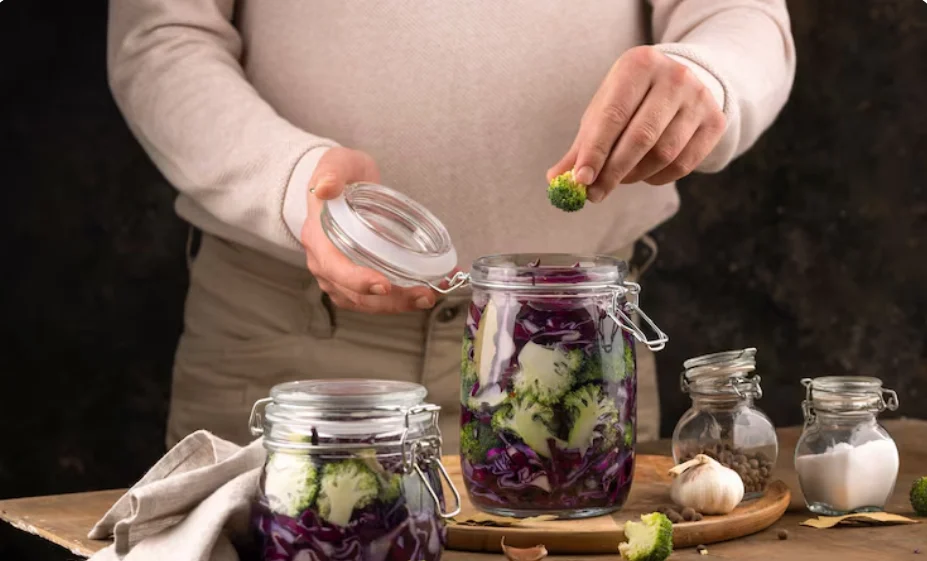
The basic idea is surprisingly simple: vegetables are combined with an appropriate amount of salt and kept under conditions that encourage desirable fermentation.
Salt performs several important functions. It helps draw moisture from vegetables, influences texture, and creates conditions that favor certain microorganisms over others.
Cabbage is a classic example.
When shredded cabbage is mixed with salt and massaged, moisture begins leaving the vegetable. Eventually, enough liquid may appear to create a natural brine.
The cabbage is then packed tightly into a suitable container and kept submerged beneath the brine during fermentation.
Over time, the flavor gradually changes from fresh and slightly salty to noticeably tart.
Beyond Sauerkraut
Sauerkraut may be one of the best-known examples, but the possibilities extend far beyond cabbage.
Carrots, radishes, cauliflower, cucumbers, peppers, and various other vegetables can be incorporated into fermented recipes.
Spices and aromatics can add additional character. Garlic, ginger, chili, herbs, peppercorns, and other seasonings allow cooks to create distinct combinations.
Traditional fermented foods around the world demonstrate just how diverse these methods can become.
Korean kimchi incorporates vegetables with seasonings that may include chili, garlic, ginger, and other ingredients. Fermented cucumber preparations appear in numerous cuisines. Various cultures also ferment roots, grains, legumes, seafood, and dairy products.
These traditions remind us that fermentation is not a single recipe. It is an entire family of techniques.
Sourdough: Fermentation in the Bread Basket
Another ancient practice experiencing renewed popularity is sourdough baking.
Traditional sourdough relies on a starter containing microorganisms that ferment flour and water. Instead of relying entirely on commercially produced baker’s yeast, the starter contributes fermentation activity and characteristic flavor.
Maintaining a starter requires consistency. It must be refreshed periodically with flour and water so the microbial community remains active.
For many home bakers, sourdough becomes more than a method for making bread. It becomes an ongoing kitchen project.
The process rewards observation.
Temperature, hydration, flour choice, timing, and starter activity can all affect the final loaf. Through repeated baking, people gradually learn how fermentation behaves in their own kitchens.
Fermented Dairy Traditions
Milk has also been transformed through fermentation for thousands of years.
Yogurt is one of the most familiar examples. Specific bacterial cultures convert lactose into lactic acid, causing milk to thicken while developing a distinctive tart flavor.
Traditional fermented dairy foods vary greatly between regions. Some are drinkable, others spoonable, and some eventually become cheeses through additional processing.
Before refrigeration, fermentation provided communities with practical ways of extending the usefulness of fresh milk.
Today, preparing fermented dairy products at home can offer an opportunity to understand how a highly perishable ingredient can be transformed through controlled microbial activity.
Flavor Is Part of the Preservation Story
Modern discussions about preservation often focus on shelf life, but traditional fermentation was equally important for developing flavor.
Fermentation creates tastes that cannot simply be reproduced by storing fresh ingredients.
Acidity is only one part of the transformation. Depending on the food and process, fermentation can create savory notes, aromatic compounds, slight sweetness, carbonation, and complex textures.
This is why fermented ingredients appear not only as preserved foods but also as flavor-building components.
A small amount of fermented vegetables can provide contrast in a rich meal. Yogurt can add acidity to sauces. Fermented pastes and condiments can introduce depth to soups, marinades, and dressings.
Preservation and culinary creativity often work together.
Fermentation and the Fight Against Food Waste
Modern households throw away significant quantities of food, often because ingredients are purchased faster than they can be consumed.
Fermentation can sometimes provide an additional option for handling surplus produce.
Imagine having too much cabbage, carrots, or radishes after a large grocery trip or garden harvest. Rather than trying to eat everything immediately, some of the produce might be incorporated into an appropriate fermentation recipe.
This does not mean fermentation can rescue spoiled food. Ingredients used for preservation should begin in suitable condition.
Instead, fermentation works best as proactive planning.
When cooks recognize that they have more fresh produce than they can reasonably use, preservation can become part of their kitchen routine.
The Importance of Cleanliness and Food Safety
Fermentation may be ancient, but that does not mean food safety should be approached casually.
Clean equipment, reliable recipes, proper ingredient ratios, appropriate temperatures, and correct storage procedures all matter.
Containers should be properly cleaned. Recipes should come from reputable food safety or preservation sources, particularly when someone is new to fermentation.
Maintaining appropriate conditions is especially important because not every microbial change in food is desirable.
Home cooks should learn the normal appearance, aroma, and texture expected from the fermentation they are preparing. When something clearly seems wrong or safety is uncertain, guessing is not a good strategy.
Traditional knowledge becomes most useful when combined with modern understanding of food safety.
Starting With Small Batches
Beginners often imagine shelves filled with dozens of bubbling jars.
That is unnecessary.
Small batches are usually a much easier introduction.
One jar of fermented vegetables provides an opportunity to understand how ingredients change over several days without requiring a large investment of time or produce.
Keeping simple notes can also be useful.
Record the ingredients, salt quantity, date, approximate kitchen temperature, and observations during fermentation.
These notes make future batches easier to improve. Over time, cooks begin noticing how seasonal temperatures, vegetable varieties, ingredient sizes, and fermentation duration influence flavor.
Let Your Senses Become Part of the Process
One of the most interesting aspects of fermentation is how much it encourages observation.
Color changes.
Textures soften or become pleasantly crisp depending on the preparation.
Aromas develop.
Bubbles may appear as microorganisms become active.
Flavor evolves gradually.
Modern kitchen appliances often hide food processes behind buttons, timers, and sealed compartments. Fermentation does the opposite. It encourages people to watch transformation happen.
That direct connection with ingredients may be one reason the practice feels so satisfying.
Traditional Techniques in a Modern Kitchen
Reviving fermentation does not require abandoning modern technology.
In fact, modern tools can make traditional techniques easier to manage.
Digital kitchen scales help measure ingredients accurately. Temperature monitoring can help cooks understand environmental conditions. Specialized fermentation weights can keep vegetables submerged, while modern glass jars provide convenient containers for small batches.
Refrigeration also plays an important role after many fermented foods reach the desired level of flavor.
The goal is not necessarily to recreate a kitchen from hundreds of years ago. Instead, modern cooks can combine traditional preservation knowledge with contemporary tools and food safety practices.
Fermentation Encourages Seasonal Eating
Fermentation naturally works well with seasonal abundance.
When farmers’ markets and gardens produce large amounts of vegetables at once, preservation allows some of that harvest to continue being enjoyed later.
This creates a different relationship with seasonal food.
Instead of expecting every ingredient to remain equally available throughout the year, cooks can preserve certain flavors when ingredients are abundant.
A jar prepared during peak harvest season can later serve as a reminder of that period.
In this way, preservation becomes part of the rhythm of the kitchen.
Experimentation Comes After Understanding the Basics
Creative experimentation is one of the most enjoyable parts of fermentation, but beginners benefit from learning established methods first.
Once the fundamentals are understood, recipes can gradually be adapted.
Different spice combinations may be explored. Several vegetables can be combined. Fermentation duration can sometimes be adjusted according to desired flavor.
However, safety-critical elements should not be changed casually.
Reliable preservation depends on understanding which parts of a recipe can be customized and which exist for technical or safety reasons.
Creativity works best when built on knowledge.
A Connection Between Past and Present
Fermentation is unusual because it connects some of humanity’s oldest food traditions with many modern culinary interests.
It satisfies the desire for sustainability, stronger flavors, homemade foods, reduced waste, and hands-on cooking.
At the same time, every jar of fermented vegetables or bowl of cultured dairy echoes methods used long before electricity entered the kitchen.
Earlier generations developed preservation techniques because they had to. Modern cooks often return to them because they discover something valuable that convenience cannot entirely replace.
The process requires patience, observation, and respect for ingredients.
Those qualities feel surprisingly relevant in kitchens dominated by speed.
Final Thoughts
The revival of fermentation demonstrates that older food practices do not necessarily become obsolete simply because newer technologies appear.
Refrigerators may have reduced the necessity of fermenting food for survival, but they never replaced the distinctive flavors, cultural traditions, and creative possibilities fermentation provides.
For modern home cooks, fermentation offers an opportunity to preserve seasonal ingredients, explore new tastes, reduce unnecessary waste, and understand food transformation at a deeper level.
You do not need a cellar full of barrels or generations of family experience to begin. A reliable recipe, quality ingredients, clean equipment, and a willingness to observe can be enough to open the door.
The ancient preservation jar has returned to the modern countertop—and it still has plenty to teach us.
Read More : The Emergency Fund Myth: Rethinking Safety Nets in Uncertain Times