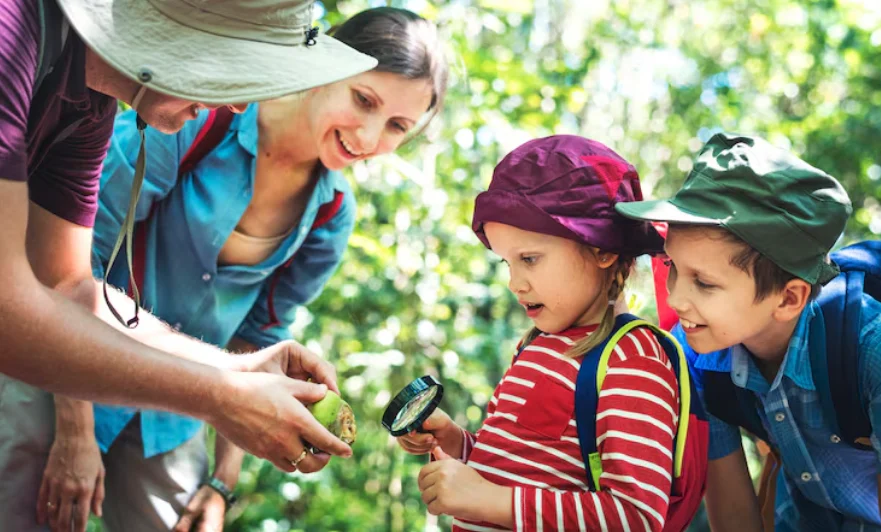
For generations, education has largely been associated with desks, whiteboards, textbooks, and four classroom walls. Yet an older style of learning is steadily returning to schools around the world: taking lessons outdoors.
Outdoor classrooms are becoming more common as educators look for new ways to make learning engaging, practical, and connected to the real world. From school gardens and woodland learning spaces to shaded courtyards and local parks, nature is increasingly being used as an extension of the classroom.
The idea is not simply to move traditional lessons outside. Outdoor education encourages students to observe, explore, experiment, collaborate, and learn directly from their surroundings. As schools place greater emphasis on student wellbeing, creativity, and experiential learning, outdoor classrooms are once again gaining attention.
What Is an Outdoor Classroom?
An outdoor classroom is any natural or open-air space intentionally used for teaching and learning. It does not necessarily require a large forest, expensive equipment, or a specially designed campus.
A school garden, grassy field, courtyard, playground, nearby park, or shaded seating area can all become effective learning environments.
Teachers may use these spaces for traditional subjects such as mathematics, science, literature, art, geography, and environmental studies. The difference is that students can interact directly with the environment instead of learning only through books or screens.
For example, students studying plant biology can examine real leaves and flowers. Mathematics lessons can involve measuring trees, calculating distances, or collecting data. Creative writing students may describe the sounds, smells, colors, and movement they observe around them.
The environment itself becomes part of the lesson.
Moving Beyond the Traditional Classroom
Traditional classrooms provide structure and consistency, but they are not always the ideal setting for every type of learner or lesson.
Students often spend long periods sitting indoors while concentrating on screens, worksheets, and lectures. Outdoor learning introduces movement, sensory experiences, and variety into the school day.
Changing the learning environment can also make familiar subjects feel new.
A lesson about insects may seem ordinary in a textbook, but discovering insects beneath leaves or observing them in their natural environment can make the same topic much more memorable.
Outdoor classrooms therefore complement indoor education rather than replacing it. They provide teachers with another learning environment that can be used when appropriate.
Learning Through Direct Experience
One of the greatest advantages of outdoor learning is the opportunity for hands-on experiences.
Students often understand ideas more clearly when they can see, touch, measure, build, or investigate something themselves.
A science class might study ecosystems by observing insects, plants, soil, and weather conditions. Geography students might explore erosion, drainage, or landscape features. Mathematics students could estimate heights, calculate areas, or create graphs based on environmental data.
These activities transform abstract concepts into practical experiences.
Experiential learning can also encourage curiosity. Students frequently begin asking questions naturally when they encounter something unexpected.
Why are certain plants growing in one area but not another?
Why does one part of the playground stay wetter after rainfall?
Why are insects attracted to particular flowers?
Questions like these can lead to deeper investigation and independent thinking.
Outdoor Learning Can Improve Engagement
Keeping students interested is one of the ongoing challenges of education.
Outdoor classrooms can introduce novelty into the school day, helping students approach lessons with renewed attention. A change of environment may make learning feel less repetitive, particularly when activities involve exploration or problem-solving.
Students who struggle to participate during traditional classroom discussions may also become more involved when lessons include movement or practical tasks.
Instead of simply listening to information, they become active participants.
This does not mean every student will automatically concentrate better outdoors. Teachers still need clear expectations and structured activities. However, when outdoor lessons are carefully planned, they can offer a powerful way to increase participation.
Supporting Physical Activity
Children naturally need opportunities to move.
Traditional classroom routines often require students to remain seated for long periods, while outdoor lessons can allow movement to become part of the learning process.
Students may walk between observation points, collect samples, measure objects, draw maps, build structures, or participate in educational games.
Even gentle physical activity can provide a welcome break from prolonged sitting.
Outdoor classrooms can therefore support both academic learning and more active school routines without necessarily separating physical activity from education.
A Natural Setting for Creativity
Nature provides endless material for creative thinking.
A changing sky, unusual leaf pattern, bird call, flower, shadow, or weather event can become the starting point for an art project, poem, story, or discussion.
Outdoor environments are constantly changing, meaning no two lessons are exactly the same.
Students might sketch trees, create temporary artwork from natural materials, photograph patterns, write stories inspired by their surroundings, or compose descriptive passages based on sensory observations.
Because outdoor spaces contain fewer fixed visual boundaries than traditional classrooms, they can encourage imagination and experimentation.
Developing Problem-Solving Skills
Outdoor activities often introduce situations that require students to make decisions.
They may need to design a shelter from simple materials, create a route through an area, investigate why a plant is struggling, organize collected information, or complete a team challenge.
These experiences require planning, communication, flexibility, and problem-solving.
Importantly, outdoor tasks do not always have one correct solution.
Students may discover that different approaches can produce successful outcomes. Learning how to test an idea, adjust a plan, and try again is an important skill that extends far beyond school.
Encouraging Teamwork and Communication
Outdoor classrooms frequently create opportunities for collaborative learning.
Students might work in groups to conduct experiments, complete scavenger hunts, build projects, map locations, or study environmental features.
Working together requires them to share responsibilities, explain their ideas, listen to others, and make group decisions.
The informal atmosphere of outdoor learning can also help students interact with classmates in different ways than they normally would indoors.
Someone who rarely speaks during a classroom discussion might take the lead during a practical activity.
Another student might discover strengths in observation, organization, navigation, or creative problem-solving.
These experiences can help students recognize that intelligence and contribution can take many forms.
Building a Stronger Connection With Nature
Many children now spend significant amounts of time indoors and interacting with digital devices.
Outdoor classrooms provide regular opportunities to experience the natural world directly.
Students can observe seasonal changes, identify plants and animals, study weather patterns, grow food, monitor insects, or explore local ecosystems.
Repeated exposure to nature can also create a stronger understanding of environmental responsibility.
Environmental topics become more meaningful when students can see the systems they are learning about.
Instead of discussing biodiversity only as a distant concept, students may observe how plants, insects, birds, soil, and weather interact within their own school grounds.
This connection can encourage greater respect for the environment.
School Gardens as Learning Spaces
School gardens are among the most popular forms of outdoor classrooms.
They can support lessons across multiple subjects.
Students may study biology by examining plant growth, mathematics by measuring garden beds, nutrition by learning about vegetables, and environmental science by studying composting or water conservation.
Gardening also teaches patience.
Plants do not grow instantly, meaning students must observe changes over weeks or months.
They learn that consistent care produces results and that unexpected challenges such as pests, weather, or poor soil sometimes require new solutions.
The process can provide valuable lessons about responsibility and long-term thinking.
Supporting Student Wellbeing
Schools are increasingly paying attention to the relationship between education and wellbeing.
Outdoor environments can provide a different atmosphere from busy indoor classrooms. Natural light, fresh air, open spaces, and greenery may help create a calmer setting for certain activities.
Outdoor lessons can also break up long periods of screen exposure.
Technology remains an important educational tool, but balancing digital learning with real-world experiences can help create a more varied school day.
Activities such as reading beneath a tree, observing clouds, drawing plants, or discussing a story outside can provide simple changes of pace without reducing academic value.
Outdoor Classrooms and Technology Can Work Together
Outdoor learning does not require abandoning technology.
In fact, digital tools can make outdoor lessons more informative.
Students might use tablets to photograph plants, record environmental observations, identify species, create digital maps, measure sound levels, document weather conditions, or present research findings.
The key is using technology as a tool for investigation rather than allowing it to replace direct observation.
A student might photograph an unknown insect outdoors, research it later, compare findings with classmates, and create a presentation about its role in the ecosystem.
The outdoor environment provides the experience, while technology helps extend the learning.
Making Education More Memorable
People often remember experiences more clearly than information they simply read or hear.
A student may forget a paragraph describing soil layers but remember digging a small soil profile and identifying different textures.
They may forget a diagram explaining pollination but remember watching bees move between flowers.
Outdoor classrooms create opportunities for learning moments connected to real experiences.
These memories can make it easier for students to recall concepts later because the knowledge is associated with a specific place, activity, or observation.
Challenges of Outdoor Learning
Outdoor classrooms are not without difficulties.
Weather is perhaps the most obvious challenge. Extreme heat, heavy rain, strong winds, or cold conditions can make outdoor lessons uncomfortable or unsafe.
Schools may also need to consider accessibility, supervision, allergies, insects, traffic, equipment, and student behavior.
Distractions can also be greater outdoors.
A passing bird, playground activity, or unexpected noise may interrupt a lesson.
Successful outdoor education therefore requires planning.
Teachers need clear objectives, appropriate safety procedures, suitable locations, backup plans, and activities designed specifically for the environment.
The goal is not simply to move desks outside but to use the outdoor setting in a meaningful way.
Outdoor Learning Does Not Need to Be Complicated
One reason outdoor classrooms are becoming more attractive is that they can be simple.
Schools do not necessarily need expensive equipment or elaborate landscaping.
A few benches, a shaded area, portable materials, clipboards, gardens, or existing green spaces can provide useful learning environments.
Teachers can also begin with short outdoor lessons rather than redesigning entire schedules.
A 20-minute observation activity, outdoor reading session, measurement exercise, or science investigation can introduce students to outdoor learning gradually.
Over time, schools can develop spaces and activities that work best for their students.
Why Outdoor Classrooms Are Returning
Several trends are contributing to renewed interest in outdoor education.
Schools are looking for ways to increase student engagement, reduce excessive screen dependence, encourage physical movement, and support emotional wellbeing.
There is also growing interest in environmental education and practical learning.
Modern education increasingly recognizes that students need more than academic knowledge. They also need communication skills, creativity, resilience, curiosity, collaboration, and problem-solving abilities.
Outdoor classrooms naturally provide opportunities to practice many of these skills.
At the same time, outdoor learning offers something increasingly rare in highly digital environments: direct contact with the physical world.
Students can observe something happening in real time rather than watching it through a screen.
Preparing Students for the Real World
The world outside school rarely presents problems in neat textbook formats.
Real situations are often unpredictable, complex, and influenced by changing conditions.
Outdoor learning reflects this reality.
A scientific observation may produce unexpected results. A group project may require compromise. Weather may change plans. Materials may not behave as expected.
Students learn to adapt.
These experiences help develop the flexibility and practical thinking needed in many careers and everyday situations.
Learning becomes less about memorizing the correct answer and more about understanding how to investigate a problem.
The Classroom of the Future May Have Fewer Walls
Education continues to evolve as schools reconsider where and how meaningful learning happens.
Technology will remain important. Traditional classrooms will remain important too.
But increasingly, educators are recognizing that valuable lessons can happen in gardens, parks, courtyards, forests, playgrounds, and other open spaces.
Outdoor classrooms reconnect learning with observation, movement, curiosity, and experience.
They remind students that education is not limited to textbooks or screens. Mathematics exists in shapes and distances. Science exists in plants, insects, soil, and weather. Art exists in patterns and colors. Stories can begin with something as simple as a bird flying overhead.
Conclusion
The comeback of outdoor classrooms reflects a broader shift toward more flexible and experience-based education.
By taking students beyond four walls, schools can create opportunities for practical learning, physical activity, creativity, collaboration, environmental awareness, and exploration.
Outdoor education does not need to replace traditional teaching. Instead, it can expand what a classroom means.
Sometimes the most memorable lesson begins not when a teacher opens a textbook, but when a student steps outside and starts asking questions about the world around them.
Read More : The AI Tutor in Every Backpack: Personalized Learning’s Brave New Frontier