For many people, depression does not feel like sadness. It feels like a mind that will not switch off: constant worry, physical tension, a racing heart, and a sense of dread that colors every day. More than half of people with major depressive disorder also have significant anxiety symptoms, and this combination is often the hardest to treat with medication alone. At FitMind Therapeutics, adults with depression and anxiety symptoms are finding relief through a non-invasive treatment that is FDA-cleared for exactly this presentation. Exploring TMS Therapy Jacksonville FL is a useful way to understand how magnetic stimulation quiets the overactive circuits behind both the low mood and the constant unease.
Anxious Depression: When Worry and Low Mood Combine
Clinicians use the term anxious depression for major depressive disorder accompanied by prominent anxiety symptoms. People with this pattern tend to respond less well to standard antidepressants, take longer to recover, and relapse more often. The brain circuitry involved overlaps: the prefrontal regions that regulate mood also regulate the body’s alarm system, and when they are underactive, both slide at once.
The result is a person who is exhausted and wired at the same time, unable to enjoy anything yet unable to rest. Treating one half of the picture while ignoring the other rarely works.
How TMS Therapy Jacksonville FL Patients Use Magnetic Stimulation
Transcranial Magnetic Stimulation is FDA-cleared for major depressive disorder in adults and for decreasing anxiety symptoms in adults with major depressive disorder. Focused magnetic pulses are delivered to the left prefrontal cortex over 36 sessions across about six weeks, encouraging the underactive mood circuit to return to a healthier level of activity. As that circuit recovers, its regulating influence over the alarm system tends to recover with it.
There is no anesthesia or sedation, and TMS does not have the common systemic side effects of medication. The most common side effect is temporary scalp discomfort or headache. There is a rare risk of seizure, under 0.1% per patient, and clinical trials showed no adverse effects on memory or concentration.
No Sedation: Unlike anti-anxiety medications, TMS adds no drowsiness and nothing to become dependent on.
Short Sessions: Each visit may take as little as 19 minutes, and you remain awake and alert throughout.
Measured Progress: In real-world outcomes reported by NeuroStar, 83% of patients who completed treatment experienced measurable depression relief, and 62% reached full remission.
What the Course Looks Like at FitMind Therapeutics
Treatment begins with an evaluation that confirms a diagnosis of major depressive disorder, documents the anxiety symptoms, reviews the medications you have tried, and screens for contraindications such as non-removable metal in or near the head. Counseling continues throughout, and your prescriber decides whether to keep, adjust, or taper medication as mood and anxiety symptoms improve.
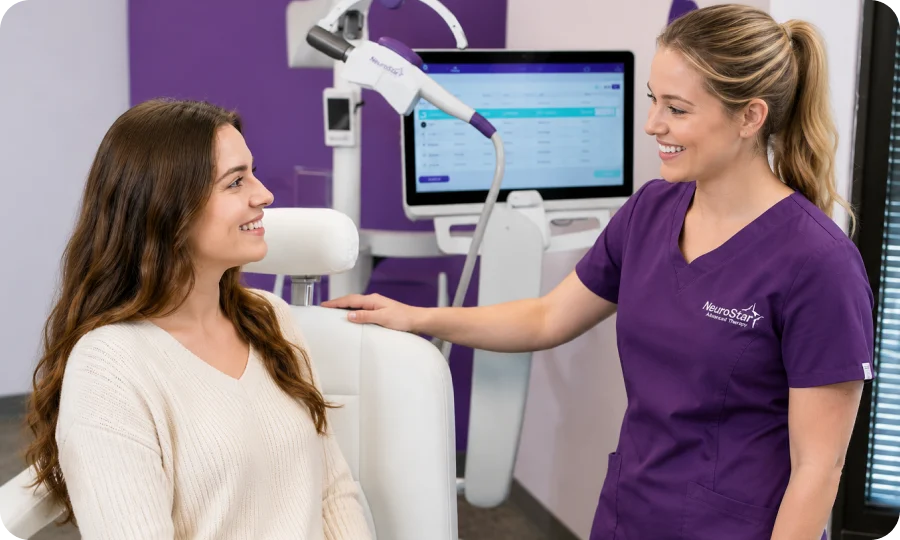
Many patients with anxiety symptoms worry about the session itself. The scalp sensation is a firm tapping, the coil makes a clicking sound, and staff explain each step before it happens. Most people find the routine reassuring by the second week. Toward the end of the course, sessions are spaced out, and follow-up visits are scheduled; clinical studies have shown response and remission lasting over a year.
Everyday Habits That Support Treatment
Anxiety symptoms in depression feed on disrupted routines. Irregular sleep, heavy caffeine, and long stretches without movement all keep the body’s alarm system primed. None of these replace clinical treatment, but steadying them during the course gives the mood circuit that TMS is helping to restore a calmer environment to settle into.
The team at FitMind Therapeutics suggests keeping a consistent wake time, getting daylight early in the day, limiting caffeine after midday, and building a short walk into the afternoon. Counseling sessions are the place to work on the thought patterns that keep worry running, and many patients find that work becomes easier as the biological weight of the depression lifts.
Frequently Asked Questions About Anxious Depression and TMS
Is TMS cleared for anxiety on its own?
TMS is FDA-cleared for major depressive disorder and for decreasing anxiety symptoms in adults who have major depressive disorder. It is not a stand-alone treatment for anxiety disorders or panic disorder.
Will the session make my anxiety worse?
Most patients find the routine calming once they know what to expect. Staff at FitMind Therapeutics adjust intensity in the early sessions and check in at every visit.
Can I keep taking anti-anxiety medication during TMS?
Usually yes, under your prescriber’s guidance. Bring a complete medication list to your evaluation.
To learn more or schedule a consultation, call FitMind Therapeutics at (904) 827-3704.