You’ve probably seen it.
A friend texts:
“Honestly, IDGAF anymore.”
And you pause.
Is it rude? Is it funny? Is it serious?
Or is someone just having a bad day?
If you’ve ever wondered what is IDGAF mean in text, you’re in the right place. Let’s break it down in the simplest, clearest way possible — so you fully understand when, why, and how people use it.
What Does IDGAF Mean in Text?
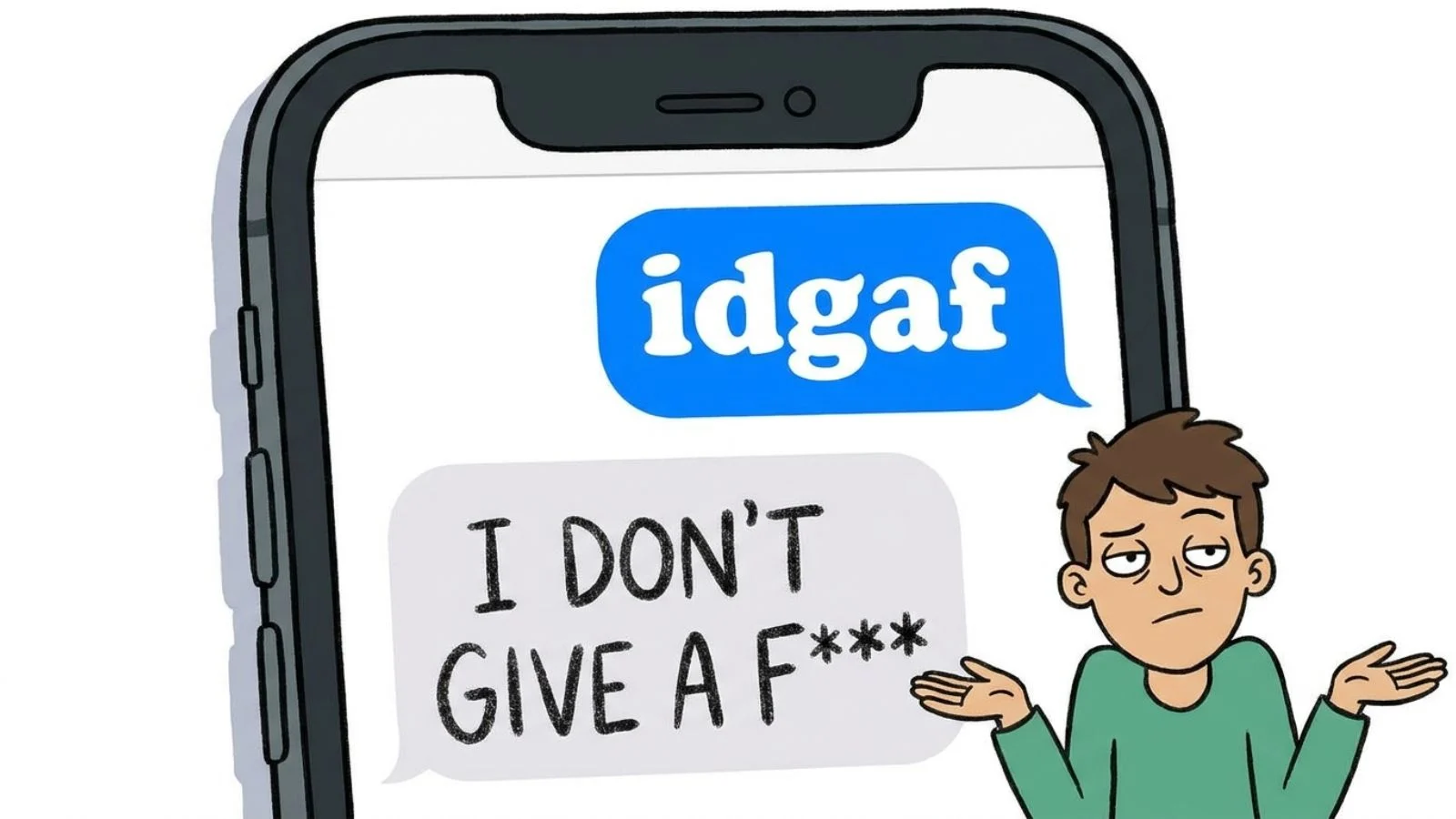
IDGAF stands for:
“I Don’t Give A F*.”**
It’s a strong slang phrase used in texting and online conversations to show complete lack of care, concern, or interest about something.
It’s bold.
It’s emotional.
And sometimes, it’s aggressive.
Simple Meaning (Easy Explanation)
In simple words:
IDGAF means you don’t care at all.
Not a little.
Not slightly.
Not maybe.
It means zero concern.
For example:
- “They’re talking about me.”
“IDGAF.”
That means: I don’t care what they say.
Where Is IDGAF Used?
You’ll mostly see IDGAF in:
- Text messages
- WhatsApp chats
- Instagram comments
- Twitter/X posts
- TikTok captions
- Snapchat conversations
- Gaming chats
- Online forums
It’s very common among teenagers and young adults. But adults use it too — especially in informal conversations.
You usually won’t see it in:
- Job emails
- School essays
- Professional messages
- Formal communication
Because it contains a swear word.
Why Do People Use IDGAF?
People use IDGAF for different emotional reasons.
1. To Show Confidence
Sometimes it’s about self-confidence.
Example:
“People don’t like my style.”
“IDGAF. I love it.”
Here, it means: I’m confident and I won’t change for others.
2. To Show Frustration
When someone is tired or annoyed:
“I tried explaining 10 times. IDGAF anymore.”
This shows emotional exhaustion.
3. To Act Cool or Bold
Some people use it to appear fearless or rebellious.
“Rules? IDGAF.”
It creates a “don’t mess with me” vibe.
4. To Protect Feelings
Sometimes people pretend they don’t care — even if they do.
“My ex is dating someone new.”
“IDGAF.”
In reality, they might care a lot.
Real-Life Examples of IDGAF (With Explanation)
Let’s look at how it appears in real conversations.
Example 1: School Situation
Friend: “Everyone laughed at your presentation.”
You: “IDGAF. I did my best.”
Meaning: You’re choosing confidence over embarrassment.
Example 2: Social Media Drama
Commenter: “Your video is cringe.”
Creator: “IDGAF.”
Meaning: They don’t care about negative opinions.
Example 3: Relationship Argument
Partner: “You’re always late.”
Reply: “IDGAF.”
Meaning: This one sounds rude and dismissive.
Example 4: Work Burnout
Coworker: “The boss is complaining again.”
You: “At this point, IDGAF.”
Meaning: Emotional exhaustion.
IDGAF vs Similar Slang Terms
Here’s how it compares to other common phrases:
| Slang Term | Meaning | Strength Level | Polite? |
|---|---|---|---|
| IDC | I Don’t Care | Mild | Yes |
| IDGAF | I Don’t Give A F*** | Strong | No |
| Whatever | Dismissive response | Medium | Sometimes |
| I’m done | Emotionally finished | Medium | Yes |
| Not my problem | Refusing responsibility | Medium | Depends |
Key difference:
- IDC = softer
- IDGAF = much stronger and contains profanity
When Should You Use IDGAF?
Use it only when:
- You are texting close friends
- The situation is casual
- You want to sound bold or expressive
- You’re comfortable using strong language
Avoid it when:
- Talking to parents
- Messaging teachers
- Emailing employers
- In professional environments
- Around people who dislike profanity
Remember: context matters.
Common Misunderstandings About IDGAF
1. It Always Means Confidence
Not true.
Sometimes it hides sadness or frustration.
2. It’s Always Funny
No.
It can sound aggressive depending on tone.
3. It’s Safe Everywhere
Definitely not.
Because it includes a swear word, it can offend people.
4. It Means You’re Strong
Sometimes it actually shows emotional shutdown.
Emotional Tone of IDGAF
The tone depends on context.
It can feel:
- Confident
- Angry
- Dismissive
- Sarcastic
- Hurt
- Rebellious
- Tired
Same word. Different emotions.
That’s why understanding tone is important.
Pro Tips for Using IDGAF Correctly
If you plan to use it, keep these things in mind:
1. Know Your Audience
Don’t use it with people who dislike swearing.
2. Check the Situation
Is this casual? Or serious?
3. Understand Tone
In text, tone is unclear. It may sound harsher than you intended.
4. Don’t Overuse It
If you say IDGAF about everything, people may think you’re careless.
5. Consider Alternatives
If you want something softer, try:
- “I’m not worried.”
- “It doesn’t matter to me.”
- “I’m okay with it.”
- “It’s fine.”
Is IDGAF Offensive?
Yes, it can be.
Because it includes the F-word, some people see it as:
- Disrespectful
- Aggressive
- Rude
- Immature
But among close friends, it may feel normal.
It depends entirely on your relationship and tone.
Is IDGAF Popular?
Very.
It became popular through:
- Social media trends
- Rap music culture
- Meme culture
- Youth texting habits
It fits modern internet communication because it’s short, strong, and expressive.
Should Teenagers Use IDGAF?
It’s common among teens.
But parents and teachers may not approve due to the swear word.
If you’re younger, it’s better to understand it — not necessarily use it publicly.
Psychological Meaning Behind IDGAF
Sometimes, saying “I don’t care” is easier than admitting:
- I’m hurt
- I’m tired
- I’m disappointed
- I feel ignored
IDGAF can be emotional armor.
It can protect pride.
But it can also block honest communication.
Final Thoughts
So, what is IDGAF mean in text?
It means “I don’t give a f*”** — a strong, bold way to say you don’t care at all.
It can show confidence.
It can show anger.
It can hide feelings.
Use it wisely.
Because words carry tone — even in text.
And sometimes, saying less says more.
Frequently Asked Questions
1. Is IDGAF rude?
Yes, it can be. It includes a swear word, so it may sound disrespectful depending on context.
2. Is IDGAF the same as IDC?
No. IDC means “I don’t care” and is softer. IDGAF is much stronger and more intense.
3. Can I use IDGAF in school or work?
No. It’s inappropriate in professional or academic settings.
4. Does IDGAF always mean someone doesn’t care?
Not always. Sometimes people say it to hide hurt feelings.