Have you ever received a message that simply says “CYA” and wondered what it actually means?
At first glance, it looks confusing. Is it short for something serious? Is it rude? Friendly? Professional?
You’re not alone.
Texting slang changes fast. New abbreviations pop up every day. And if you don’t know them, it can feel awkward or even embarrassing.
Let’s clear it up right now.
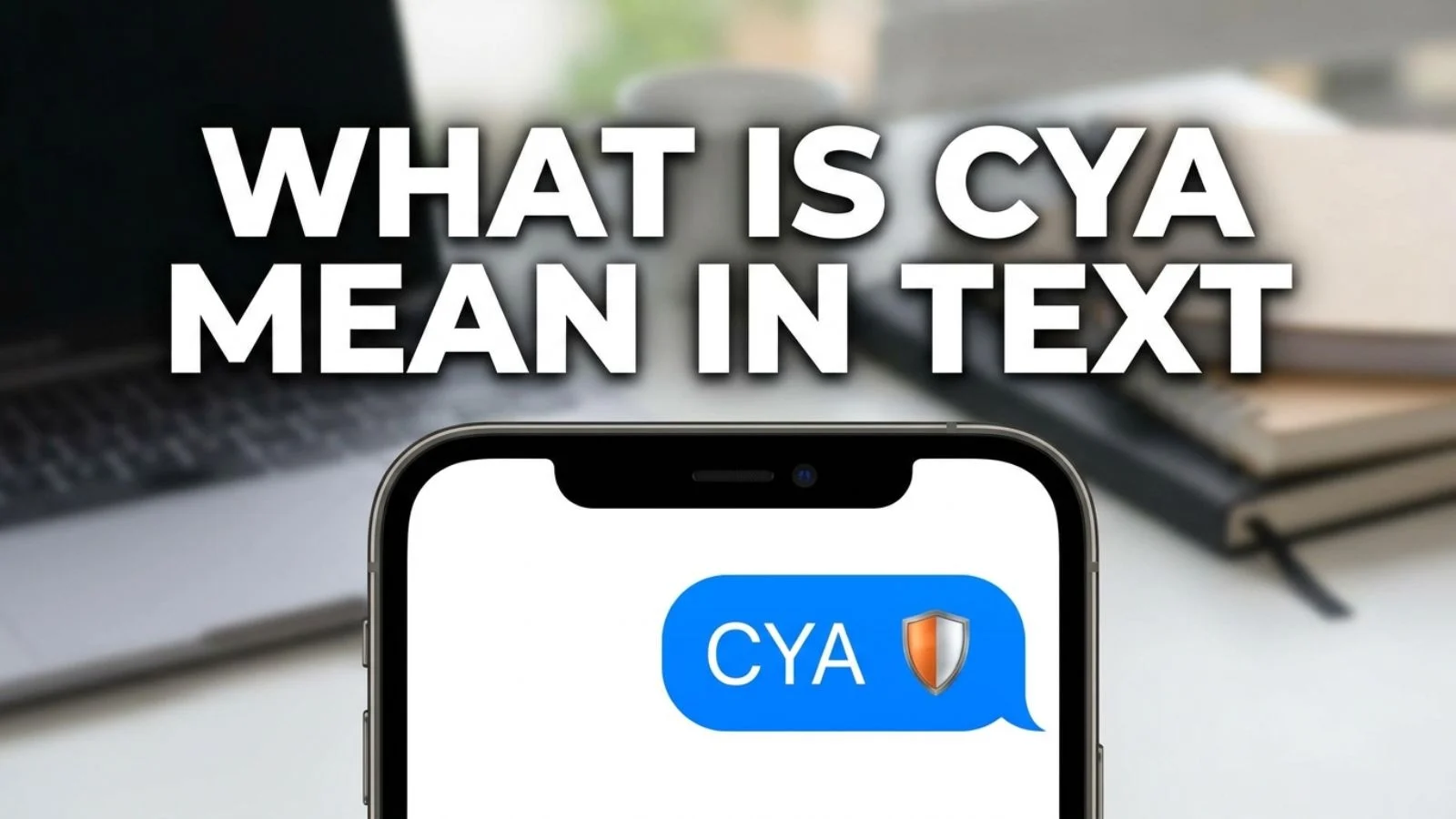
What Is CYA Mean in Text?
CYA in text means “See You.”
It is a short, casual way of saying goodbye. People use it at the end of a conversation when they plan to talk or meet again.
In simple words:
CYA = See You
It’s friendly, informal, and very common in text messages and online chats.
Simple Meaning of CYA
Think of it this way.
Instead of typing:
- “See you later.”
- “See you soon.”
- “Talk to you later.”
People just type CYA.
It saves time. It’s quick. It feels relaxed.
There is no deep or hidden meaning most of the time. It’s just a fast goodbye.
Where Is CYA Used?
You’ll mostly see CYA in casual digital conversations.
Here are the common places:
- Text messages
- WhatsApp chats
- Instagram DMs
- Snapchat
- Online gaming chats
- Facebook Messenger
- Discord
You probably won’t see it in:
- Formal emails
- Job applications
- Business reports
- Academic writing
It belongs in friendly conversations, not professional ones.
Why Do People Use CYA?
There are a few simple reasons.
1. It’s Fast
Typing “CYA” takes just three letters. That’s much faster than typing a full sentence.
In today’s fast messaging culture, speed matters.
2. It Sounds Friendly
“CYA” feels relaxed. It doesn’t sound cold or serious.
It shows you’re ending the conversation in a casual way.
3. It Matches Internet Culture
Online language is full of shortcuts:
- LOL
- BRB
- TTYL
- IDK
CYA fits perfectly into that style.
Real-Life Examples of CYA in Text
Let’s look at how people actually use it.
Example 1: Friends Chatting
Ali: I’m heading home now.
Sara: Okay, cya tomorrow.
Here, Sara simply means “See you tomorrow.”
Example 2: After Gaming
Player 1: Good game tonight.
Player 2: Yeah, that was fun. Cya!
This means “See you next time.”
Example 3: Ending a Quick Chat
You: I have to go now.
Friend: No problem. CYA.
It’s just a quick goodbye.
CYA vs Similar Terms
Sometimes people confuse CYA with other slang. Let’s compare them.
| Term | Full Form | Meaning | Tone |
|---|---|---|---|
| CYA | See You | Goodbye | Casual |
| TTYL | Talk To You Later | Will talk later | Casual |
| BRB | Be Right Back | Coming back soon | Temporary |
| CU | See You | Goodbye | Very informal |
The difference is simple:
- CYA is a goodbye.
- BRB means you are coming back.
- TTYL means you will talk later, not necessarily see the person.
Important: CYA Can Have Another Meaning
Here’s something interesting.
In some situations, CYA can also mean “Cover Your Actions” or “Cover Your Assets.”
This is completely different from “See You.”
This second meaning is usually used in:
- Workplaces
- Legal situations
- Business discussions
Example:
“My boss told me to email everything for CYA.”
Here, it means protecting yourself by keeping proof.
But don’t worry.
In texting between friends, CYA almost always means “See You.”
Context is everything.
When Should You Use CYA?
Use CYA when:
- You’re chatting with friends
- You’re ending a casual conversation
- You want a quick goodbye
- The tone is relaxed
Do NOT use CYA when:
- Writing a formal email
- Talking to your boss
- Sending a job-related message
- Writing academic work
Instead of:
“CYA in the meeting.”
Write:
“See you at the meeting.”
It sounds more professional.
Common Misunderstandings About CYA
Let’s clear up some confusion.
1. Is CYA Rude?
No.
It’s not rude. It’s casual.
But in formal settings, it can feel unprofessional.
2. Does It Mean Something Secret?
Usually, no.
In normal texting, it simply means “See you.”
3. Is It Only for Young People?
Not really.
Teenagers use it a lot, but adults use it too in informal chats.
4. Is It the Same as “Bye”?
Almost.
But “CYA” suggests you expect to see the person again.
“Bye” can be more final.
Pro Tips for Using CYA Correctly
Here are some helpful tips so you never use it the wrong way.
Tip 1: Know Your Audience
If you’re texting your best friend, CYA is fine.
If you’re texting your professor, don’t use it.
Tip 2: Watch the Context
If the conversation is serious or emotional, a simple “CYA” might feel cold.
Example:
Friend: I’m really upset today.
You: CYA.
That feels dismissive.
Instead, respond with care.
Tip 3: Avoid Overusing Slang
Using too much slang can make your message unclear.
Balance is important.
Tip 4: Capitalization Doesn’t Matter Much
You might see:
- CYA
- cya
- Cya
All mean the same thing.
Why Understanding Slang Like CYA Matters
You might think it’s “just texting.”
But language shapes connection.
If you don’t understand slang:
- You may misread tone.
- You may feel left out.
- You may respond incorrectly.
Understanding small terms like CYA helps you:
- Communicate clearly
- Avoid confusion
- Stay updated with modern language
- Feel confident in digital conversations
That’s powerful.
Is CYA Still Popular?
Yes.
Even though slang changes quickly, CYA has been around for years and is still widely used.
It’s simple. It’s easy. It works.
Short slang terms rarely disappear completely.
Final Thoughts
So, what is CYA mean in text?
It simply means “See You.”
It’s a casual, friendly way to say goodbye in digital conversations.
Just remember:
- Use it with friends.
- Avoid it in professional settings.
- Pay attention to context.
Language keeps evolving, but when you understand it, you stay ahead.
Now the next time someone texts you “CYA,” you’ll know exactly what they mean.
Frequently Asked Questions
1. What does CYA stand for in texting?
CYA stands for “See You.” It is a casual way to say goodbye in messages.
2. Is CYA appropriate for work emails?
No. It’s too informal. Use “See you” or “Best regards” instead.
3. Can CYA mean something else?
Yes. In professional contexts, it can mean “Cover Your Assets,” which refers to protecting yourself legally or professionally.
4. Is CYA outdated slang?
No. It is still commonly used in casual texting and online chats.