Have you ever received a text that says “YRW” and had no idea what the person meant?
Texting abbreviations can be confusing, especially when someone uses a short combination of letters that you have never seen before. Unlike common terms such as “LOL” or “BTW,” YRW is not used by everyone, so its meaning can depend on the conversation.
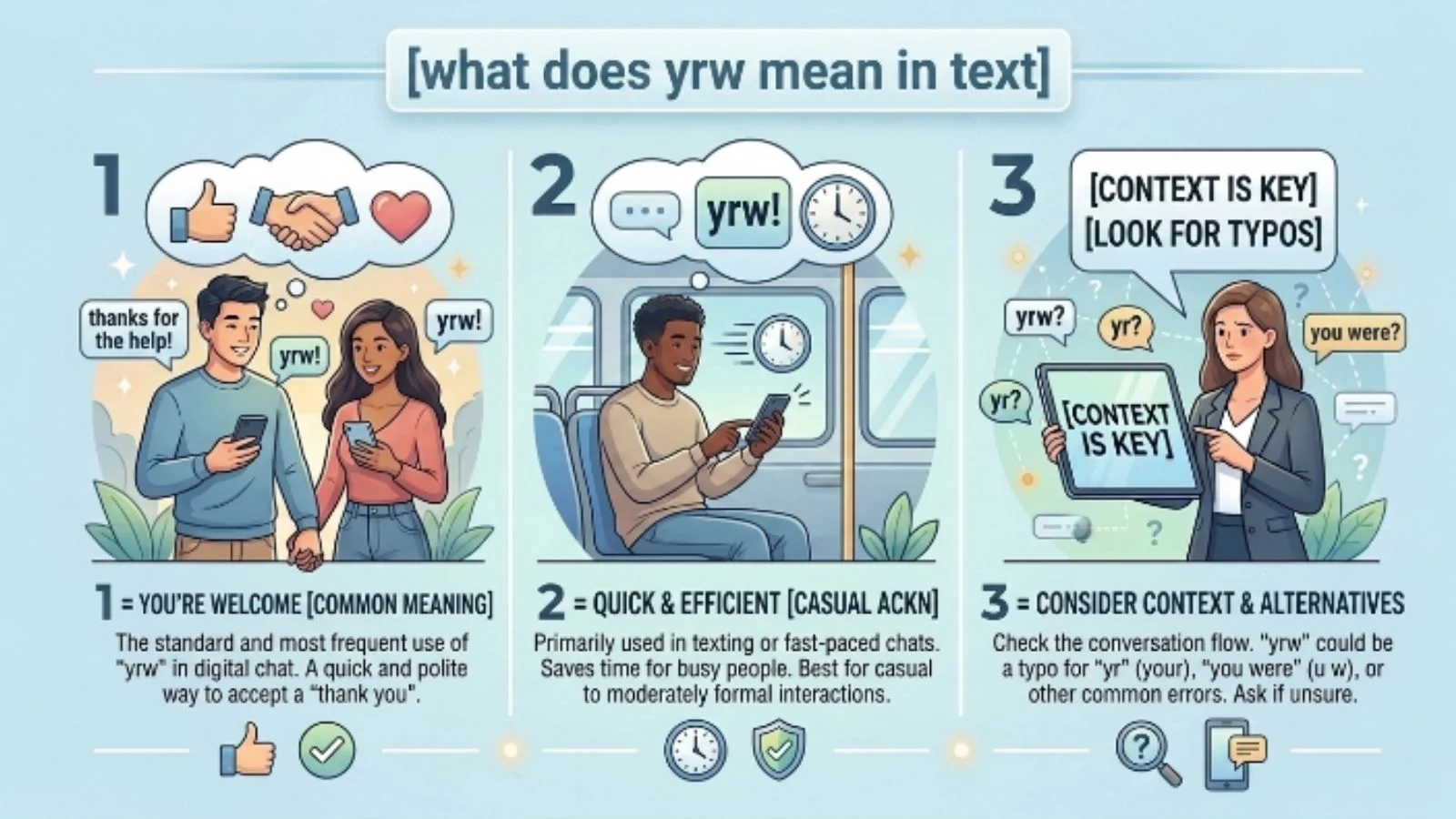
In most texting and online conversations, YRW means “You’re Welcome.” People use it as a quick and casual reply after someone says “thank you.”
But there is more to know about this abbreviation. In this guide, you will learn what YRW means, how people use it, when it is appropriate, and how it differs from similar expressions.
What Does YRW Mean in Text?
YRW usually means “You’re Welcome” in text messages and online chats.
It is a shortened version of the phrase “you’re welcome,” which people normally say after receiving thanks.
For example:
Person 1: Thanks for helping me with my homework.
Person 2: YRW!
Here, YRW simply means “You’re welcome.”
It tells the other person that they are welcome and that the speaker was happy to help.
YRW Meaning at a Glance
| Term | Meaning | Common Use |
|---|---|---|
| YRW | You’re welcome | Replying to “thank you” |
| YW | You’re welcome | Short texting reply |
| TY | Thank you | Showing appreciation |
| THX | Thanks | Casual way to say thanks |
| NP | No problem | Saying help was not a burden |
| NBD | No big deal | Saying something was easy or unimportant |
The most important thing to remember is that YRW is generally a casual abbreviation for “you’re welcome.”
What Is the Simple Meaning of YRW?
In simple English, YRW means “you’re welcome.”
Imagine someone thanks you for doing something:
“Thanks for sending me the notes.”
You could answer:
“You’re welcome.”
If you are texting quickly, you might write:
“YRW.”
The meaning does not really change. Only the wording becomes shorter.
YRW can therefore save time when chatting with friends, classmates, coworkers, or people you regularly communicate with online.
Where Is YRW Used?
You may see YRW in several forms of digital communication.
Text Messages
YRW can be used in ordinary SMS or mobile messaging.
For example:
“Thanks for picking me up.”
“YRW.”
The response is short but friendly.
Social Media
People may also use YRW in comments, direct messages, and private conversations on social media platforms.
For example:
“Thanks for sharing my post!”
“YRW!”
The abbreviation works well when the conversation is informal.
Online Chats
YRW may appear in gaming chats, community conversations, group chats, and other online messaging spaces.
Because online conversations often move quickly, short abbreviations can make replies faster.
Casual Conversations
YRW is most suitable for relaxed conversations where abbreviations are already common.
It can feel natural between friends who regularly use texting slang.
Why Do People Use YRW?
People use YRW mainly because it is short, quick, and easy to type.
There are several reasons someone might choose YRW instead of writing “you’re welcome.”
1. It Saves Time
Typing three letters is faster than typing the full phrase.
This can be useful during a fast-moving conversation.
2. It Keeps the Conversation Casual
YRW has an informal tone.
If you are chatting with a close friend, a short response may feel more natural than a formal “You are very welcome.”
3. It Matches Texting Culture
Texting has created many shortened expressions.
People often use abbreviations because messages are designed to be quick and conversational.
4. It Gives a Simple Response
Sometimes you do not need a long answer.
If someone says “thanks,” replying with YRW can close that small exchange naturally.
Real-Life Examples of YRW
Understanding an abbreviation becomes easier when you see it in actual conversations.
Example 1: Helping a Friend
Friend: Thanks for helping me study.
You: YRW.
Meaning: You are welcome. The person is politely responding to their friend’s thanks.
Example 2: Sending Information
Person A: Thanks for sending me the address.
Person B: YRW!
Meaning: Person B is saying that sending the address was no problem.
Example 3: Social Media
Friend: Thanks for tagging me in that post.
You: YRW!
Meaning: You are responding casually to their appreciation.
Example 4: Group Chat
Alex: Thanks everyone for helping with the project.
Sam: YRW.
Meaning: Sam is telling Alex that the help was gladly given.
Example 5: A Quick Reply
Person A: TY for covering my shift.
Person B: YRW.
Here, TY means “thank you,” while YRW means “you’re welcome.”
The two abbreviations work naturally together.
YRW vs. Similar Texting Terms
YRW is not the only way to respond when someone thanks you.
Several other abbreviations have similar meanings, but their tone can be slightly different.
| Text Term | Full Meaning | Tone |
|---|---|---|
| YRW | You’re welcome | Casual |
| YW | You’re welcome | Very casual |
| NP | No problem | Casual and relaxed |
| NBD | No big deal | Very casual |
| MY | My pleasure | Less common and context-dependent |
| TY | Thank you | Shows appreciation |
| THX | Thanks | Casual |
YRW vs. YW
Both YRW and YW can mean “you’re welcome.”
YW is generally shorter and may be more common in casual texting.
Example:
“Thanks!”
“YW!”
YRW communicates the same basic idea.
YRW vs. NP
NP usually means “no problem.”
For example:
“Thanks for helping.”
“NP.”
It does not literally mean “you’re welcome,” but it serves a similar purpose.
The difference is mostly in wording and tone.
YRW vs. NBD
NBD means “no big deal.”
Someone might use it when they want to make their help sound easy or unimportant.
For example:
“Thanks for grabbing that for me.”
“NBD.”
This can sound more relaxed than YRW.
When Should You Use YRW?
YRW is best used in informal or semi-informal conversations.
You can use it when:
- A friend thanks you
- A family member thanks you
- Someone thanks you in a casual group chat
- A gaming friend appreciates your help
- Someone thanks you on social media
- You are having a relaxed online conversation
The key is to consider the relationship and setting.
If the conversation is formal, writing the full phrase “You’re welcome” is usually safer.
When Should You Avoid YRW?
Although YRW is understandable in casual texting, it may not be appropriate everywhere.
Avoid it when communicating in highly professional or formal situations unless the other person clearly uses casual abbreviations.
For example, imagine your manager sends:
“Thank you for completing the report.”
A response such as:
“YRW”
could sound overly casual.
A better response would be:
“You’re welcome.”
Or:
“My pleasure.”
The best choice depends on the workplace culture and your relationship with the person.
Common Misunderstandings About YRW
Because YRW is less common than some texting abbreviations, people can misunderstand it.
Misunderstanding 1: Thinking It Is a Typo
Someone unfamiliar with texting abbreviations might assume YRW is random letters.
In a conversation following “thanks,” however, the intended meaning is usually clear.
Misunderstanding 2: Confusing YRW With YW
YRW and YW are easy to confuse because both can mean “you’re welcome.”
The difference is simply that YRW includes the R from “are.”
Misunderstanding 3: Assuming It Is Always Formal
YRW is generally casual.
It should not automatically be treated as a formal business expression.
Misunderstanding 4: Reading Too Much Into It
A short reply such as “YRW” usually does not carry a hidden emotional message.
If someone responds with YRW instead of “you’re welcome,” it normally just means they are keeping the conversation brief.
Does YRW Have Different Meanings?
In most ordinary texting situations, YRW means “you’re welcome.”
However, abbreviations can have different meanings in different communities, workplaces, games, or specialized subjects.
That is why context matters.
If you see YRW somewhere that does not involve thanking someone, do not automatically assume it means “you’re welcome.” Look at the surrounding conversation to determine what the writer intended.
For everyday texting, though, “you’re welcome” is the most likely interpretation.
Is YRW Rude?
YRW is not inherently rude.
Its tone depends on the conversation.
Between friends, it can sound perfectly normal:
“Thanks for the help!”
“YRW!”
However, a very short abbreviation can sometimes feel cold if the conversation is serious or emotional.
Compare:
“Thanks so much for helping me today.”
“YRW.”
with:
“Thanks so much for helping me today.”
“You’re very welcome. I’m glad I could help.”
The second response feels warmer because it contains more emotion.
So, if you want to sound especially friendly, writing the full phrase may be better.
How to Respond to YRW
If someone sends you YRW, you usually do not need to respond again.
For example:
You: “Thanks!”
Friend: “YRW.”
The conversation can naturally end there.
If you want to continue talking, you can simply move on to another topic.
For example:
You: “Thanks!”
Friend: “YRW.”
You: “By the way, are you coming tomorrow?”
YRW is often a natural closing point for a small thank-you exchange.
Pro Tips for Using YRW
If you want to use texting abbreviations naturally, keep these tips in mind.
Match the Other Person’s Style
If the other person writes in complete sentences, you may want to do the same.
If they regularly use abbreviations, YRW will probably fit the conversation.
Think About the Setting
Use YRW more freely in casual conversations.
For formal emails, professional messages, applications, or important communication, use “You’re welcome” instead.
Do Not Overuse Abbreviations
Too many shortened words can make messages difficult to understand.
Clear communication is more important than typing a few characters faster.
Pay Attention to Context
If YRW appears after “thanks,” the meaning is usually straightforward.
If it appears in an unrelated conversation, consider whether the abbreviation could mean something else.
Frequently Asked Questions
What does YRW mean in text?
YRW usually means “you’re welcome” in text messages. It is a casual abbreviation people use when responding to someone who has said “thank you.”
Is YRW the same as YW?
Yes. YRW and YW can both mean “you’re welcome.” YW is simply a shorter version and is often used in casual texting.
Is YRW slang?
YRW can be considered a texting abbreviation or informal shorthand rather than traditional slang. It is mainly used to make digital conversations shorter and faster.
Can I use YRW in a professional message?
You can, but it is usually better to write “You’re welcome” in formal or professional communication. YRW has a casual texting style and may not fit every workplace.
Final Thoughts
So, what does YRW mean in text? In most everyday conversations, YRW means “you’re welcome.” It is a quick way to respond when someone thanks you for something.
You will most likely see it in casual texts, social media messages, group chats, and online conversations. It is similar to YW, NP, and NBD, although each expression has a slightly different feel.
The most important thing is context. If someone says “thanks” and you receive “YRW” in response, they are almost certainly saying “you’re welcome.”
For casual conversations, YRW is perfectly understandable. For formal communication, however, spelling out “You’re welcome” is usually the better choice.