Have you ever opened a message, clicked a link, or seen a post labeled NSFW and wondered what it actually means?
You’re not alone.
The term NSFW appears everywhere online—from social media platforms and discussion forums to text messages and workplace chats. While it may look like just another internet abbreviation, understanding its meaning can save you from awkward situations, especially when you’re in public or at work.
In this guide, you’ll learn exactly what NSFW means, why people use it, where you’ll see it online, and how to use it correctly in your own conversations.
What Does NSFW Mean?
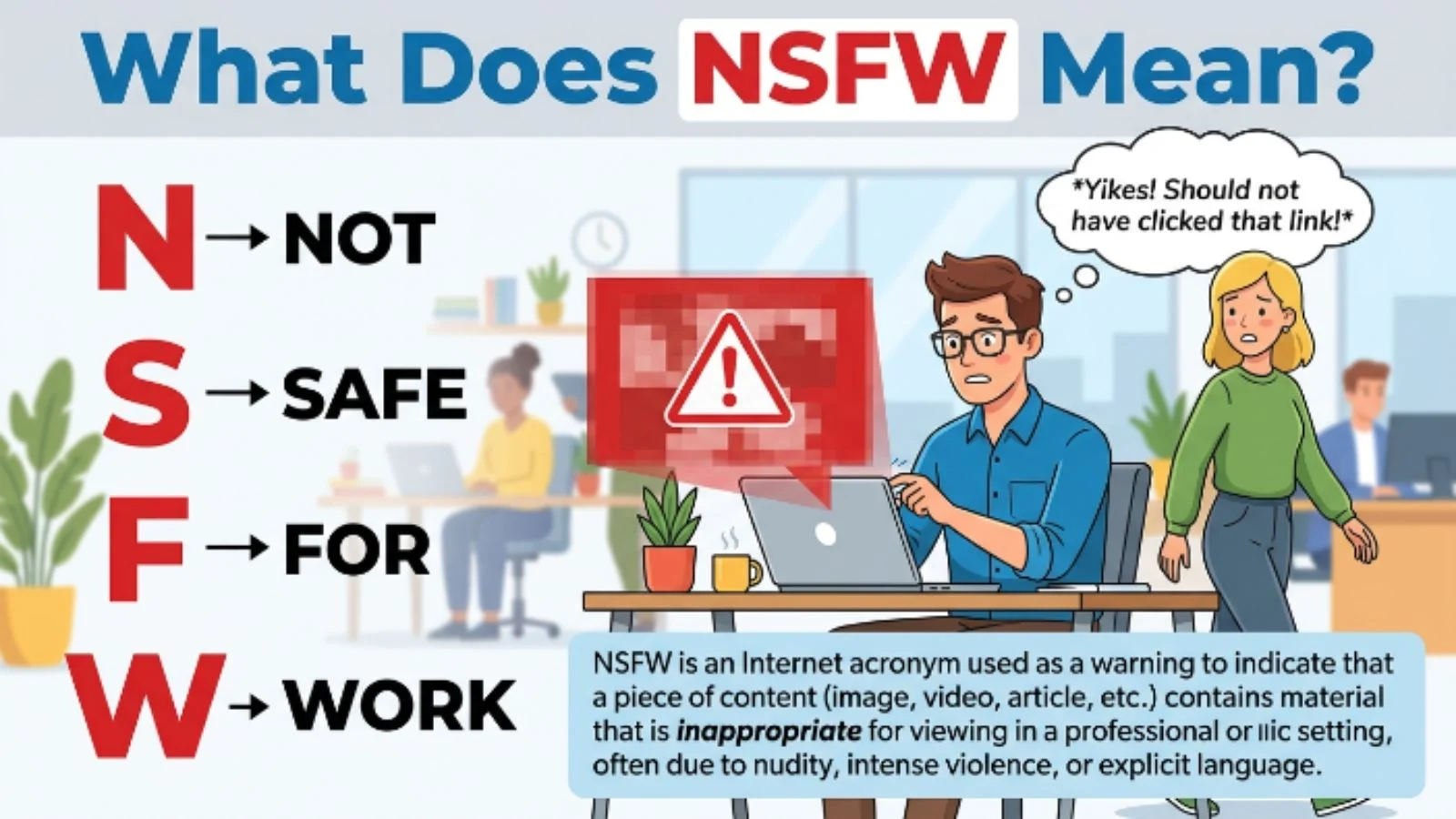
NSFW stands for “Not Safe For Work.”
It is a warning label used online to tell people that certain content may be inappropriate to view in professional, public, or formal settings.
The content marked NSFW may include:
- Adult or sexual material
- Graphic images
- Strong language
- Disturbing content
- Content that could make others uncomfortable
Quick Definition
NSFW means “Not Safe For Work.” It warns users that a photo, video, message, website, or post may contain content that is inappropriate to view in workplaces, schools, or public places.
This is the meaning most people are referring to when they use NSFW in text messages or online conversations.
Simple Meaning of NSFW
In simple words, NSFW is a heads-up warning.
It tells you:
“Be careful before opening this. Other people around you may not appreciate seeing it.”
Think of it like a digital caution sign.
For example:
- A friend sends a funny but inappropriate meme.
- A coworker shares a graphic image.
- Someone posts adult content on a forum.
Adding NSFW helps people decide whether they want to view the content immediately or wait until they’re in a private place.
Where Is NSFW Used?
NSFW is used across many websites, apps, and messaging platforms.
Social Media
You may see NSFW labels on:
- X (Twitter)
- Tumblr
- Discord
- Instagram discussions
- Facebook groups
Users often add the label before sharing mature or sensitive content.
Text Messages
Friends sometimes use NSFW before sending:
- Adult jokes
- Offensive memes
- Strong language
- Embarrassing videos
Example:
“NSFW: Check out this meme when you’re alone.”
Online Forums
Discussion forums often use NSFW tags to warn readers before they open a thread or image.
This helps users avoid accidentally viewing inappropriate content.
Workplace Chats
In professional environments, employees may use NSFW labels when sharing something that isn’t directly work-related and could be considered inappropriate.
Why Do People Use NSFW?
People use NSFW for several reasons.
To Warn Others
The biggest reason is courtesy.
A warning gives people the choice to view content later.
To Avoid Embarrassment
Imagine opening an adult-themed image during a meeting.
An NSFW label can prevent uncomfortable situations.
To Follow Community Rules
Many websites require users to mark sensitive content as NSFW.
This helps protect users and keeps communities organized.
To Provide Context
The label immediately tells viewers what to expect before clicking.
Examples of NSFW in Real Life
Let’s look at some common examples.
Example 1: Text Message
Friend:
“NSFW: This joke is hilarious.”
Meaning:
The joke may contain adult humor or offensive language.
Example 2: Reddit Post
Title:
“NSFW: Graphic accident photo”
Meaning:
The image may contain disturbing visuals.
Example 3: Group Chat
Message:
“NSFW video. Don’t open this at work.”
Meaning:
The content may be inappropriate for a professional environment.
Example 4: Social Media Link
Post:
“NSFW warning before you click.”
Meaning:
The linked content could contain adult or sensitive material.
What Types of Content Are Usually Marked NSFW?
NSFW content varies widely.
Common categories include:
Adult Content
This is the most common use.
Examples:
- Sexual images
- Adult videos
- Explicit discussions
Graphic Images
Examples:
- Injuries
- Medical procedures
- Accident photos
Offensive Humor
Examples:
- Crude jokes
- Explicit memes
- Strong language
Disturbing Content
Examples:
- Violence
- Shocking images
- Sensitive topics
Not every NSFW post contains adult material. Sometimes it’s simply content that may be uncomfortable to view publicly.
NSFW vs Similar Internet Terms
Many people confuse NSFW with other warning labels.
Here’s a simple comparison.
| Term | Meaning | Purpose |
|---|---|---|
| NSFW | Not Safe For Work | General warning for inappropriate content |
| SFW | Safe For Work | Suitable for workplaces and public viewing |
| NSFL | Not Safe For Life | Extremely disturbing or shocking content |
| CW | Content Warning | Alerts users about potentially upsetting material |
| TW | Trigger Warning | Warns about sensitive topics that may trigger emotional reactions |
NSFW vs NSFL
This is an important difference.
NSFW usually means inappropriate.
NSFL usually means extremely disturbing.
For example:
- Adult meme = NSFW
- Graphic injury photo = often NSFL
When Should You Use NSFW?
Using NSFW correctly helps other people.
Consider adding the label when sharing:
- Adult jokes
- Explicit discussions
- Graphic photos
- Mature videos
- Offensive humor
- Sensitive visual content
Good Example
“NSFW: Strong language in this video.”
Another Good Example
“NSFW: Graphic medical image.”
These warnings help others make informed choices.
When Should You Not Use NSFW?
Not everything needs an NSFW label.
You generally don’t need it for:
- Everyday conversations
- Family-friendly memes
- News articles without graphic content
- Educational material that isn’t explicit
Overusing the term can make warnings less meaningful.
Common Misunderstandings About NSFW
Many people misunderstand how NSFW works.
Myth 1: NSFW Always Means Adult Content
Not true.
While adult content is common, NSFW can also refer to:
- Graphic images
- Offensive language
- Disturbing content
Myth 2: NSFW Means Illegal Content
False.
NSFW simply means inappropriate for public or workplace viewing.
It does not automatically indicate illegal material.
Myth 3: All Platforms Define NSFW the Same Way
Different websites may have different standards.
What qualifies as NSFW on one platform might not on another.
Myth 4: NSFW Guarantees Offensive Content
Not necessarily.
Sometimes content is labeled NSFW simply because it contains mild mature themes.
How Did NSFW Become Popular?
The term became popular during the growth of internet forums and online communities.
Users needed a quick way to warn others before they opened links or images.
Eventually, NSFW spread across:
- Forums
- Blogs
- Social media
- Messaging apps
- Online communities
Today, it is one of the most recognized internet abbreviations worldwide.
Pro Tips for Using NSFW Correctly
If you plan to use NSFW in messages or online posts, keep these tips in mind.
Be Specific When Possible
Instead of writing only NSFW, provide context.
Example:
“NSFW: Graphic medical image.”
This helps viewers understand the warning.
Respect Platform Rules
Some communities require NSFW tags.
Always follow the rules where you’re posting.
Consider Your Audience
Ask yourself:
Would someone be uncomfortable viewing this in public?
If the answer is yes, add the warning.
Don’t Use It as Clickbait
NSFW labels should genuinely warn people, not attract attention.
Misusing the label can reduce trust.
Is NSFW Still Common Today?
Absolutely.
Even as internet slang evolves, NSFW remains widely used.
You’ll still see it on:
- Reddit communities
- Discord servers
- Social media posts
- Group chats
- Messaging platforms
Because people continue sharing content across professional and personal spaces, NSFW warnings remain useful and relevant.
Final Thoughts
If you’ve ever wondered what does NSFW mean, the answer is simple:
NSFW stands for “Not Safe For Work.” It is a warning that content may be inappropriate to view in workplaces, schools, or public settings.
Whether you’re browsing social media, participating in online forums, or chatting with friends, understanding NSFW helps you avoid awkward moments and use internet slang more confidently.
The next time you see an NSFW label, you’ll know exactly what it means and why it’s there.
Frequently Asked Questions
What does NSFW mean in text messages?
NSFW means “Not Safe For Work.” In text messages, it warns that the content may contain adult, graphic, offensive, or otherwise inappropriate material.
Does NSFW always mean adult content?
No. While adult content is common, NSFW can also refer to graphic images, disturbing content, or strong language.
What is the opposite of NSFW?
The opposite is SFW, which stands for “Safe For Work.” It means the content is appropriate for public and professional settings.
Should I use NSFW when sending memes?
If the meme contains adult humor, offensive language, or inappropriate images, adding an NSFW warning is a good idea.
What does NSFW mean on social media?
On social media, NSFW warns users that a post, image, video, or link may contain content that is unsuitable for workplace or public viewing.