Have you ever received a text that simply said “gotchu” and wondered what the person really meant?
This short word can look confusing at first, especially because it is not the standard spelling of a common English phrase. But in texting, “gotchu” is a casual way to say “got you.”
Depending on the conversation, it can mean “I understand,” “I’ll help you,” “I’ve got you covered,” or simply “I understand what you mean.”
Let’s look at what “gotchu” means in text, how people use it, and how you can respond when someone sends it to you.
What Does Gotchu Mean in Text?
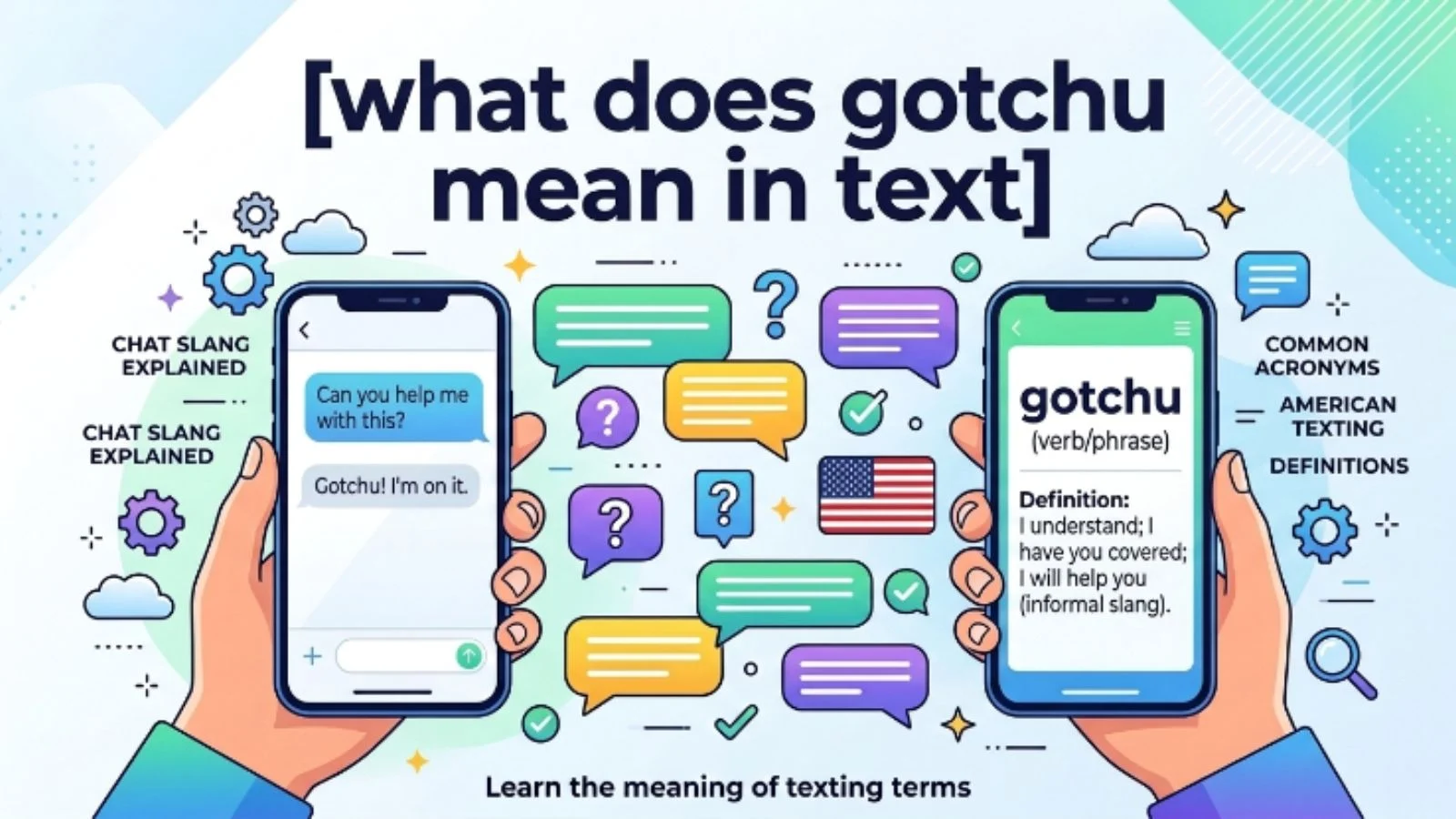
“Gotchu” is an informal texting version of “got you.” People use it to show that they understand something, agree to help, or assure someone that they will take care of a situation.
For example:
Person 1: Can you send me the notes later?
Person 2: Gotchu.
Here, “gotchu” means “I’ve got you” or “Sure, I’ll send them.”
The exact meaning depends on the context. It can be friendly, supportive, reassuring, or simply a quick way to confirm that someone understands.
Simple Meaning of Gotchu
In simple words, gotchu means “got you.”
It is often used to say:
- I understand you.
- I understand what you mean.
- I’ll help you.
- I’ll take care of it.
- Don’t worry, I’ve got you.
- I know what you are saying.
- Okay, I understand.
The spelling “gotchu” comes from the way “got you” sounds when spoken quickly.
It is common in casual digital conversations because texting often uses shortened, informal, and phonetic spellings.
Where Is Gotchu Used?
You can see “gotchu” in many casual online conversations.
It may appear on:
- Text messages
- Snapchat
- TikTok
- Facebook Messenger
- Discord
- Gaming chats
- Group chats
- Casual online conversations
It is especially common when friends are talking quickly and want to give a short response.
For example:
Friend: Can you remind me about the meeting tomorrow?
You: Gotchu.
The response sounds relaxed and friendly rather than formal.
You would usually avoid this spelling in professional emails, formal reports, school assignments, or other situations where standard English is expected.
Why Do People Use Gotchu?
There are several reasons people use “gotchu” instead of writing “I understand” or “I’ve got you.”
1. It Is Short
Texting is often about sending a quick response.
Instead of writing:
“Yes, I understand what you are asking me to do.”
Someone may simply write:
“Gotchu.”
The meaning is clear when the context is familiar.
2. It Sounds Casual
“Gotchu” has a relaxed, conversational feeling.
It sounds more like something you would say to a friend than something you would write in a formal message.
3. It Can Show Support
Sometimes “gotchu” is more than just “I understand.”
It can also mean:
“Don’t worry. I will help you.”
For example:
Friend: I forgot to bring my charger.
You: Gotchu. You can use mine.
Here, “gotchu” communicates support.
4. It Matches Spoken English
When people say “got you” quickly, the words can sound similar to “gotcha” or “gotchu.”
Internet users often turn spoken sounds into informal spellings when texting.
What Does Gotchu Mean in Different Situations?
The meaning can change slightly depending on the conversation.
Gotchu Meaning “I Understand”
Someone may use “gotchu” after you explain something.
You: The restaurant is next to the pharmacy, not across from it.
Friend: Gotchu.
Here, it means:
“I understand.”
Gotchu Meaning “I’ll Help You”
It can also be a promise to help.
You: Can you help me with this homework question?
Friend: Gotchu.
Here, the person is basically saying:
“Sure, I’ll help you.”
Gotchu Meaning “I’ll Take Care of It”
It can be used when someone gives you a task.
Boss: Please send this file before noon.
Worker: Gotchu.
In a very casual workplace chat, this could mean:
“Okay, I’ll take care of it.”
However, a more professional response would usually be better in formal communication.
Gotchu Meaning “I’ve Got Your Back”
Sometimes “gotchu” has a supportive or reassuring meaning.
Friend: I’m nervous about talking to everyone tomorrow.
You: Gotchu. I’ll be there with you.
In this case, the meaning is closer to:
“I’ve got your back.”
Real-Life Examples of Gotchu in Text
Seeing “gotchu” in different conversations makes its meaning easier to understand.
Example 1: Asking for Help
Alex: Can you pick me up at 7?
Sam: Gotchu.
Meaning: Sam is saying that they will pick Alex up.
Example 2: Explaining Something
Mia: You need to click the blue button first.
Lena: Gotchu.
Meaning: Lena understands the instructions.
Example 3: Offering Support
Tom: I forgot my lunch today.
Jake: Gotchu. I have extra food.
Meaning: Jake is offering to help.
Example 4: Making a Request
Sarah: Can you remind me to call Mom tonight?
Emma: Gotchu.
Meaning: Emma agrees to remind Sarah.
Example 5: Gaming Conversation
Player 1: Cover me while I move to the other side.
Player 2: Gotchu.
Meaning: Player 2 is saying, “I’ll cover you.”
Example 6: Casual Conversation
You: So you mean we should meet at 5 instead?
Friend: Gotchu.
Meaning: “Yes, I understand what you mean.”
Gotchu vs. Similar Terms
Several expressions can have a similar meaning, but they are not always interchangeable.
| Term | Common Meaning | Tone |
|---|---|---|
| Gotchu | I understand / I’ll help / I’ve got you | Very casual |
| Got you | I understand / I will help | Casual |
| Gotcha | I understand / I caught you | Casual |
| I understand | I understand what you mean | Neutral |
| Sure | Yes / okay | Casual to neutral |
| No problem | I can do it / it is okay | Casual |
| I’ve got you | I will help or support you | Friendly and supportive |
The biggest difference is that “gotchu” is highly informal.
It is best suited to relaxed conversations rather than formal writing.
Gotchu vs. Gotcha
People sometimes confuse “gotchu” with “gotcha.”
They can sound similar, but their use can be slightly different.
Gotchu is generally a phonetic texting form of “got you.”
Gotcha can mean “I understand,” but it can also mean “I caught you” or “I tricked you.”
For example:
Friend: The appointment is at 3 PM.
You: Gotcha.
This means “I understand.”
But:
You: Gotcha! You were hiding behind the door.
Here, it means “I caught you.”
Context is important.
When Should You Use Gotchu?
You can use “gotchu” when you are talking casually with people you know.
It works well when:
- A friend asks you for help.
- Someone gives you simple instructions.
- You want to reassure someone.
- You understand what someone is saying.
- You agree to do something.
- You want to give a quick, friendly response.
- You are chatting in a casual group.
For example:
Friend: Can you save me a seat?
You: Gotchu.
That sounds natural in a casual text.
When Should You Avoid Gotchu?
Although “gotchu” is common online, it is not appropriate for every situation.
Avoid it in:
- Formal emails
- Job applications
- Official letters
- Academic assignments
- Business reports
- Professional communication with people you do not know well
Instead of:
Gotchu, thanks.
You could write:
Understood, thank you.
Or:
Sure, I’ll take care of it.
The right choice depends on your relationship with the person and the situation.
Common Misunderstandings About Gotchu
It Does Not Always Mean “I Understand”
One common mistake is assuming “gotchu” always means “I understand.”
Sometimes it means:
“I will help you.”
Other times, it means:
“I’ll take care of it.”
Look at the message before it to understand the intended meaning.
It Is Not Formal English
“Gotchu” is an informal spelling.
It is useful in texting and casual online conversations, but it should not replace standard English in formal writing.
It Does Not Automatically Mean Deep Support
Someone saying “gotchu” does not always mean they are making a serious promise.
For example:
Can you send me that picture?
Gotchu.
This may simply mean:
“Sure.”
The strength of the promise depends on the context.
How to Respond When Someone Says Gotchu
Your response can be simple.
If someone says:
“Gotchu.”
You might reply:
- Thanks!
- Appreciate it.
- Perfect, thanks.
- Awesome.
- Okay, thank you.
- You’re the best.
- Sounds good.
If “gotchu” means they understand your explanation, you may not need to respond at all.
For example:
You: Meet me outside the library at 4.
Friend: Gotchu.
The conversation can naturally end there.
Is Gotchu a Positive Word?
Usually, yes.
“Gotchu” generally has a positive, friendly, or reassuring tone.
It often tells you that the other person understands you, agrees to help, or is ready to handle something.
However, tone can change depending on the conversation.
A person might also use it sarcastically or playfully. If someone adds other words, punctuation, or emojis, the emotional meaning can change.
For example:
“Oh, gotchu.”
could sound different from:
“Gotchu! I’ll handle it.”
The surrounding conversation matters.
Pro Tips for Understanding Gotchu
Here are a few simple tips to help you understand the expression correctly.
1. Read the Message Before It
The previous message often tells you what “gotchu” means.
If you asked for help, it probably means “I’ll help.”
If you explained something, it probably means “I understand.”
2. Look at the Conversation Tone
A conversation between close friends can use much more informal language than a conversation with a teacher, manager, or client.
3. Do Not Overthink It
In most casual conversations, “gotchu” is simply a quick way of saying:
“Got you.”
It usually does not contain a hidden meaning.
4. Use Standard English When Needed
There is nothing wrong with using “gotchu” in a casual text.
Just remember that informal slang and professional English serve different purposes.
Final Thoughts
So, what does gotchu mean in text?
“Gotchu” is an informal spelling of “got you.” It can mean “I understand,” “I’ll help you,” “I’ll take care of it,” or “I’ve got your back,” depending on the context.
It is common in texting, social media, gaming chats, and conversations between friends. The expression is short, friendly, and casual.
If someone sends you “gotchu,” they are usually letting you know that they understand or are willing to help. Just check the surrounding conversation to know which meaning fits best.
Frequently Asked Questions
What does gotchu mean in texting?
Gotchu means “got you” and is usually used to say “I understand,” “I’ll help you,” or “I’ll take care of it.” The exact meaning depends on the conversation.
Is gotchu the same as got you?
Yes. “Gotchu” is an informal phonetic spelling of “got you.” It is mainly used in casual texts, social media, and online conversations.
Is gotchu slang?
Yes. Gotchu is informal internet and texting slang. It is suitable for casual conversations but is generally not appropriate for formal writing.
What should I reply to gotchu?
You can reply with “Thanks,” “Appreciate it,” “Perfect,” or another casual response. If the person is simply confirming that they understand, you may not need to reply.