Have you ever received a short “bof” in a text and wondered what the person was trying to say?
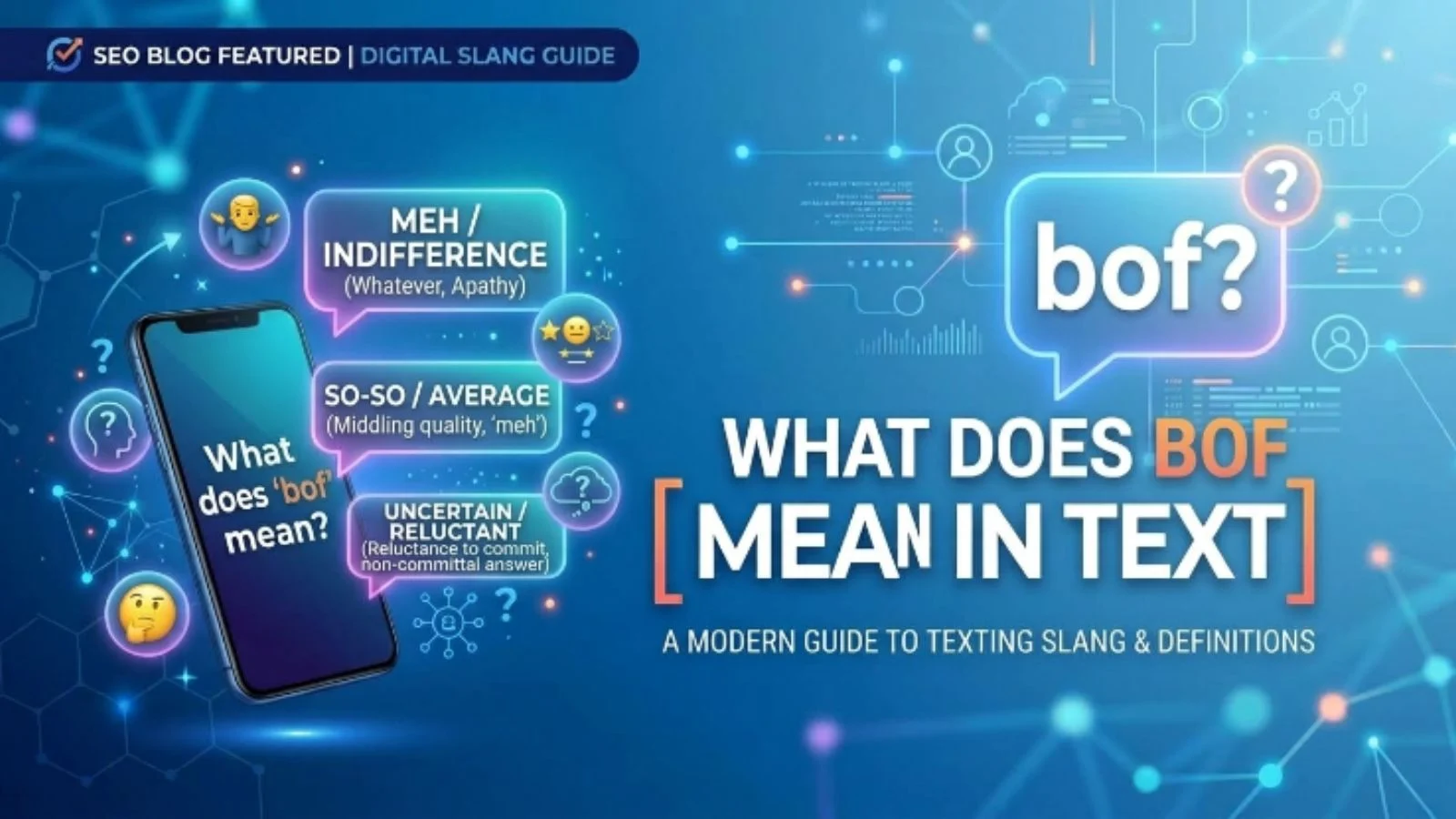
It looks simple, but bof can carry a whole attitude in just three letters. Depending on the conversation, it can sound like “meh,” “whatever,” “not really,” “I don’t know,” or a simple lack of excitement.
If someone sends you “bof”, they are usually not showing strong interest. They may feel unsure, unimpressed, indifferent, or simply not care much about the topic.
What Does Bof Mean in Text?
In texting and online conversations, bof commonly means “whatever” or expresses a feeling similar to “meh.” It is used to show that someone is not very interested, excited, or concerned about something.
For example:
Person 1: “Do you want to watch that new movie?”
Person 2: “Bof.”
Here, bof could mean:
- “Meh, I don’t really care.”
- “I’m not excited about it.”
- “Whatever.”
- “I guess.”
- “Not really.”
The exact meaning comes from the context and tone of the conversation.
Simple Meaning of Bof
The easiest way to understand bof is to think of it as a verbal shrug.
It is similar to saying:
- “Meh.”
- “Whatever.”
- “Not really.”
- “I don’t know.”
- “It’s okay.”
- “I’m not impressed.”
- “I don’t really care.”
The French expression bof is an informal interjection that can show a lack of enthusiasm or interest. English speakers may encounter it in chats, social media, memes, or conversations influenced by French.
So if someone replies “bof” instead of giving a longer answer, they may be communicating an attitude rather than a specific piece of information.
Is Bof an Acronym?
Usually, bof is not an acronym in the common texting sense.
This is important because people sometimes assume every short word in a text must stand for several words.
In its common conversational use, bof is an informal expression rather than a set of initials. It comes from French and is used to express feelings such as indifference, hesitation, or a lack of enthusiasm.
However, BOF can have completely different meanings in other contexts. For example, it may refer to a title, organization, technical term, or fandom-related phrase.
That is why you should always look at the conversation around the word before deciding what it means.
Where Is Bof Used?
You may see bof in several types of casual communication.
1. Text Messages
Someone might use bof when they do not have a strong opinion.
Example:
Friend: “Do you like this restaurant?”
You: “Bof. It’s okay.”
Here, the person is saying that the restaurant is neither especially good nor especially bad.
2. Social Media
You might see bof in comments or replies when someone wants to show mild indifference.
Example:
Comment: “This new update is amazing!”
Reply: “Bof, I liked the old version better.”
The reply suggests that the person is not impressed.
3. Private Chats
Friends may use bof as a quick response when they do not want to give a detailed answer.
Example:
Friend: “Are you excited for tomorrow?”
You: “Bof, not really.”
This makes the person’s lack of excitement clear.
4. French or Multilingual Conversations
The word has a strong connection to informal French usage. In French, bof can express indifference, hesitation, or a feeling that something is only average.
Because of this, you may encounter it more often in conversations involving French speakers or people familiar with French expressions.
Why Do People Use Bof?
The main reason people use bof is convenience.
Instead of writing a complete sentence such as “I’m not really interested”, someone can simply type:
“Bof.”
It communicates the general mood quickly.
People may use it to express:
- Indifference
- Low excitement
- Uncertainty
- Mild disappointment
- Lack of interest
- A casual “whatever” attitude
- A feeling that something is just average
It can also make a response sound less serious.
For example, saying “I don’t care” may sound harsh. Saying “bof” can sound more casual, depending on the conversation.
Bof Meaning in Different Situations
The meaning can change slightly depending on what comes before and after it.
Bof = “Meh”
Person: “How was the concert?”
You: “Bof.”
Meaning: It was okay, but nothing special.
Bof = “Not Really”
Person: “Are you excited about the party?”
You: “Bof, not really.”
Meaning: You are not very excited.
Bof = “Whatever”
Person: “You can choose the restaurant.”
You: “Bof, anywhere is fine.”
Meaning: You don’t have a strong preference.
Bof = “I Don’t Know”
Person: “What do you think we should do?”
You: “Bof… I don’t know.”
Meaning: You are unsure and do not have a clear answer.
French usage can similarly combine bof with uncertainty, such as an informal “I don’t know” or “it’s okay.”
Real-Life Texting Examples
Here are some natural examples to help you understand how bof can work in everyday conversations.
Example 1: Talking About Food
A: “Was the pizza good?”
B: “Bof, I’ve had better.”
Meaning: The pizza was not terrible, but the person was not impressed.
Example 2: Talking About a Movie
A: “Did you like the movie?”
B: “Bof.”
Meaning: The movie was probably average or disappointing.
Example 3: Making Plans
A: “Do you want to go shopping tonight?”
B: “Bof, maybe.”
Meaning: The person is uncertain and does not sound very interested.
Example 4: Choosing Between Options
A: “Blue or black?”
B: “Bof, either one.”
Meaning: The person does not have a strong preference.
Example 5: Talking About a Trend
A: “Everyone is wearing this style now.”
B: “Bof, not my thing.”
Meaning: The person is not impressed or interested in the trend.
Example 6: When Someone Is Unimpressed
A: “Look at this expensive phone!”
B: “Bof. My phone works fine.”
Meaning: The second person is not impressed by the expensive phone.
Bof vs Similar Terms
| Term | Basic Meaning | Typical Tone |
|---|---|---|
| Bof | Whatever, meh, not really | Indifferent |
| Meh | Not impressive or exciting | Unenthusiastic |
| Whatever | I don’t care / any option is fine | Indifferent |
| IDK | I don’t know | Uncertain |
| IDC | I don’t care | More direct |
| Eh | Average, uncertain, or unimpressed | Casual |
| Fine | Acceptable or okay | Neutral |
The closest English comparison is often “meh.” Both can communicate a lack of excitement without necessarily showing strong dislike.
However, bof can have slightly different shades of meaning depending on the speaker and context.
Bof vs Meh: Are They the Same?
Not exactly, but they are very close.
Meh is commonly used in English to say something is average, boring, or not impressive.
Bof can communicate the same feeling, but it can also suggest “whatever,” “I don’t know,” or simple indifference.
For example:
“How was the movie?”
“Meh.”
This usually means the movie was not very good or exciting.
But:
“Which one do you want?”
“Bof, either.”
This is more about not having a preference.
So, while the two expressions overlap, context matters.
When Should You Use Bof?
You can use bof in casual conversations when you want to express a mild lack of interest or a neutral-to-unenthusiastic reaction.
It can work well when talking with:
- Close friends
- People who understand the expression
- People familiar with French
- People who regularly use casual internet language
- People who understand your conversational style
For example:
“Bof, I’m not really into that.”
This sounds casual and relatively soft.
When You Should Avoid It
Be careful when using bof in formal situations.
Avoid it in:
- Job applications
- Professional emails
- Academic writing
- Formal customer messages
- Official documents
- Serious business discussions
Instead of writing:
“Bof, I don’t know.”
in a professional conversation, you could say:
“I’m not sure.”
That communicates uncertainty much more clearly and professionally.
Common Misunderstandings About Bof
1. Bof Does Not Always Mean “I Don’t Care”
This is one of the biggest misunderstandings.
Sometimes bof simply means “not really” or “it’s okay.”
The speaker may not be angry or dismissive.
2. Bof Does Not Always Mean Something Is Bad
If someone says:
“Bof.”
about a movie, they may mean the movie was average.
They are not necessarily saying it was terrible.
3. Bof Is Not Always an Acronym
In casual texting, lowercase bof is commonly used as an informal expression rather than an acronym.
Capital letters can change the context, especially when BOF is being used as an abbreviation for something else.
4. Tone Matters
A simple “bof” may sound neutral.
But:
“Bof…”
can sound more hesitant or uninterested.
And:
“BOF.”
could look more like an acronym rather than the casual French-style expression.
The surrounding conversation is therefore important.
How to Reply When Someone Says Bof
Your response should depend on what they appear to mean.
If They Seem Uninterested
You can ask:
“Not your thing?”
If They Seem Unsure
You can say:
“No worries. Take your time.”
If They Mean “Whatever”
You can simply choose an option:
“Okay, let’s go with the first one.”
If They Seem Disappointed
You can ask:
“What didn’t you like about it?”
This keeps the conversation going instead of guessing what they mean.
Pro Tips for Understanding Bof
Here are a few simple tips that can help you interpret bof correctly.
1. Look at the full message.
Never interpret a slang word completely by itself.
2. Check the topic.
A bof about a movie may mean “not great,” while a bof about two choices may mean “either is fine.”
3. Consider the person’s usual texting style.
Some people use short expressions frequently, while others do not.
4. Do not automatically assume anger.
A short response can simply show low enthusiasm.
5. Ask when the meaning is unclear.
A simple “What do you mean?” can prevent unnecessary confusion.
6. Use it casually.
Because bof is informal, it is better suited to relaxed conversations than professional communication.
What Does Bof Mean From a Girl?
If a girl texts you “bof,” it does not automatically have a romantic meaning.
She could simply mean:
- “Meh.”
- “Not really.”
- “Whatever.”
- “I’m not sure.”
- “I don’t care which one.”
The meaning depends on the conversation.
For example:
You: “Do you want to go out tonight?”
Her: “Bof, maybe.”
This sounds uncertain or unenthusiastic.
But:
You: “Pizza or burgers?”
Her: “Bof, either.”
Here, she simply does not have a preference.
Do not assume a deeper message from the word alone.
What Does Bof Mean From a Guy?
The same idea applies when a guy texts “bof.”
It usually reflects his reaction to the topic rather than automatically communicating a hidden message.
For example:
You: “Did you enjoy the game?”
Him: “Bof.”
This could mean he thought the game was average or boring.
If he says:
“Bof, whatever works.”
he may simply be saying that he has no strong preference.
Context is more useful than trying to attach a fixed meaning to the word.
Final Thoughts
So, what does bof mean in text?
In casual texting, bof is generally used to express indifference, uncertainty, low enthusiasm, or a feeling similar to “meh” or “whatever.” It is an informal expression, strongly associated with French conversational usage.
The exact meaning depends on the situation.
If someone texts “bof” after you ask about a movie, they may mean “It was okay, but nothing special.” If they use it while choosing between two options, they may mean “Either one is fine.”
The easiest way to understand it is to treat bof as a casual verbal shrug.
When you are unsure, look at the surrounding conversation rather than assuming the person is angry or uninterested in you.
FAQ
1. What does bof mean in texting?
Bof usually means “whatever,” “meh,” “not really,” or “I don’t know.” It expresses indifference, hesitation, or a lack of enthusiasm.
2. Is bof a bad word?
No. Bof is not normally a swear word. It is an informal expression. However, depending on the situation, it can sound dismissive or uninterested.
3. Is bof the same as meh?
They are very similar. Both can show low enthusiasm or indifference. However, bof can also be used to express uncertainty or that either option is acceptable.
4. What should I reply to “bof”?
It depends on the context. You can respond with “Not really?”, “What do you mean?”, or ask a simple follow-up question if you are unsure what the person means.