
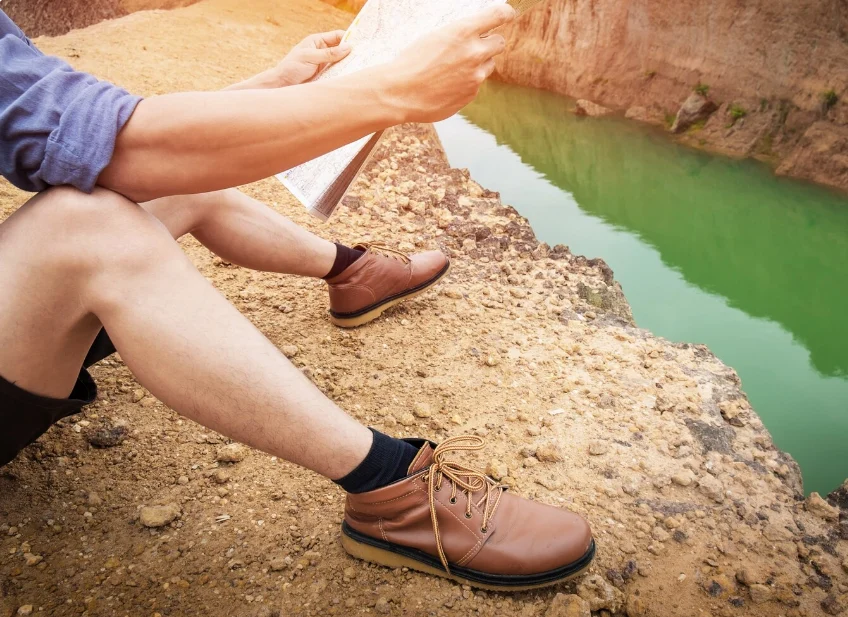
A worn-out sneaker may look like little more than an old shoe waiting to be thrown away. The rubber is smooth, the fabric is faded, the heel is uneven, and the once-bright colors have disappeared beneath dust, rain stains, and years of use. Yet every crease, scrape, and worn patch can tell a story.
Sneaker archaeology is a way of looking at old footwear as evidence of human movement and experience. Just as archaeologists study tools, pottery, and buildings to understand how people lived, an observant person can study a pair of worn sneakers to learn something about the person who wore them.
The sole becomes a record of movement. The upper carries signs of weather, work, travel, and routine. Even the way the shoe bends can reveal how it interacted with the body over time.
Sneakers are not simply objects we wear. After enough miles, they become personal archives.
Every Sole Leaves a Record
The bottom of a sneaker begins its life with a carefully designed tread pattern. Manufacturers shape these patterns to improve grip, flexibility, cushioning, and stability.
Over time, however, the original pattern slowly disappears.
Some areas remain almost untouched while others become completely smooth. One person may wear down the outside edge of the heel first. Another may create heavy wear around the ball of the foot. A runner may leave different patterns than someone who spends most of the day standing.
These differences are created by thousands of small movements.
Every step removes a microscopic amount of material. After months or years, those tiny changes accumulate into visible evidence.
In that sense, the sole works almost like a map of repeated behavior.
Walking Patterns Written in Rubber
People do not walk in exactly the same way.
The angle at which the heel touches the ground, the way weight moves through the foot, and the point where the toes push off can vary from person to person.
These movement patterns gradually shape a shoe.
Heavy wear on one section of the outsole may indicate where the greatest pressure occurs during walking. Uneven wear between the left and right shoes can also reflect differences in movement, posture, or daily habits.
Of course, worn sneakers cannot provide a complete medical diagnosis. Footwear wear patterns are influenced by many factors, including shoe design, surfaces, body mechanics, and how frequently the shoes are worn.
Still, they can provide interesting clues.
Someone studying an old pair of sneakers may notice that one heel is dramatically thinner than the other or that one side of the sole has almost disappeared. These patterns show how consistently the shoe interacted with the ground.
The Geography of a Shoe
Sneakers also carry traces of the places they have visited.
Mud trapped in deep grooves may suggest outdoor trails or rainy streets. Fine dust might come from construction areas, dry landscapes, or sports fields. Tiny stones embedded in the outsole could reflect gravel roads or hiking paths.
Salt stains may remain after winter walks on treated sidewalks.
Sand sometimes hides beneath insoles long after a beach trip.
A shoe that has crossed many environments becomes a miniature geographic archive.
The materials trapped inside its seams and tread patterns can preserve evidence of places that the wearer may barely remember.
This is one reason old shoes can feel surprisingly personal. They have physically touched nearly every place the wearer walked.
Scuffs as Memories
A small scratch on the side of a sneaker may seem meaningless to anyone else.
To the owner, however, it may bring back a specific memory.
Perhaps the mark appeared while learning to skateboard. Maybe a stain came from a music festival where rain turned the entire field into mud. A torn section of fabric might come from climbing a fence during childhood.
These imperfections transform ordinary footwear into personal objects.
New sneakers often represent possibility. Old sneakers represent experience.
Their value shifts from appearance to memory.
This emotional attachment explains why some people keep worn-out shoes long after they are useful. Throwing them away can sometimes feel like discarding a physical reminder of a particular stage of life.
Sneakers as Cultural Artifacts
Sneakers can also tell stories that go far beyond individual wearers.
Different generations have associated particular sneaker styles with sports, music, fashion, and social identity.
Basketball shoes became closely connected with streetwear culture. Skateboarding communities adopted shoes designed for durability and board control. Running shoes moved beyond athletic use and became part of everyday fashion.
Hip-hop culture helped transform sneakers into symbols of identity and status.
Limited-edition collaborations later turned certain models into collectible objects.
Future historians studying today’s society could potentially learn a surprising amount from our footwear.
The brands people wear, the materials used, the manufacturing methods, and the styles that become popular all reflect larger cultural trends.
A sneaker may therefore represent both a personal journey and a moment in fashion history.
What the Upper Reveals
The bottom of the shoe is not the only part worth examining.
The upper section often contains its own clues.
Creases across the toe box show where the foot repeatedly bends. Frayed fabric may reveal areas of constant friction. Discoloration can indicate exposure to sunlight, rain, sweat, or dirt.
Even shoelaces change over time.
They become stretched, faded, and polished where fingers repeatedly tie them.
Inside the shoe, the imprint of the foot slowly becomes visible. Insoles compress in certain areas while fabric around the heel gradually wears away.
Together, these details create a three-dimensional record of how the shoe interacted with its wearer.
The Difference Between Running and Everyday Wear
Athletic shoes often develop distinctive wear patterns because they experience repetitive movement.
A runner may take thousands of steps during a single training session. Over months of running, this repetition can rapidly reshape the outsole.
Everyday sneakers experience a different type of wear.
They may spend hours walking through offices, shopping centers, schools, train stations, and sidewalks. The total distance might be considerable, but the movement is often more varied.
Someone who uses the same shoes for commuting, traveling, working, and social activities may create a surprisingly complex pattern of wear.
The shoes become evidence of an entire lifestyle rather than one specific activity.
Children’s Shoes Tell Particularly Fast Stories
Children often outgrow shoes before completely wearing them out, but when sneakers are heavily used, they can change remarkably quickly.
Playgrounds, running, climbing, cycling, and sports place constant stress on footwear.
Scraped toes may come from kicking balls or dragging feet while riding a bicycle. Dirt embedded in the tread may reveal hours spent exploring outdoors.
Parents sometimes keep a child’s first pair of shoes for emotional reasons.
Those tiny sneakers can symbolize a major developmental moment—the transition from crawling to walking.
In this case, footwear becomes more than clothing. It becomes a record of growth.
Work Shoes as Evidence of Daily Life
Some sneakers reveal professional routines as clearly as athletic habits.
A restaurant worker may develop heavily compressed soles after spending long hours standing on hard floors. A delivery worker may wear through shoes quickly because of constant walking.
Healthcare workers, warehouse employees, retail staff, teachers, and tradespeople often rely heavily on comfortable footwear.
Their shoes experience hundreds of hours of repeated movement.
Studying these shoes can reveal something about the physical demands of different jobs.
They become artifacts of labor.
Why We Replace Shoes Before They Look Destroyed
One interesting part of sneaker archaeology is that a shoe does not need to look completely damaged to be worn out.
Cushioning materials inside the midsole can gradually compress and lose their ability to absorb impact.
The outsole may still appear relatively intact while the internal structure has changed significantly.
This means the visible story of a sneaker is only part of its history.
Some changes happen inside materials where they cannot easily be seen.
For athletes in particular, performance and comfort may decline before the shoe looks obviously damaged.
The invisible aging of sneakers reminds us that objects can accumulate history even when their appearance changes only slightly.
Repair Changes the Story
A repaired sneaker becomes even more interesting.
Replacement laces, stitched fabric, glued soles, and added insoles create additional layers in the shoe’s history.
Instead of a single period of use, the sneaker shows multiple stages.
The original manufacturer created the shoe, but the owner later modified it to extend its life.
In traditional archaeology, repaired pottery or tools can reveal how valuable an object was to its owner.
The same idea can apply to footwear.
Someone who repeatedly repairs a favorite pair of sneakers may value comfort, sustainability, financial savings, sentimental attachment, or simply the design.
Repair itself becomes part of the artifact.
The Environmental Story of Old Sneakers
Worn-out shoes also reveal a larger environmental issue.
Modern sneakers often contain combinations of rubber, foam, synthetic textiles, plastics, adhesives, and sometimes leather.
These mixed materials can make recycling difficult.
Millions of pairs of shoes are discarded every year, creating significant waste.
Looking closely at an old sneaker raises an interesting question: what happens after its personal story ends?
Some footwear recycling programs attempt to recover materials. Other initiatives collect usable sneakers for resale or donation.
There is also growing interest in designing shoes that can be repaired, recycled, or made using fewer types of materials.
In this way, sneaker archaeology can encourage people to think not only about where footwear has been but also about where it goes next.
Why Old Sneakers Feel Different From Other Objects
Many possessions stay relatively unchanged throughout their lives.
A book on a shelf may look almost identical after several years. A decorative object may show only a little dust.
Sneakers are different because they experience continuous physical contact with both the wearer and the outside world.
They bend with every step.
They absorb pressure, moisture, heat, and impact.
They touch pavement, grass, soil, stairs, floors, and countless other surfaces.
Because of this constant interaction, sneakers change alongside the person wearing them.
Their aging process becomes deeply connected to human movement.
Photographing Your Own Sneaker History
Anyone can practice a simple form of sneaker archaeology.
Before throwing away an old pair, examine it carefully.
Look at the heel, tread, toe box, laces, interior, and sides.
Compare the left shoe with the right.
You may notice patterns you never recognized while wearing them.
Photographing old shoes can also create an unusual record of personal history.
A collection of sneakers worn during different periods of life might represent school years, jobs, travel, athletic goals, relationships, and major life transitions.
Each pair can become a chapter.
When Wear Becomes Identity
Some people deliberately keep their sneakers looking perfectly clean.
Others prefer the character that comes with wear.
In certain fashion communities, aged sneakers are valued because they look lived-in and authentic.
Manufacturers sometimes even produce shoes with artificial distressing, faded materials, or pre-scuffed designs.
This creates an interesting contradiction.
Natural wear comes from real experience, while manufactured wear attempts to imitate that history.
A genuine worn sneaker is impossible to reproduce exactly because its marks come from countless unpredictable moments.
No two pairs age in precisely the same way.
A Museum of Everyday Movement
Imagine a museum where every display contains a pair of ordinary sneakers.
One pair belonged to someone who walked across a university campus every day.
Another belonged to a marathon runner.
Another came from a traveler who explored several countries.
Another belonged to a restaurant worker who stood through thousands of hours of busy shifts.
At first, the collection might appear ordinary.
But once the stories behind the shoes were revealed, each pair would become a document of human experience.
That is the central idea behind sneaker archaeology.
Everyday objects can contain extraordinary amounts of information if we learn how to observe them.
Final Thoughts
Worn-out sneakers are rarely beautiful in the traditional sense. They may be dirty, cracked, faded, and misshapen.
Yet those imperfections are precisely what make them interesting.
Every worn heel represents thousands of steps. Every crease records repeated movement. Every stain connects the shoe to a particular environment or moment.
A new sneaker is mostly a product.
A worn sneaker is a record.
The next time you are about to throw away an old pair, take a closer look at the soles. The patterns beneath your feet may contain a history you never realized you were writing.
Read More : What Does ILD Mean in Text? The Real Slang Meaning Explained



Pingback: The Benefits of Slow Travel and Experiencing Local Cultures