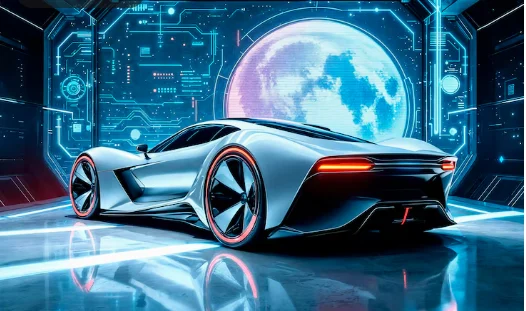
Electric supercars are changing nearly everything people associate with high-performance driving. They accelerate with astonishing force, deliver instant torque, and use sophisticated electronics to control power with extraordinary precision. Yet one of the biggest challenges facing their designers has little to do with speed.
It is sound.
For more than a century, the personality of a performance car has been closely connected to the noises produced by its engine and exhaust. A powerful V8 could rumble at idle and roar under acceleration, while a high-revving V10 or V12 produced an entirely different emotional experience. Drivers could often identify a performance car before even seeing it.
Electric vehicles change that relationship. Without combustion taking place thousands of times per minute, many traditional automotive sounds disappear. Instead of exhaust pulses and mechanical explosions, an electric drivetrain produces comparatively subtle motor whines, gear sounds, tire noise, aerodynamic turbulence, and vibrations.
For electric supercar manufacturers, silence is therefore both an advantage and an engineering problem. The goal is no longer simply to make a vehicle quieter. Engineers must decide what an electric performance car should actually sound like.
Why Sound Matters in a Supercar
Performance cars have always appealed to more than measurable specifications. Acceleration, top speed, braking distance, and cornering ability matter, but the emotional connection between driver and machine is equally important.
Sound contributes heavily to that connection.
Traditional combustion engines naturally communicate what the vehicle is doing. As engine speed increases, pitch rises. Heavy acceleration produces louder exhaust and induction noise. Gear changes create distinct changes in tone.
These acoustic signals provide drivers with information without requiring them to look at an instrument display.
Electric motors behave differently. They can generate enormous torque from extremely low speeds and operate across wide rotational ranges. Their natural sounds are typically smoother and much quieter than combustion engines.
In a luxury electric sedan, this silence may be desirable. In an electric supercar, however, engineers often want to preserve the feeling of drama.
The challenge is creating excitement without simply imitating the past.
The Natural Sound of Electric Performance
Electric drivetrains are not actually silent.
When an electric motor rotates at high speed, electromagnetic forces create distinctive high-frequency tones. Reduction gears can produce additional mechanical sounds, while inverters controlling electrical power may introduce subtle frequencies of their own.
At extreme performance levels, these sounds can become surprisingly dramatic.
Engineers can influence how much of this natural drivetrain sound reaches the cabin. Mounting materials, insulation, structural components, and acoustic chambers can either suppress certain frequencies or allow them to become more noticeable.
This creates an interesting engineering opportunity.
Instead of generating an entirely artificial soundtrack, manufacturers can amplify or reshape sounds already produced by the vehicle.
The result can feel more authentic because the audio remains connected to actual mechanical activity.
Turning Motor Speed Into Musical Character
One of the most important relationships in vehicle sound design is between speed and pitch.
In a combustion engine, this connection occurs naturally. Increasing engine revolutions generally produces a higher-frequency sound.
Electric vehicles can reproduce a similar sense of progression through carefully designed acoustic mapping.
Engineers can connect sound parameters to data such as:
- Motor speed
- Accelerator position
- Vehicle speed
- Torque demand
- Regenerative braking
- Drive mode
- Steering input
- Longitudinal acceleration
The sound system then responds dynamically to how the vehicle is being driven.
A gentle press of the accelerator might create only a subtle electronic tone. Full acceleration could produce a much stronger rising frequency that communicates the increasing rotational speed of the motors.
This relationship is extremely important.
If a vehicle produces dramatic sound without a believable connection to acceleration, drivers may quickly perceive it as artificial. Effective sound design therefore follows the physical behavior of the car.
Sound Synthesis Enters Automotive Engineering
Modern electric supercars increasingly combine mechanical engineering with technologies more commonly associated with music production and digital signal processing.
Engineers can generate sound using synthesizers controlled by real-time vehicle data.
Instead of playing a simple prerecorded audio track, these systems may continuously produce sound based on mathematical waveforms and frequency relationships.
Different layers can then be combined.
For example, one layer might follow motor revolutions while another responds to torque. Additional frequencies can appear during heavy acceleration or disappear during relaxed cruising.
Digital processing may adjust:
- Pitch
- Harmonics
- Resonance
- Volume
- Frequency balance
- Distortion
- Spatial positioning
Thousands of possible combinations can be tested before manufacturers settle on a final acoustic identity.
The process resembles composing music, except the driver controls the composition using the accelerator and steering wheel.
Designing Sound Around Human Perception
Creating a powerful sound is relatively easy. Creating one that remains enjoyable during daily driving is considerably more difficult.
Human hearing responds differently to different frequencies. Certain high-frequency sounds can quickly become tiring, while excessive low-frequency energy may produce uncomfortable pressure inside a vehicle cabin.
Automotive acoustic teams therefore study psychoacoustics—the relationship between physical sound and human perception.
Engineers evaluate whether particular sounds communicate impressions such as:
- Speed
- Power
- Precision
- Futurism
- Luxury
- Aggression
- Mechanical authenticity
Small changes can significantly affect perception.
A clean high-frequency tone might suggest advanced technology, while stronger lower harmonics can make the same vehicle feel heavier and more powerful.
Manufacturers must therefore create an acoustic signature that fits the personality of the car.
A luxury electric grand tourer may need a refined, subtle soundscape, while a track-focused electric supercar may benefit from something much more intense.
The Cabin Becomes an Acoustic Instrument
Vehicle interiors also play an important role in electric supercar sound design.
The shape of the cabin, location of speakers, seat position, glazing, insulation, and interior materials all influence how sound reaches occupants.
Advanced speaker systems make it possible to create carefully controlled sound fields around the driver.
Rather than simply increasing volume throughout the cabin, engineers can position certain frequencies around specific areas.
For example, acceleration sounds could appear to originate behind the driver, creating the impression of a powertrain located at the rear of the vehicle.
Other sounds may be positioned toward the front or sides depending on the intended experience.
This type of spatial audio gives designers far more creative freedom than a conventional exhaust system.
Active Sound Versus Artificial Sound
Synthetic automotive audio sometimes receives criticism because drivers may feel that electronically generated sound is less authentic than mechanical noise.
The distinction, however, is becoming increasingly complicated.
Modern combustion vehicles already use electronic systems to modify cabin sound. Active exhaust valves, speaker enhancement, electronically controlled resonators, and noise cancellation technologies have blurred the boundary between mechanical and digitally engineered audio.
Electric supercars simply take this concept further.
The most convincing systems typically avoid pretending that an electric vehicle has a combustion engine. Instead, designers create sounds that reflect the unique characteristics of electric propulsion.
This may include futuristic harmonics, turbine-like frequencies, or tones based directly on motor speed.
Authenticity in an electric vehicle may therefore mean representing the electrical powertrain honestly rather than reproducing the sound of gasoline combustion.
Active Noise Cancellation Shapes the Experience
Sound engineering is not only about adding noise. It is also about removing unwanted sound.
Electric vehicles expose noises that combustion engines often mask.
Without constant engine and exhaust noise, passengers may become more aware of:
- Tire resonance
- Wind turbulence
- Suspension movement
- Cooling pumps
- Gear whine
- Road surface changes
Active noise cancellation systems can help control these unwanted frequencies.
Microphones monitor sound inside the cabin while speakers generate opposing sound waves. When carefully synchronized, these waves can reduce specific unwanted noises.
This gives engineers a cleaner acoustic canvas.
Once undesirable frequencies have been reduced, selected performance sounds can be introduced more precisely.
The vehicle therefore becomes both quieter and more emotionally expressive at the same time.
Exterior Sound Has a Safety Role
Electric vehicle sound design also extends outside the cabin.
At low speeds, electric vehicles can be extremely quiet, making them more difficult for pedestrians and cyclists to detect.
For this reason, many markets require electric vehicles to produce external warning sounds at lower speeds.
Performance manufacturers have an opportunity to transform this safety requirement into part of the vehicle’s identity.
Rather than producing a generic electronic hum, designers can create distinctive exterior sounds that communicate movement while remaining recognizable to pedestrians.
However, these systems must balance several competing requirements.
The sound needs to be noticeable without becoming irritating, directional enough to help people determine where the vehicle is coming from, and compliant with applicable regulations.
Designing these acoustic warning systems therefore involves safety engineering as much as branding.
Acceleration Without Gear Changes
Another challenge arises from transmission design.
Traditional supercars often use multi-speed gearboxes. Each gear change produces a noticeable interruption and change in engine tone, giving drivers a strong sense of acceleration.
Many electric vehicles use single-speed reduction gear systems.
Acceleration can therefore feel almost continuous.
From a performance perspective, this is extremely efficient. From an emotional perspective, however, it removes one of the familiar signals drivers associate with increasing speed.
Some electric performance vehicles address this by introducing simulated shift events.
Software can briefly alter torque delivery while the sound system changes pitch, producing sensations similar to changing gears.
Whether this approach becomes widespread remains uncertain. Some manufacturers may choose simulated transmissions, while others will embrace completely uninterrupted electric acceleration.
Both approaches demonstrate how deeply software can influence vehicle character.
Drive Modes Can Change the Soundtrack
Electric powertrains allow sound profiles to change almost instantly.
A comfort mode might minimize artificial sound and emphasize refinement. A sport mode can introduce stronger motor frequencies and more aggressive acceleration tones.
Track settings can push the experience further.
Manufacturers could potentially synchronize sounds with battery output, thermal conditions, torque distribution, or aerodynamic systems.
Future vehicles may even allow drivers to customize certain sound characteristics.
The same electric supercar could theoretically provide a quiet experience during a long highway trip and a completely different acoustic environment on a racing circuit.
Sound becomes another adjustable component of vehicle performance.
The Role of Structural Vibration
Speakers are not the only way to create sensation.
Some acoustic systems can use transducers to introduce controlled vibration into seats, panels, or other parts of the cabin.
Humans experience powerful machines through both hearing and physical sensation. Traditional engines produce vibrations that travel through the chassis and seats.
Electric drivetrains naturally produce less of this low-frequency vibration.
Carefully controlled tactile feedback could restore some of that physical communication.
A driver might therefore feel subtle pulses or vibrations during acceleration even when cabin volume remains relatively moderate.
Combining auditory and tactile feedback can create a stronger sensation of speed without requiring excessive noise.
Creating a Brand Sound
Automotive companies have historically developed recognizable visual identities through styling, lighting, badges, and interior design.
Electric vehicles create another opportunity: acoustic branding.
Future drivers may recognize a manufacturer from its electric sound signature in the same way enthusiasts once recognized particular engine configurations.
This requires consistency across different vehicle models.
A brand might develop a set of harmonic characteristics that appear throughout its electric lineup while allowing each vehicle to have its own variation.
A luxury SUV, sports sedan, and electric hypercar could therefore sound different while sharing a recognizable acoustic DNA.
For manufacturers, this transforms sound engineering into an important part of brand strategy.
Software Makes Sound Continuously Adjustable
Traditional exhaust systems are largely determined by physical components. Once the vehicle leaves the factory, its basic sound character remains relatively fixed.
Software-defined sound systems introduce a very different possibility.
Manufacturers can potentially update acoustic profiles through software.
A vehicle could receive improved sound mapping, additional driving modes, or revised audio characteristics long after production.
This flexibility introduces interesting questions.
Should owners be able to select multiple sound themes? Should certain acoustic profiles be downloadable? Could track-specific sound settings be created?
Technically, many of these possibilities are achievable.
However, manufacturers will need to avoid turning serious performance vehicles into acoustic novelty products. Successful sound design will likely depend on restraint and consistency.
Electric Motorsport May Influence Road Cars
Motorsport has historically influenced automotive sound expectations.
Racing engines demonstrated what extreme mechanical performance sounded like, and some of that excitement eventually reached road vehicles.
Electric motorsport may have a similar influence.
High-performance electric racing machines generate intense motor, gear, aerodynamic, and tire sounds. As audiences become more familiar with these acoustic signatures, perceptions of what a high-performance vehicle “should” sound like may change.
Future generations of drivers may not expect the rumble of a V8 or the scream of a V12.
Instead, high-frequency electric motor sounds could become the new acoustic symbol of extreme acceleration.
Silence Can Also Communicate Performance
Interestingly, manufacturers may eventually discover that sound does not need to replace everything that combustion engines provided.
Silence itself can be dramatic.
An electric supercar that accelerates from a standstill with enormous force and almost no mechanical noise creates a sensation that traditional cars cannot replicate.
The absence of an explosive soundtrack can make acceleration feel almost surreal.
This gives designers another creative direction.
Rather than trying to make electric vehicles louder, they can selectively use moments of silence followed by carefully controlled sound.
Contrast can sometimes create more emotional impact than continuous noise.
The Future of Supercar Sound
Electric vehicles are forcing automotive engineers to reconsider a fundamental question: what should performance sound like?
For decades, the answer was largely dictated by mechanical architecture. Cylinder count, displacement, firing order, exhaust design, turbochargers, and engine speed determined the majority of a vehicle’s acoustic personality.
Electric propulsion removes many of those restrictions.
Sound can now be engineered with extraordinary precision.
Motor frequencies, structural vibrations, digital synthesis, spatial audio, active noise cancellation, and real-time vehicle data can all contribute to the experience.
The result is an entirely new field where automotive engineering meets acoustics, software design, psychology, and even musical composition.
Conclusion
The electric supercar is not truly silent. Its voice is simply being created differently.
Behind every futuristic acceleration tone lies a complex combination of motors, sensors, processors, speakers, structural materials, acoustic models, and software algorithms. Engineers must determine which natural sounds to preserve, which unwanted frequencies to remove, and which digital elements can enhance the connection between driver and vehicle.
The most successful electric supercars will likely avoid trying to imitate combustion engines. Instead, they will develop acoustic identities that reflect the speed, precision, and technological sophistication of electric propulsion.
The thunder of tomorrow may not come from exploding fuel inside cylinders.
It may emerge from electrons, algorithms, and carefully engineered sound waves.
Read More : The Last Manual: Why Stick Shifts Are Becoming a Collector’s Obsession