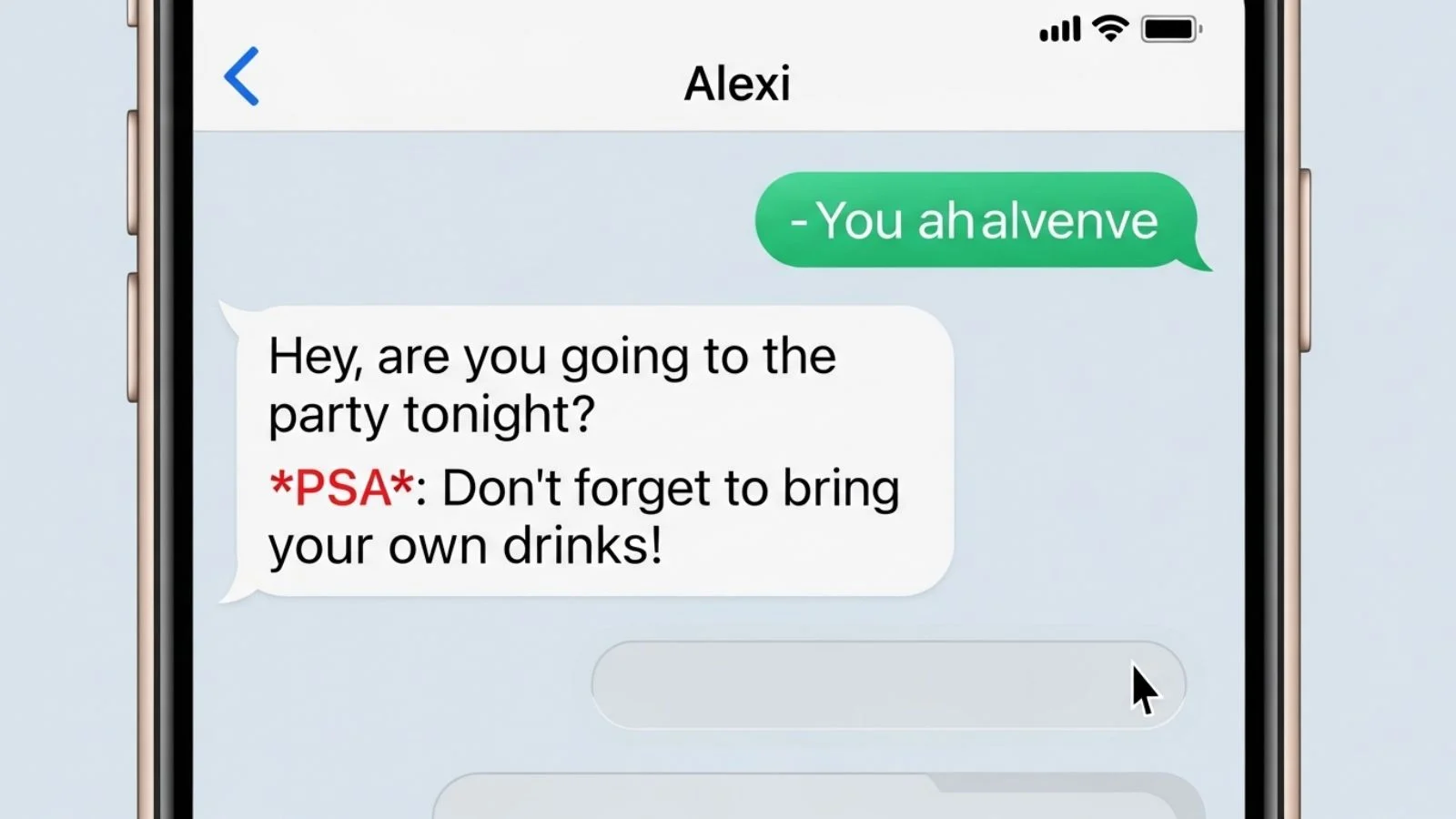
PSA in text means “Public Service Announcement.” It’s used online to share important information, warnings, reminders, or helpful advice in a slightly dramatic or attention-grabbing way.
But on social media and in chats, PSA doesn’t always feel official. Sometimes it’s serious. Sometimes it’s funny. And sometimes it’s sarcastic.
Let’s break down exactly what PSA means in text, how people use it on different platforms, and how you should reply when someone sends it.
PSA Meaning in Text
The PSA meaning in text is short for Public Service Announcement.
Traditionally, a Public Service Announcement was a message broadcast on TV or radio to inform the public about something important — like safety warnings or health campaigns.
Online, though, PSA has evolved.
In casual texting and social media:
- It introduces advice
- It highlights a warning
- It shares a reminder
- It exaggerates something for humor
Is PSA an Acronym?
Yes.
PSA is:
- An acronym
- A short form of “Public Service Announcement”
- Not a phonetic spelling
- Not a meme-based word originally (but now often used humorously)
It’s commonly used at the beginning of a sentence.
Example:
PSA: Don’t update your phone yet. The new version is buggy.
What Does PSA Mean in Chat?
When someone asks, “what does PSA mean in chat?” the answer is simple:
It means the person is announcing something they think others should know.
In chat conversations, PSA is often used:
- Dramatically
- Playfully
- Or seriously depending on context
Example:
A: I’m starving.
B: PSA: There’s leftover pizza in the fridge.
A: You’re a hero.
PSA Slang Meaning
The PSA slang meaning is slightly different from its formal meaning.
Online slang use includes:
- Fake dramatic announcements
- Jokes disguised as important warnings
- Relationship advice
- Petty reminders
Example:
PSA: If he wanted to, he would.
This is not an official announcement. It’s a social commentary.
PSA Meaning on Snapchat
On Snapchat, PSA is often used in:
- Story captions
- Group chats
- Screenshots with text overlays
Tone on Snapchat:
- Playful
- Slightly dramatic
- Attention-grabbing
Example Snap:
PSA: Stop texting your ex.
It usually feels personal and direct.
PSA Meaning on TikTok
On TikTok, PSA often appears in:
- Video captions
- On-screen text
- Advice-style videos
Tone on TikTok:
- Advisory
- Trend-driven
- Sometimes sarcastic
Example:
PSA: Your situationship is not your soulmate.
It’s often tied to trends or viral advice culture.
PSA Meaning on Instagram
On Instagram, PSA is commonly used in:
- Story slides
- Carousel posts
- Reels captions
Tone:
- Polished
- Opinion-based
- Informative
Example:
PSA: Drink water. Mind your business. Protect your peace.
It’s aesthetic but meaningful.
PSA Meaning on WhatsApp
On WhatsApp, PSA is usually more practical.
Examples:
- Family group reminders
- Work updates
- Event notices
Example:
PSA: Meeting moved to 3 PM.
Tone here is more literal and straightforward.
PSA Meaning in SMS
In regular text messages (SMS):
PSA usually signals something important.
Example:
PSA: The store closes early today.
No jokes. Just clarity.
Tone & Context Variations
PSA changes meaning depending on tone.
Funny Tone
Used for exaggeration.
Example:
A: I just ate 5 cookies.
B: PSA: Self-control has left the chat.
A: I regret nothing.
Sarcastic Tone
Used mockingly.
A: He said he’s “different.”
B: PSA: They’re all different until they’re not.
A: Facts.
Romantic Tone
Soft advice or emotional commentary.
A: He hasn’t replied in 6 hours.
B: PSA: If someone likes you, they make time.
A: Needed that.
Angry Tone
Used to call something out.
A: They cancelled last minute again.
B: PSA: Respect people’s time.
A: Exactly.
Playful Tone
Light teasing.
A: I’m late again.
B: PSA: Time management is free.
A: Wow.
15 Real Chat Examples
A: I’m pulling an all-nighter.
B: PSA: Sleep is important.
A: Not tonight.
A: Should I text him?
B: PSA: Protect your peace.
A: True.
A: I forgot my wallet.
B: PSA: Always double-check before leaving.
A: Learned the hard way.
A: I’m broke.
B: PSA: Budgeting matters.
A: Don’t start.
A: I miss her.
B: PSA: Nostalgia lies.
A: That hit.
A: I’m getting bangs.
B: PSA: Post-breakup decisions need supervision.
A: Rude.
A: It’s 2 AM.
B: PSA: Go to bed.
A: Never.
A: He left me on read.
B: PSA: Silence is an answer.
A: Ouch.
A: I skipped the gym.
B: PSA: Monday is coming.
A: Stop.
A: I overslept.
B: PSA: Alarms are suggestions now?
A: Apparently.
A: I ordered fast food again.
B: PSA: Your body deserves better.
A: Tomorrow.
A: I hate my job.
B: PSA: Update your resume.
A: Already did.
A: I’m texting my ex.
B: PSA: We don’t recycle trash.
A: Brutal.
A: I’m overthinking.
B: PSA: Not everything is that deep.
A: Needed that.
A: I’m procrastinating.
B: PSA: Deadlines don’t move.
A: Sadly.
Grammar & Language Role
Part of Speech
PSA is a noun (acronym form of a noun phrase).
Sentence Role
It acts as:
- A label
- An introduction
- A framing device
Usually placed at the beginning of a sentence.
Example:
PSA: Bring your charger.
Does It Replace a Full Sentence?
Sometimes, yes.
Example:
PSA.
When used alone, it signals an announcement coming next.
Formal vs Informal Usage
- Formal: Workplace emails
- Informal: Social media jokes
Tone depends entirely on context.
How to Reply When Someone Says “PSA”
Here’s what to say back.
Funny Replies
- “Thank you for your service.”
- “Breaking news indeed.”
- “Noted with dramatic effect.”
Serious Replies
- “Thanks for the heads-up.”
- “Appreciate the reminder.”
- “Good to know.”
Flirty Replies
- “Only listening because it’s you.”
- “You always have the best announcements.”
- “Another PSA from my favorite person?”
Neutral Replies
- “Got it.”
- “Okay.”
- “Makes sense.”
Is PSA Rude or Bad?
Is PSA rude?
No. PSA is not inherently rude.
Is it disrespectful?
Only if the message itself is disrespectful.
Is it a bad word?
Not at all. It’s completely clean and AdSense-safe.
Can you use it in school?
Yes.
Example:
PSA: Homework is due Friday.
Can you use it at work?
Yes, especially in internal chats.
Example:
PSA: The deadline has moved.
Just avoid sarcastic tone in professional settings.
Who Uses This Term?
PSA is widely used by:
- Gen Z
- Millennials
- Online communities
Regions
- United States
- United Kingdom
- Canada
- Australia
- Global English-speaking internet
Most Common Platforms
- TikTok
- Snapchat
- Twitter/X
- WhatsApp groups
Origin & Internet Culture
PSA originally came from public broadcast media.
Before social media, PSAs were:
- Government warnings
- Health announcements
- Safety campaigns
With the rise of internet humor culture, people started using PSA sarcastically.
Now it’s:
- Meme-friendly
- Advice-driven
- Aesthetic on social platforms
Its online popularity increased with short-form video platforms like TikTok where quick advisory captions work well.
Comparison Table
| Term | Meaning | Formal/Informal | Tone | Popularity | Confusion Risk |
|---|---|---|---|---|---|
| PSA | Public Service Announcement | Both | Serious or sarcastic | High | Low |
| idk | I don’t know | Informal | Casual | Very High | Very Low |
| ion | I don’t | Informal | Casual/slang | Medium | Medium |
| dunno | Don’t know | Informal | Casual | High | Low |
| idc | I don’t care | Informal | Blunt | Very High | Low |
Real-World Usage Insight
In real conversations, PSA is rarely used in a truly formal way between friends.
Most people use it:
- To give advice without sounding preachy
- To joke dramatically
- To call something out indirectly
It softens criticism while still making a point.
Frequently Asked Questions
What Does PSA Mean in Text Messages and Online Chat?
It means Public Service Announcement. It’s used to introduce important information, advice, or warnings in conversations.
What Does PSA Mean on Snapchat and TikTok?
On Snapchat and TikTok, PSA is often playful or sarcastic. It’s used to share life advice, relationship commentary, or trending opinions.
Is PSA Rude, Disrespectful, or Harmless Slang?
PSA itself is harmless. The tone of the message determines whether it feels rude or supportive.
How Should You Reply When Someone Says “PSA”?
You can respond seriously, humorously, or neutrally depending on context. “Thanks for the heads-up” works in most situations.
Is PSA the Same as IDK or Different?
Completely different. PSA introduces an announcement. IDK means “I don’t know.”
Can You Use PSA in School or Work?
Yes. It’s safe for both environments, especially when sharing reminders or updates.
Final Thoughts: When to Use PSA (And When Not To)
PSA is simple but powerful.
Use it when:
- You’re sharing advice
- Giving a reminder
- Warning someone
- Making a dramatic joke
Avoid it when:
- The situation is highly sensitive
- You need a serious formal tone without humor
- The message could be misunderstood as sarcasm
Common Mistakes
- Using PSA without actually saying anything useful
- Using it too often
- Using sarcastic PSAs in professional chats
Quick Usage Tip
If your message sounds like something that could be announced publicly, you can probably start it with PSA.